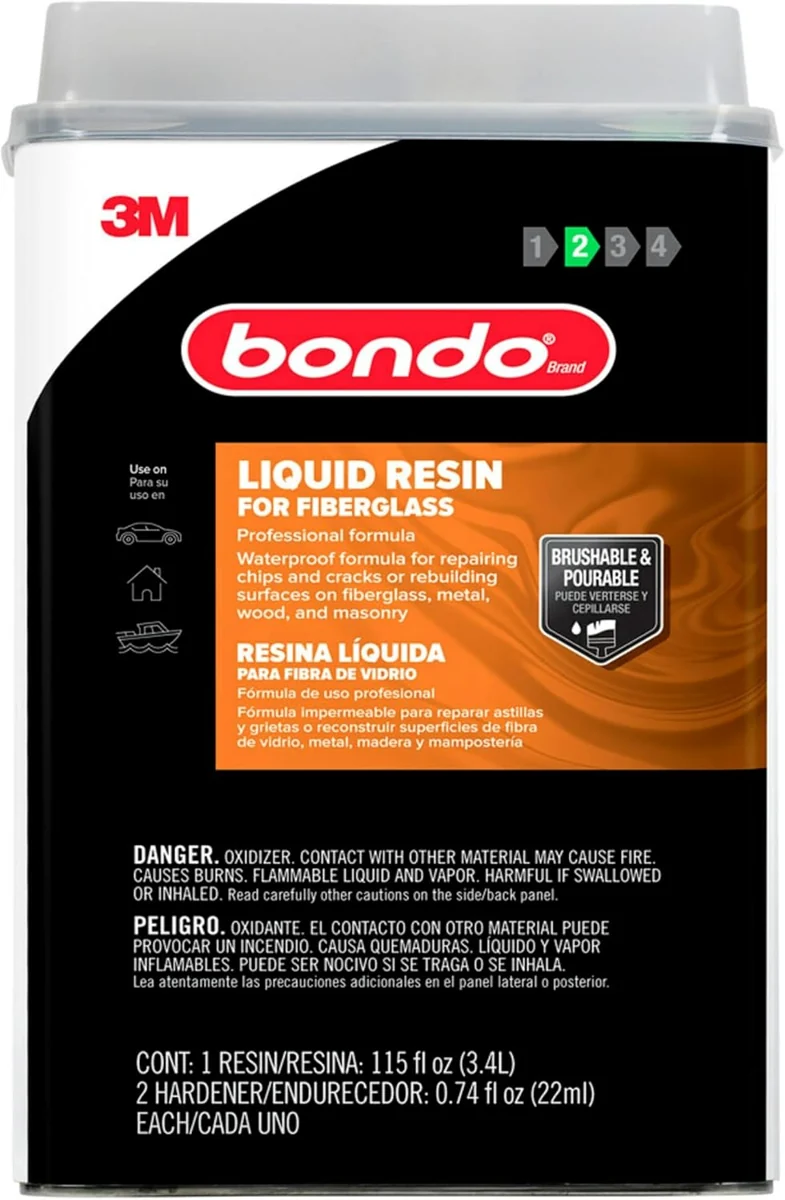
I bought Bondo 404 Fiberglass Resin as part of my camper van equipment.
Fiberglass resin is part of my purchased body-repair materials, alongside the fillers, abrasives and coatings used to organize the finishing stage.
Where it fits my build
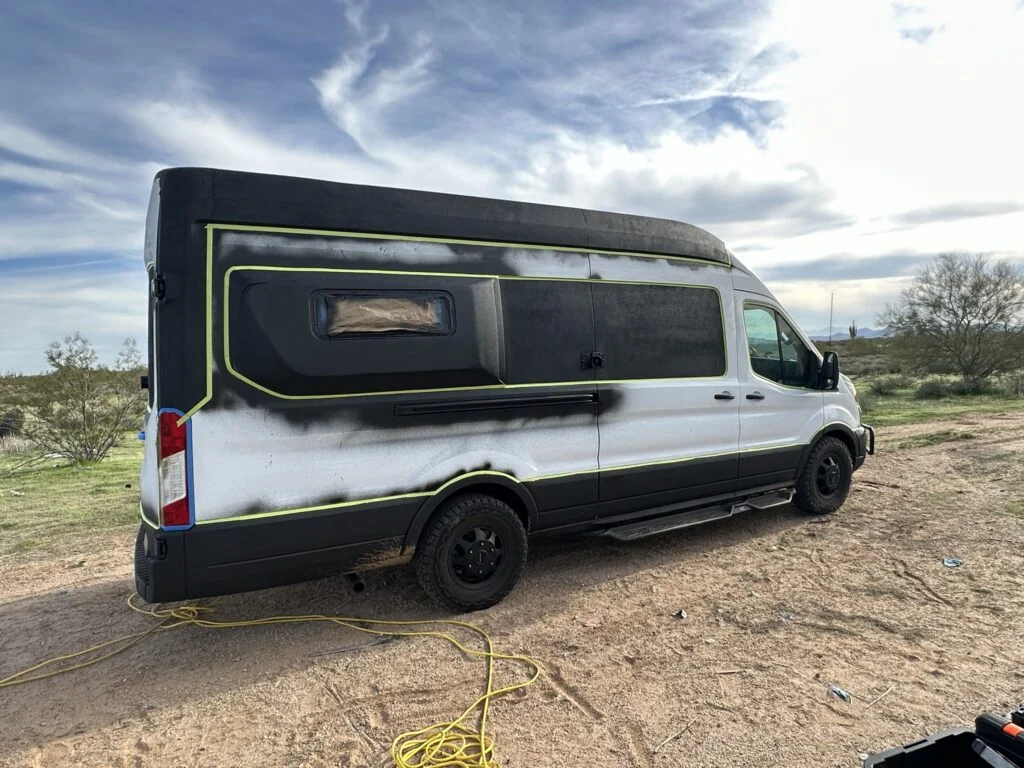
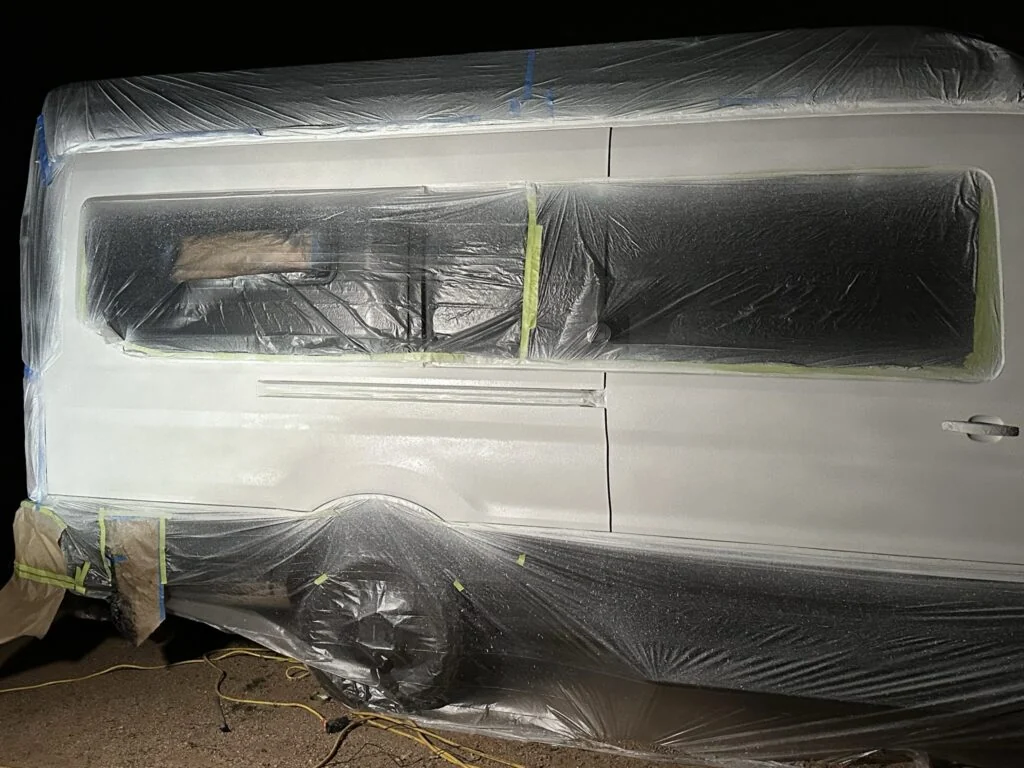
I taped the boundaries and covered the areas that would not be painted with plastic sheeting. I then sanded the exposed areas with an orbital sander and 60-grit abrasive, blew away the dust with a compressor, and cleaned and degreased the surfaces.
I mixed clear bedliner with white tint and sprayed the van. After it dried, I removed the masking. The tape and sheeting stage alone took around eight hours, and the finished edges still needed some touch-up.
My van with masking around the exterior areas prepared for coating.The side of the van during the white-bedliner project.
My build notes
The most useful detail in my diary is the result, including the problems. Rust-Oleum pooled and dripped in places, and trying to repair one area with a paintbrush made it worse. I wrote that I would use a foam roller for touch-ups and preferred the more consistent finish I had obtained with RAPTOR.
Masking, preparation and application method each became a substantial part of the exterior-coating job.
Alternative products
Two alternatives to compare
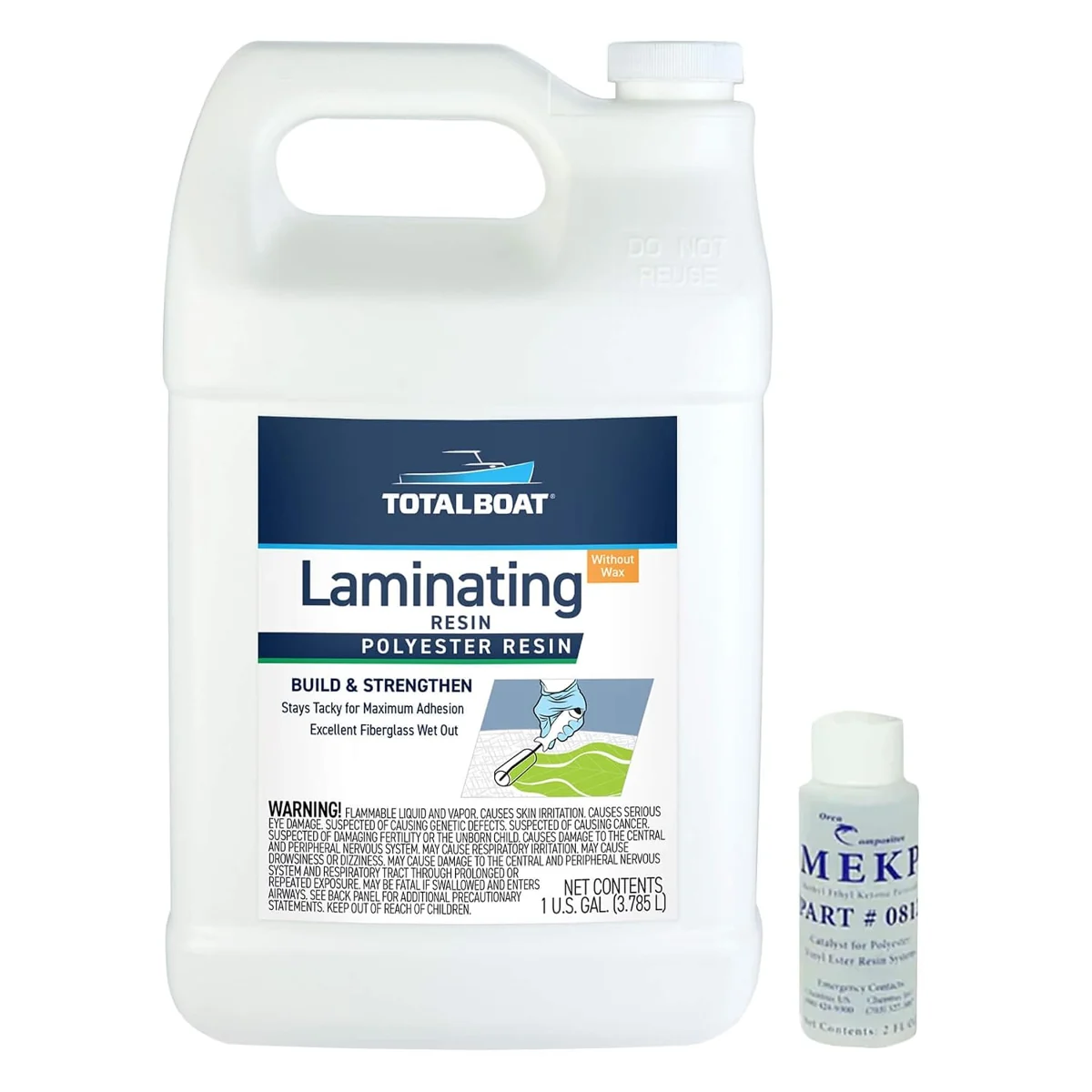
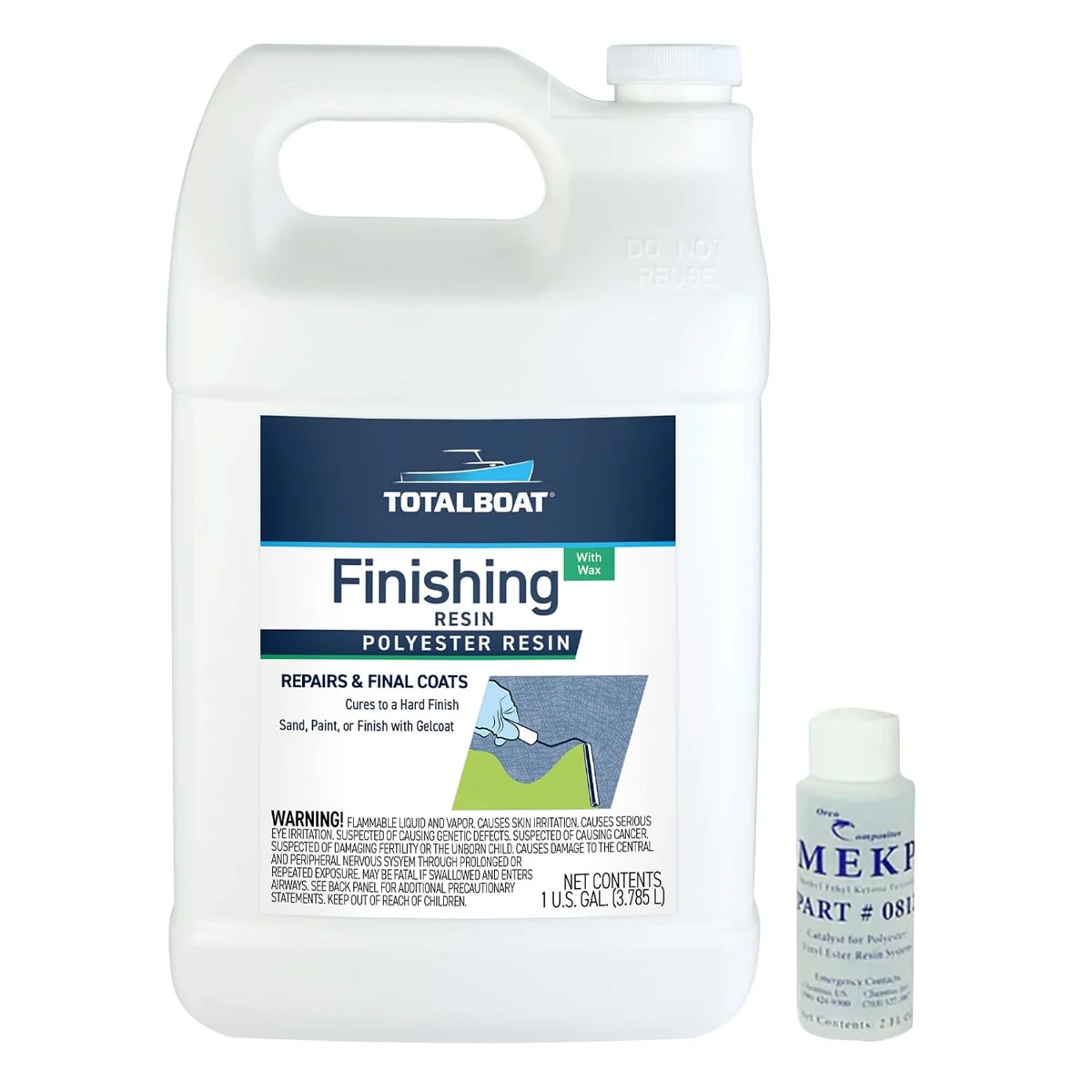
TotalBoat's laminating resin contains no wax, while its finishing resin includes wax. Those formulations distinguish building up layers from the final surface-coat approach.
TotalBoat Polyester Laminating Resin
This polyester resin is supplied with MEKP hardener for fiberglass lay-up work. Its wax-free formulation is intended for building successive layers.