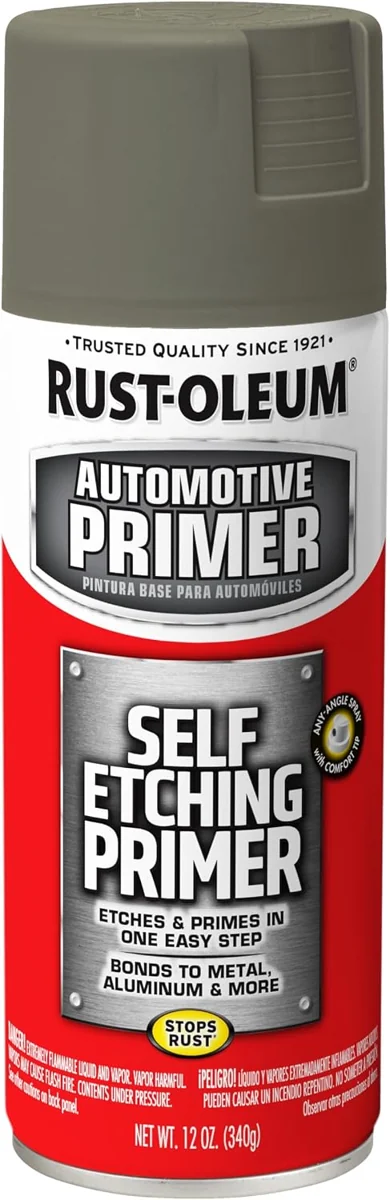
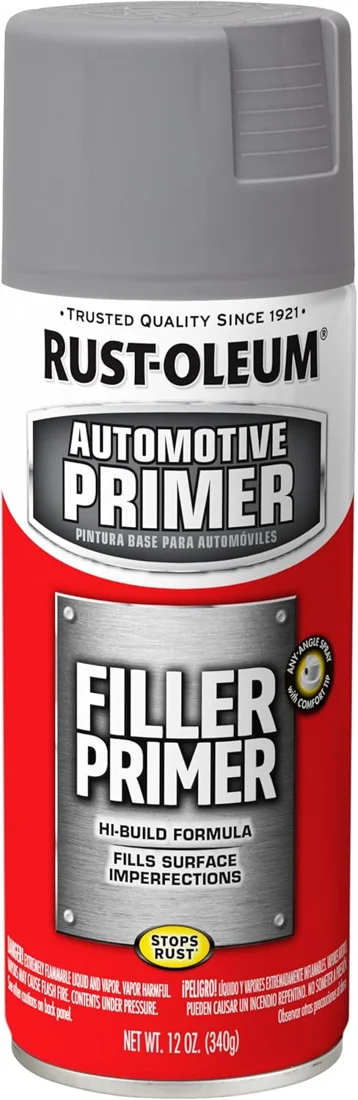
I bought Rust-Oleum Self-Etching Primer as part of my camper van equipment.
Self-etching primer is one of the preparation products in my purchases, before the later color and finish coats.
Where it fits my build
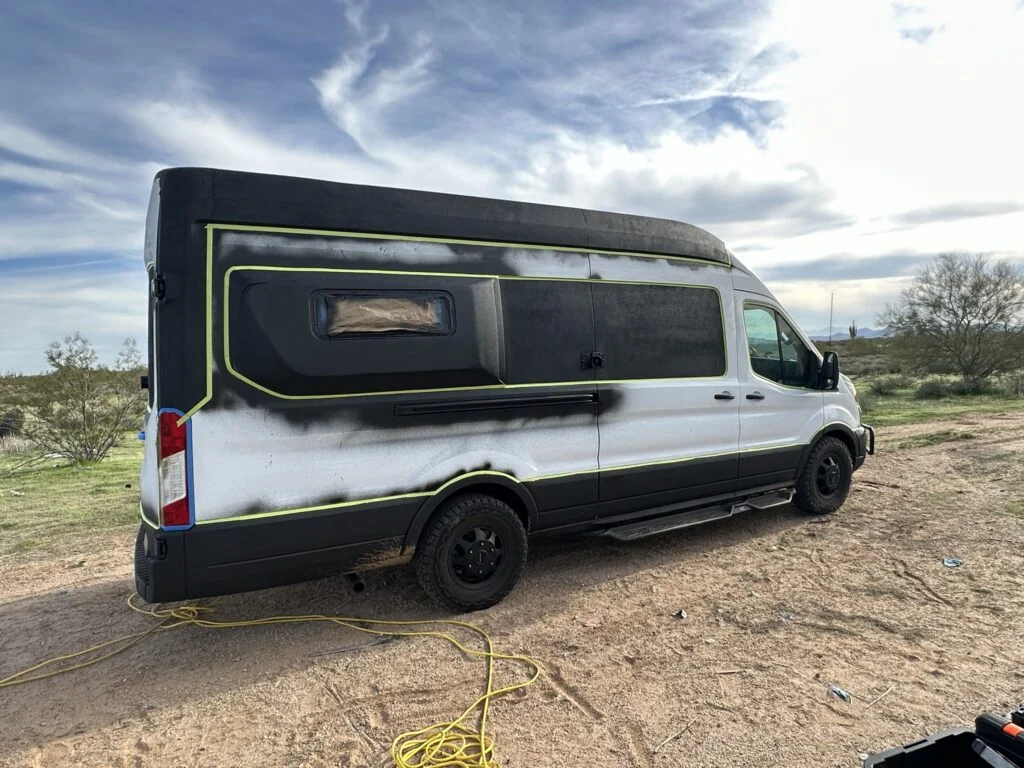
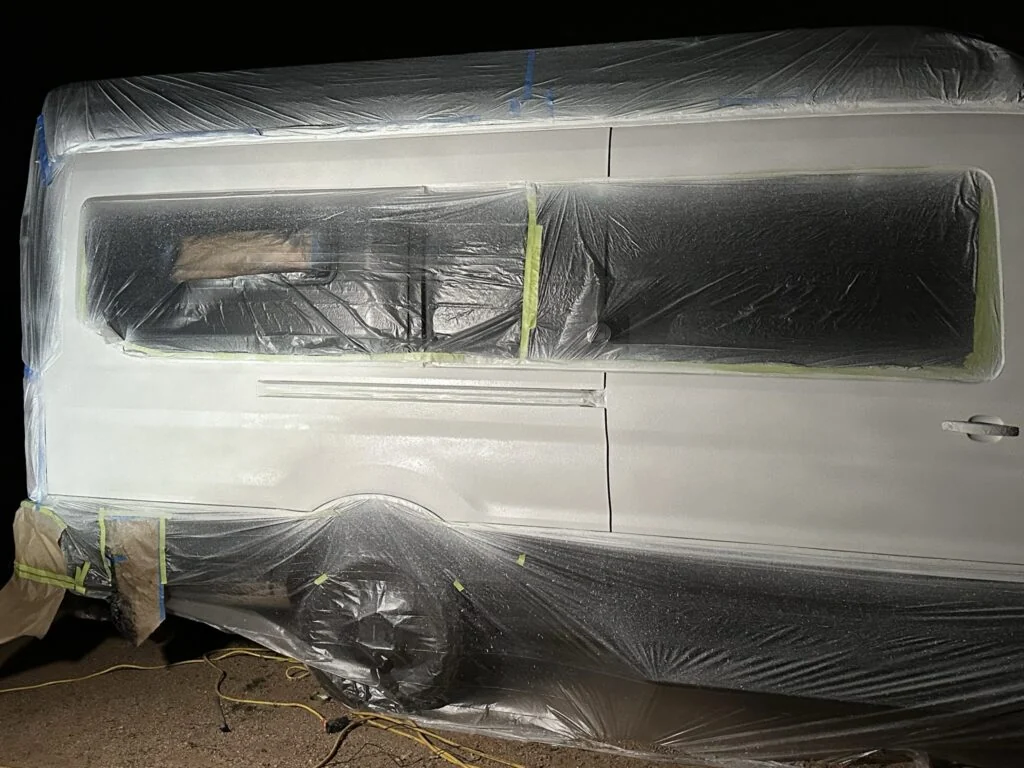
I taped the boundaries and covered the areas that would not be painted with plastic sheeting. I then sanded the exposed areas with an orbital sander and 60-grit abrasive, blew away the dust with a compressor, and cleaned and degreased the surfaces.
I mixed clear bedliner with white tint and sprayed the van. After it dried, I removed the masking. The tape and sheeting stage alone took around eight hours, and the finished edges still needed some touch-up.
My van with masking around the exterior areas prepared for coating.The side of the van during the white-bedliner project.
My build notes
The most useful detail in my diary is the result, including the problems. Rust-Oleum pooled and dripped in places, and trying to repair one area with a paintbrush made it worse. I wrote that I would use a foam roller for touch-ups and preferred the more consistent finish I had obtained with RAPTOR.
Masking, preparation and application method each became a substantial part of the exterior-coating job.
Alternative products
Two alternatives to compare
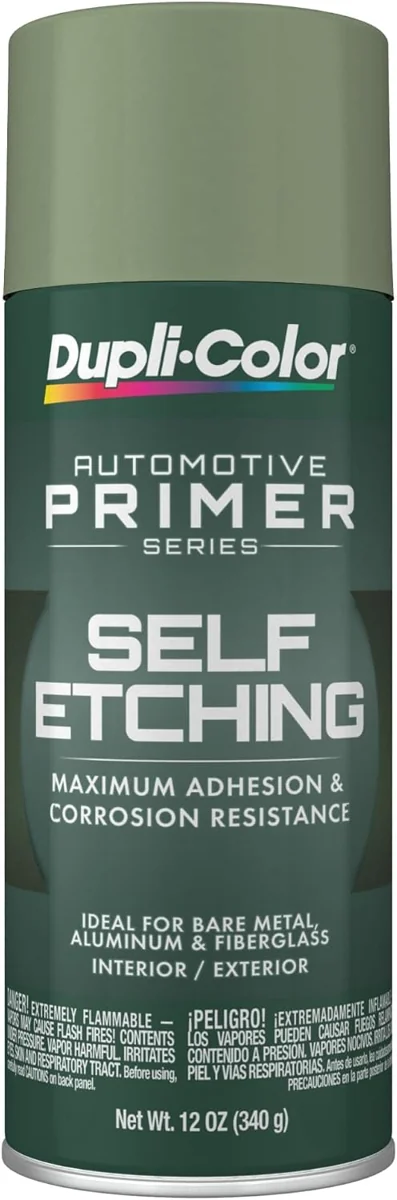
Dupli-Color offers another self-etching primer. Rust-Oleum's filler primer focuses on building a sandable surface, a different role in the preparation sequence.
Dupli-Color Self-Etching Primer
This green aerosol is a self-etching automotive primer. The spray can combines surface preparation and primer application in one product.