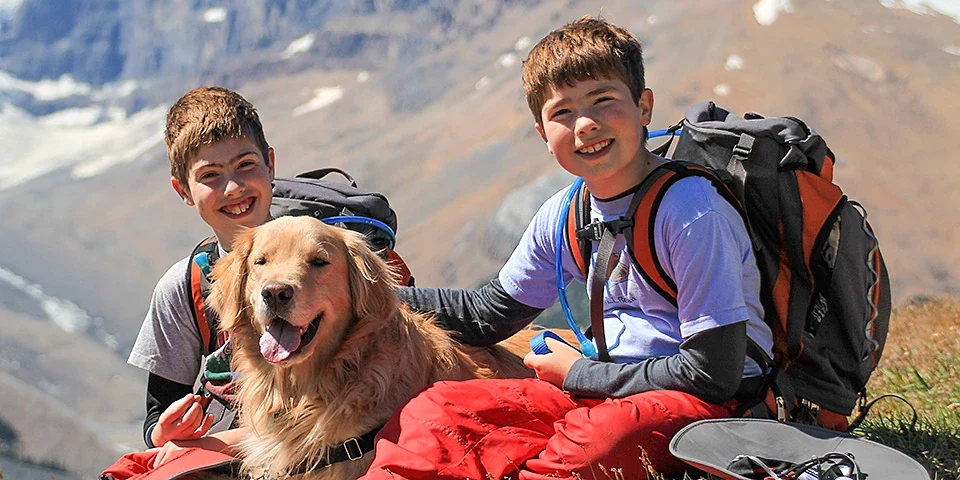
I bring my dog camping with the van, so she belongs in the plan from the beginning. Her resting place, food, water and movement through the entrance are part of the living arrangement. I would work through those ordinary activities before treating the remaining floor as spare space for another container.
My camper is a 2023 Ford Transit 250 high-roof extended conversion. The build gives me a real interior to think about: a bed area, computer area, butcher-block countertops and aluminum-extrusion enclosures with black and gray carpet. This guide connects that shared space to a practical camping day without turning it into a product comparison.
The result I want is a dog-inclusive trip card. It should connect the destination, the journey, the entrance routine, supplies and the return home. That is a different job from selecting a tracker or another individual item. The dog needs a place in the whole day.
Start With A Day You Actually Want To Share
I would write the trip in order: prepare, travel, stop, arrive, settle, eat, go out and return to the van. For each stage, I would include what my dog is doing alongside me. This makes her part of the itinerary rather than an extra packing category added after the activities are chosen.
I would begin with familiar activities and a manageable route. The first planning question is whether the day suits both of us, not how many destinations fit on the map. An attractive itinerary can become awkward when its main activities leave the dog's part of the day unanswered.
I would also note the ordinary transitions. Getting a bag from a compartment, opening the sliding door and putting groceries away can change where we both need to stand. These small movements deserve attention because they happen repeatedly. A practical shared routine is built from them rather than from a single posed campsite photograph.
Choose The Destination With The Dog Included
Before relying on a destination, I would check the actual site's pet information and the areas we intend to use. Permission at a campground does not automatically describe every trail, building or activity nearby. The relevant question is whether the planned day works in the places we can actually go together.
The National Park Service's camping-with-pets page directs visitors to park-specific rules and notes that access can differ across areas. I would keep the current destination's instructions with the trip card. That lets me choose suitable activities before arriving rather than reorganize the day at the entrance.
I would record the source and when I checked it, along with any unresolved question. If an activity does not include my dog, it needs a separate workable arrangement or a different choice. The plan becomes clearer when those decisions are made explicitly instead of hidden behind a general pet-friendly label.
Make A Journey Plan With Useful Stops
I would identify stops that serve an actual purpose for both of us. A travel day includes more than reaching the campsite; it also includes breaks, food, water and opportunities to reset the interior. I would keep the route flexible enough to respond to the day rather than treat every pause as lost progress.
For each planned stop, I would consider the arrival and return sequence. Which items need to be reachable before the door opens? Where do they go afterward? A stop becomes easier when the everyday supplies are available without unloading the belongings that are meant to remain packed.
I would avoid attaching a universal stop interval to every dog and journey. The useful plan reflects my dog's routine, the conditions and the actual trip. I would keep observations from the day so the next route can be organized around what worked rather than copied from someone else's timetable.
Give The Resting Place A Real Footprint
I would mark the resting place with the van in its ordinary living state. That means the furniture, storage openings and daily belongings are represented too. A space that appears available in an empty van may be the same space needed to open a drawer or move between the bed and entrance.
I would check the position during more than one activity. Can I reach clothing while she rests? Where do my feet go when I sit? Does preparing food require asking her to move every time? These are concrete layout questions, and the answers may suggest a different location before any new furniture is considered.
The usable-space guide provides the broader measurement approach. Here I would add the dog's occupied area and the paths around it. The point is to make room for a living companion, not draw another storage rectangle and assume the movement will take care of itself.
Keep Travel And Campsite Arrangements Separate
The arrangement used while traveling and the one used while settled are different states. I would identify each clearly and follow the actual vehicle and equipment instructions relevant to the travel setup. A comfortable campsite location does not establish a suitable travel position by itself.
I would record which items move when the van changes state and where they go. A bowl, a loose bag or a resting item may need a different location before departure. The same objects need to return to their usable places after arrival without blocking the entrance or the first task of the evening.
This is also where I would keep the packing sequence practical. If the dog-related supplies are buried behind the final travel load, the first stop becomes a complete unpacking exercise. I would arrange the frequently needed items around the journey rather than only around the campsite.
Rehearse The Entrance Routine
The entrance is a shared workspace. I would rehearse reaching the items needed for the next activity, opening the door and returning inside. The sequence should be clear enough to repeat when I am also carrying a bag or dealing with ordinary travel belongings.
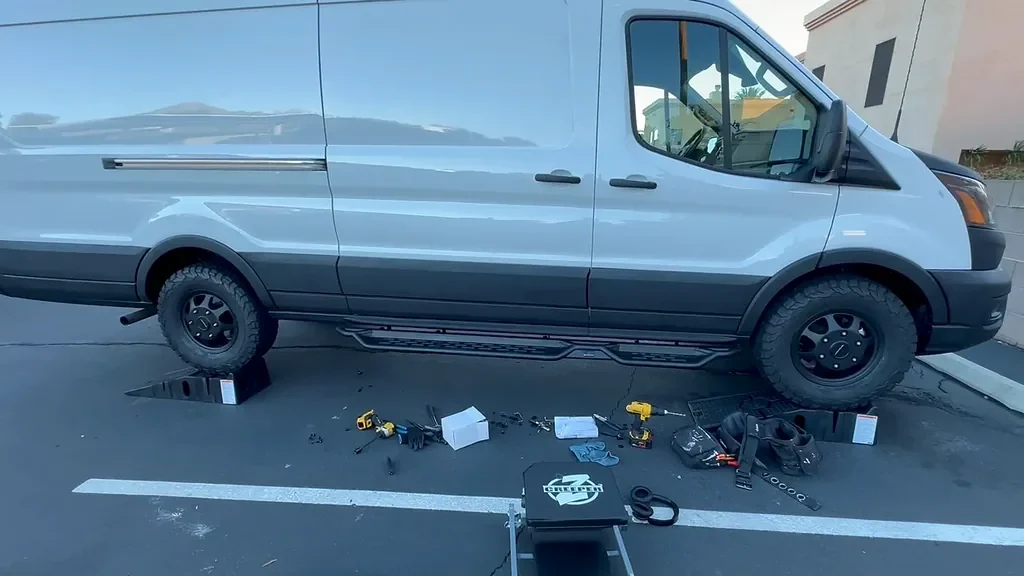
I would identify where each item rests during the changeover. A lead or towel needs a location before use and after use. A temporary hook or compartment is helpful only when it remains reachable in the actual packed state. The routine should not depend on a surface that is already occupied by another task.
I would then rehearse the return after a walk. This adds the used items and any dirt or moisture to the sequence. It is often the return that reveals the missing step: nowhere to put something down, a blocked cleaning item or an occupied resting place. Those findings make the next revision specific.
Give Food Supplies A Complete Cycle
I would plan food from storage to serving and cleanup. The supply container, serving items and any partly used package need defined positions. The goal is to make a normal feeding routine understandable without spreading several unrelated objects across the kitchen and entrance.
I would keep the actual food requirements with the dog's existing care information rather than invent a general quantity for every trip. The travel plan can record what is packed, how it is checked and when replenishment is needed. That is enough to connect the supply to the itinerary.
My longer-trip resupply method connects this cycle to the next supply stop. The storage-zone guide handles the locations: give each group a normal home, a retrieval route and a clear reset after use. Together, those records keep the food routine connected to both the trip calendar and the actual living space.
Place Water Where The Routine Works
I would decide where water is carried, where it is offered and what happens afterward. These are related but different positions. A serving location may need to remain available while I am cooking, moving through the interior or preparing to leave.
I would rehearse the task with the actual items and normal belongings present. If reaching water requires shifting a daily storage group, that relationship deserves a change. The useful result is an accessible routine, not a claim that the largest possible container is always the best arrangement.
I would record replenishment alongside the rest of the trip supplies. That keeps it from becoming an assumption hidden in the packing list. The relevant quantity and timing belong to the actual dog and journey; the layout plan handles where the items go and how the task is completed.
Keep Walking Items Together
The items used for an ordinary outing should have a predictable home. I would place them near the entrance routine without allowing them to become a loose collection in the aisle. The location should work before departure, during a short stop and after returning to the campsite.
I would separate ready items from things waiting to be cleaned or dried. An item used on a muddy walk may need an intermediate position before it returns to storage. Naming that position prevents the next outing from beginning with a search through damp or mixed belongings.
I would keep the group limited to what I actually use. A collection of possible accessories can make the simple task harder if the necessary item is buried among them. The routine should become easier to repeat as the packing list becomes more specific.
Design The Return From A Wet Or Dirty Walk
I would work through the return in order: enter, deal with the immediate mess, put used items in their waiting positions and restore the resting space. The sequence needs somewhere for me to stand and somewhere for the dog to be while each part happens.
I would put cleaning items within the actual reach needed for that task. A towel stored beneath the occupied bed may be technically inside the van but unavailable at the moment it is needed. The right position is the one that fits the return routine with the rest of the interior in use.
This task also connects to the flooring-layer guide and the broader storage plan, but it does not require redesigning the entire floor. I would first identify the repeated handling problem. A clearer temporary location or a changed entry sequence may be the smallest useful improvement.
Include The Dog In Meal And Work Periods
A shared interior has overlapping activities. I would check where my dog rests while I prepare food, sit at the computer or use the bed area. The aim is to avoid repeatedly assigning the same patch of floor to both her and the task I am trying to complete.
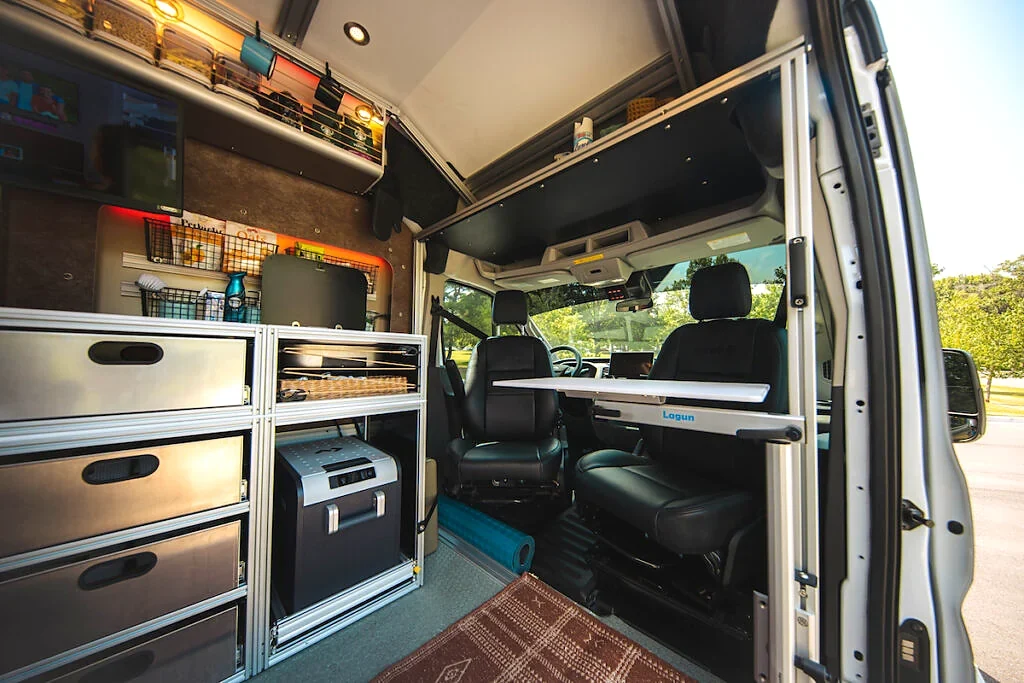
I would follow the actual openings and movements. A lower compartment might need to open into the resting position, or a chair movement might use the same space. These are useful observations because they identify a relationship I can change. They are more actionable than saying the van feels crowded.
The galley workflow shows how I follow a meal from storage to cleanup. Adding the dog's position to that sequence makes the shared-space check complete. I would do the same for the workday and evening routine instead of assuming one arrangement suits every activity.
Keep Campsite Movement Consistent With The Actual Rules
I would use the destination's current requirements to plan how we move around the campsite and nearby areas. The NPS pet guidance includes leash and restricted-area considerations. The actual park information belongs in the trip record, because a routine used elsewhere does not establish permission at the next stop.
I would keep the relevant items ready before beginning the outing and identify where they return afterward. This connects the destination's requirements to a usable physical routine. It avoids treating the rule check as a separate administrative task that has no effect on the way the van is packed.
I would also plan the activities around the places we can use together. A shorter itinerary that works for both of us may be more useful than a longer list built around exclusions. The dog is part of the trip, so the destination choice should reflect that from the beginning.
Use Familiar Routines As The Starting Point
I would carry over the parts of the ordinary day that are already clear and practical, then adapt their locations to the van. Familiar feeding, walking and resting patterns give the planning exercise a concrete starting point. I would not change every routine at once simply because the setting changes.
I would note where the van creates an extra step. A supply may need a more accessible location, or a return from outside may require a temporary waiting area. Those are the first things I would test. The aim is to preserve a workable routine while making its physical arrangement fit the smaller space.
I would keep observations about my dog separate from general claims about all dogs. What she prefers or how a particular day goes belongs to that actual experience. The guide's planning method helps organize the questions without inventing a universal behavior or a guaranteed outcome.
Make A Dog-Inclusive Packing Check
I would review the complete day and confirm that the items needed at each stage are present and reachable. The check should include the journey, campsite routine and return home. It is more useful than counting a category called dog gear without connecting it to any activity.
I would identify the location of each essential group and the point when it is checked. Food can be reviewed during resupply, walking items during the entrance reset and used items before departure. Spreading the checks across the routine makes them easier to complete than one long list at the last minute.
I would also include the things that come back in a different state. Used towels, empty packaging and partly used supplies need destinations at home or on the next leg. The trip is not complete when the van reaches the driveway; restoring the arrangement makes the following departure easier.
Work Through A One-Night Planning Example
For an example, I would choose a destination where the intended dog-inclusive activities have been checked, then plan arrival, an outing, dinner and the next morning. These are example stages rather than a record of a specific campsite visit. Their purpose is to show how the shared-space plan connects.
At arrival, the walking items are reached before other luggage is rearranged. After the outing, used items go to their waiting locations and the resting area becomes available. Dinner is prepared with that area occupied, so the cupboard and aisle checks reflect an actual shared evening.
The next morning, I would reverse the necessary movements and check the travel state. If a supply or resting item blocks departure, I would adjust its place or timing. The example is useful when it produces a specific revision rather than a general conclusion that a larger van is needed.
Keep A Short Observation Record
After a trip, I would write what worked, what needed repeated handling and what I would change before the next departure. A few specific notes are enough. The record should explain the task and its location rather than make broad claims from one day.
I would include positive findings too. An entrance routine that works, a resting location that remains available and a simple supply cycle are worth preserving. Otherwise, the next change may solve one inconvenience while disturbing an arrangement that already suits both of us.
I would connect a photograph only when it helps explain a real issue. An image of the occupied floor and open compartment can show a conflict clearly. A general van photograph may be attractive but does not establish what happened during the routine. The evidence should serve the next decision.
Choose The Smallest Useful Improvement
I would begin with the recurring inconvenience that has the clearest cause. A moved supply location, a smaller ready group or a better return sequence can be tried without rebuilding the interior. That gives the next trip a useful comparison and keeps the work focused.
If a built change is still needed, I would carry the actual task into the mockup. The dog's occupied space, my standing position and the necessary opening should all be represented. This makes the design brief more precise than adding a general pet compartment and hoping it resolves the shared-space problem.
I would preserve the distinction between a planning improvement and a tested product result. A new arrangement can be described honestly after it has been used. Before that, it remains the next version to try. The practical goal is a day that works for both of us with less unnecessary rearranging.
Make The Return Home Part Of The Plan
I would include the final unpacking in the same trip card. Food supplies need their next location, used items need their cleaning stage and the everyday walking group should become ready again. Returning home is another change of state, not the moment every item becomes someone else's problem.
I would begin with the things that affect the next ordinary day. If the usual walking items are still buried in the travel load, the camping arrangement has created extra work after the journey. Keeping that group accessible makes the return easier to complete without unloading every compartment at once.
I would then review the quantities and locations that changed during the trip. The record might show that a supply was awkward to reach or that a temporary bag repeatedly occupied the resting place. Those are specific findings for the next packing version. I would not turn one trip into a general claim about every dog or camper.
The next trip should begin with a known ready state. I would identify the few items that need replenishment or attention and give each an actual next action. A vague note to sort dog gear leaves the job open; a clear note identifying the item and task makes it possible to finish.
Finally, I would preserve the arrangement that worked well. A useful resting location and a simple entrance routine should remain the baseline while one problem is changed. That keeps the improvement focused and avoids repeatedly rebuilding a shared routine that already suits us.
Questions About Camping With A Dog In A Van
Where Should The Dog's Space Go?
I would start with an actual resting footprint and check it during meals, work, sleep and entry. The useful location remains workable while ordinary activities happen around it. A space that exists only in an empty van does not complete that check.
Should I Add Dedicated Storage First?
I would first follow the supplies through their complete routines and identify the repeated problem. The answer may be a more accessible location or a clearer used-item stage. Dedicated storage is useful when it serves a known task, rather than simply giving the packing list another compartment.
What Makes The Trip Plan Ready?
For me, the destination works for the activities we intend to share, the journey includes usable stops and the ordinary entry, feeding and resting routines have clear places. I would keep unresolved details visible and choose the next manageable trial. The dog belongs in the plan for the whole day, not just the departure photograph.