A longer camper-van trip changes the job of the storage system. The first load is only the beginning. Food comes in, clean clothes become used clothes, containers change state and the next stop rarely has exactly the same arrangement as the previous one. I would plan those cycles before trying to carry enough supplies for every possible day.
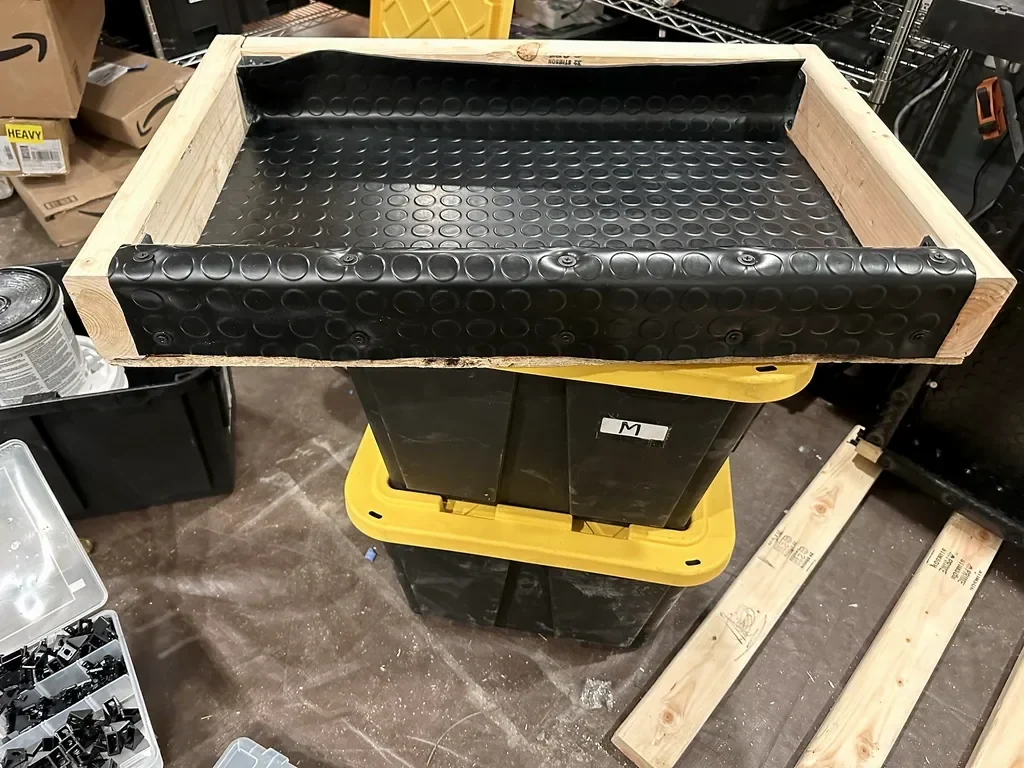
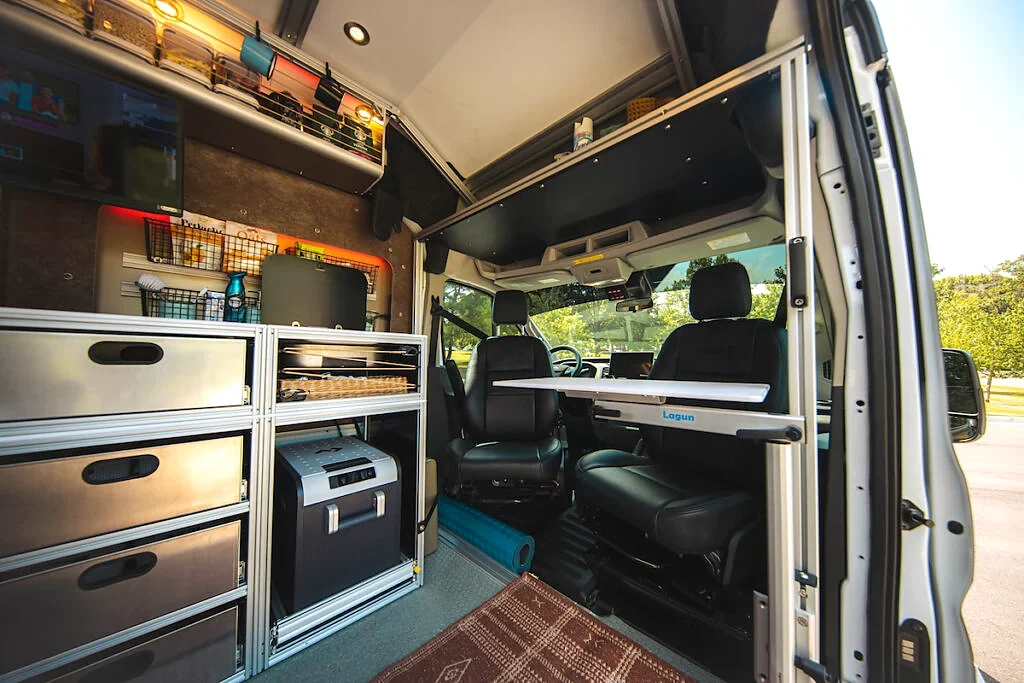
My Transit build gives me a useful physical starting point. It has aluminum-extrusion enclosures, carpeted lining, a bed area and butcher-block countertops. I have also worked through removable baskets and a separate drawer mockup. Those projects keep the question concrete: what has to move when something is added, retrieved or put back?
This guide is about resupply during an extended trip. The storage-zone guide handles where belongings live, and the weekend conversion plan defines a smaller first setup. Here I would connect the supplies, stops and repeated handling into a working cycle.
Start With The Services You Actually Use
I would list the tasks that require something outside the van. Groceries, laundry, water replenishment, disposal, deliveries and vehicle-related errands can all appear in the plan, but their relevance depends on the actual setup. I would begin with my own required tasks rather than copy a universal list.
For each task, I would write what leaves the van, what returns and what condition marks it complete. A grocery stop ends when the purchases are stored, not when payment is finished. A laundry stop ends when clean items are back in their locations and the used-laundry container is ready for another cycle.
That definition helps expose the work around each stop. Parking, carrying, sorting, waiting and repacking may take more effort than the main transaction. Recording the whole task gives me a useful basis for changing its timing or combining it with another errand. It also prevents an optimistic itinerary from hiding repeated chores.
Separate Trip Length From Supply Interval
A month-long journey does not automatically require a month of every consumable in the van. I would distinguish total trip length from the interval between usable supply points. That interval belongs to the actual route, the facilities I can use and the way I intend to spend the days.
I would start with a short, understandable interval and record how it works. If a particular supply is easy to obtain along the route, carrying a much larger quantity may only occupy useful space. If access is uncertain, the plan needs a deliberate reserve or a different route. The decision should be tied to a named requirement.
I would keep quantities personal and observed. Someone else's number of independent days does not establish mine. The useful record contains what I started with, what activities occurred, what remained and when I replenished it. After repeated cycles, I can adjust the interval using my own setup and habits.
Make A Supply Register That Can Be Updated Quickly
My supply register would group items by the action they support: meals, washing, clothing, cleaning and other recurring needs. Each entry would have a normal location, a check method and a replenishment trigger. The register should help me make a decision without opening every compartment.
A trigger can be simple and visible. It might be reaching the final unopened package or filling the available used-laundry container. I would choose a method that works with the actual item rather than force everything into a numerical estimate. The important part is noticing early enough to plan the next useful stop.
I would avoid tracking every small object just because a spreadsheet can hold it. The register should focus on things that repeatedly affect the route or the living arrangement. If an entry never changes a decision, I would simplify it. The system needs to reduce checking effort rather than become another daily chore.
Give Incoming Purchases A Landing Area
Before shopping, I would clear a temporary landing area for the bags and supplies coming back. This is different from their final storage locations. It gives me somewhere to sort the load without immediately covering the bed, the only seat or an item I need to reach.
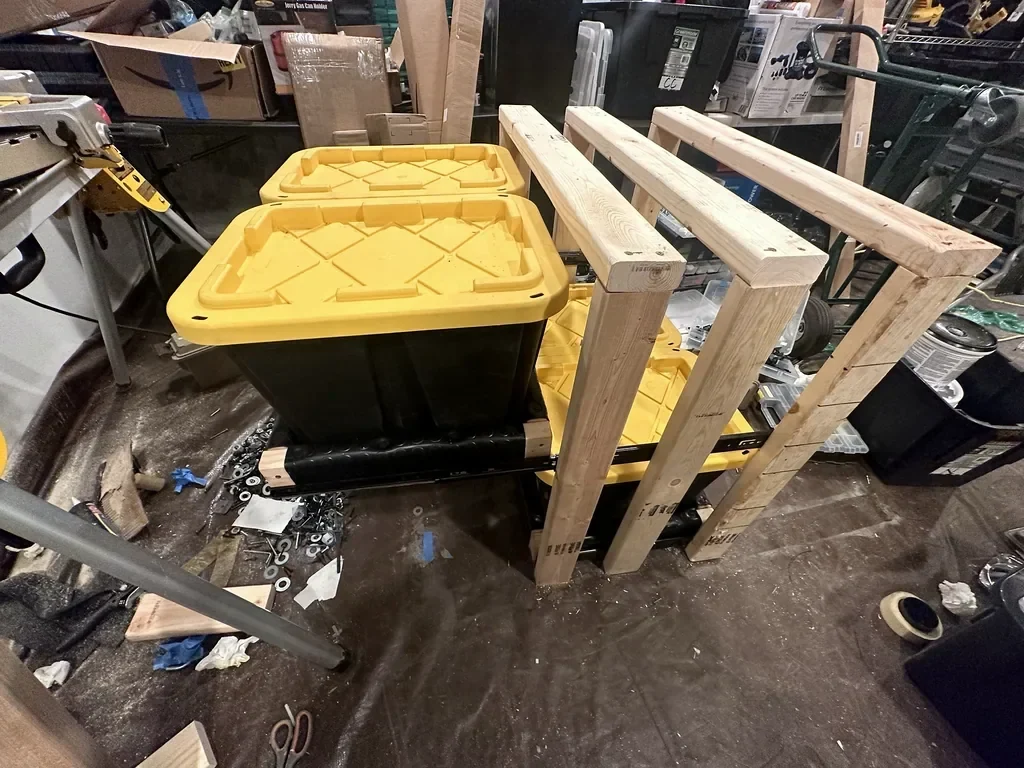
The landing area should be checked with the van in its normal daytime state. I would include the door opening and where I stand while carrying things inside. A surface that works only when another major item has been removed is not an available landing area during an ordinary stop.
I would also define how the area returns to its usual job. A counter used for sorting groceries needs to become usable for the next meal. The resupply task is complete when packaging is dealt with and the temporary surface is clear again. That small endpoint keeps each incoming load from becoming permanent clutter.
Shop From The Actual Storage Envelope
I would check the available spaces before choosing package sizes. The outside dimensions, access opening and way the contents are used all matter. A larger package may have a lower unit price but still be inconvenient if it blocks a frequently used compartment or requires repeated decanting into another container.
I would compare the complete handling routine. Does the package fit where it will be stored? Can it be removed when other supplies are present? Where does the partly used portion go? A purchase that looks efficient on the shelf can add work every day if its storage arrangement has not been considered.
For the trial cycles, I would keep a note of awkward packages and useful sizes. That creates a practical shopping preference based on the van's actual space. It is more helpful than selecting every container before knowing what it will hold. The supplies and the compartment should be developed together.
Plan Meals In A Repeatable Rotation
I would begin with familiar meals that share ingredients and fit the way I intend to cook. The goal is a manageable supply pattern rather than an elaborate menu that introduces several new tasks. I would include simple meals for an arrival evening and a day when the planned stop takes longer.
The rotation should account for leftovers and partly used ingredients. I would identify the next use before adding another package to the shopping list. This reduces the number of unrelated items competing for small storage spaces and gives the resupply register a clearer purpose.
My kitchen workflow guide follows ingredients and utensils through preparation and cleanup. Here I would add the interval between shopping trips. A meal that works physically in the galley may still be awkward if it depends on an ingredient I can obtain only at an inconvenient point in the route.
Keep Food And Packaging In Different Stages
I would draw the food cycle as incoming purchases, stored supplies, meal preparation and outgoing packaging. These stages need places at different moments. Treating all of them as one kitchen footprint can leave no room for the temporary material generated by an ordinary shopping trip.
I would give empty packaging a clear destination while putting supplies away. If it needs to remain until a suitable disposal point, its temporary position belongs in the plan. I would not assume it disappears because the counter looks clear in the finished-layout photograph.
The same principle applies to reusable containers. An empty container waiting to be cleaned or refilled is in a different state from a ready-to-use one. Keeping those states distinct makes it easier to see what is available and avoids filling the van with objects whose next action has not been decided.
Observe Water Use In Complete Cycles
For water, I would record the actual starting condition and the tasks performed before replenishment. Drinking, cooking and washing can change with the route and daily routine. I would keep those activities with the observation rather than reduce the result to a number detached from how the van was used.
I would also record the replenishment operation itself: where the necessary items were stored, how they were reached and what had to be put away afterward. The water-tank placement guide handles the physical layout. This resupply record checks whether access remains practical when the van is loaded for a longer trip.
I would use the results to choose a repeatable check point. The purpose is to make the next stop deliberate, not to stretch an interval for its own sake. If a route change alters the available facilities, I would update the plan before assuming the previous cycle still applies.
Give Laundry A Return Route
Used clothing needs a location that can fill gradually without displacing everyday belongings. I would choose that position as part of the cycle, then check how the contents leave the van. The container, carrying route and laundry supplies should be reachable at the time the task is normally done.
Clean clothing needs an equally clear return route. I would decide where sorting and folding happen and how the finished items get back into their normal locations. A laundry stop that ends with bags sitting on the bed has not yet restored the living arrangement.
I would record what actually determines the interval. It may be available clothing, the used-laundry space, the route or a preferred facility. That makes it possible to change the right thing. Adding more clothes will not necessarily improve a routine whose main problem is an awkward carrying or sorting arrangement.
Keep Wet And Used Items Out Of The Ready Supply Count
A towel that is still drying and a clean towel ready to use are different resources. I would reflect that in the packing plan instead of counting every carried item as immediately available. The same applies to clothing and reusable kitchen items that are between use and cleaning.
This is a location problem as much as a quantity problem. I would identify where an item waits, how it returns to service and whether it interferes with another task during that period. Carrying an extra item may help, but it should not conceal the absence of a workable reset routine.
I would use a simple ready, in-use and waiting distinction for the few items that repeatedly matter. There is no need to label the whole van. The point is to avoid reaching for something assumed available and discovering it is still tied up in the previous cycle.
Combine Stops Only When The Sequence Helps
A grocery shop, laundry visit and collection errand may be close together, but combining them is useful only when their order works. I would consider what must be carried, where it waits and which task has a fixed collection time. A neat map route can still create an awkward van full of unsorted bags.
I would write the sequence before committing to it. For example, a planned laundry wait might provide time for another nearby task, but only if the return and collection arrangements fit. I would keep the plan tied to the actual facilities rather than assume the same combination is available in every town.
I would also leave a task separate when that makes the day easier. Efficiency is not simply the fewest stops. It includes the handling work, waiting and disruption to meals or work. The useful combination is the one that returns the van to a normal living state with less repeated effort.
Check Destination Facilities Before Depending On Them
The National Park Service's before-trip planning page points visitors toward current destination information, including conditions and relevant facilities or requirements. I would use the actual destination's information to confirm the resources my route depends on. A general campsite description does not complete that check.
I would save the source, the date checked and the specific question it answers. If the plan depends on a collection point or facility opening at a particular time, that detail belongs beside the itinerary. I would keep an unresolved entry visible instead of replacing it with a likely assumption.
This record should stay small. I would focus on the facilities needed for the next cycle and update it as the route develops. The goal is a usable plan, not a permanent directory of every possible stop. Current, relevant details are more useful than a large list that nobody revisits.
Plan A Reserve Around A Defined Disruption
I would define what the reserve is intended to cover: a delayed shopping stop, an unavailable laundry visit or a route change. Then I would identify which supplies or arrangements support that specific delay. This makes the reserve a decision rather than an unexplained collection of extra items.
I would keep it accessible and recognizable. If reserve supplies are mixed into everyday stock without a check method, I may not notice when they have already been used. The resupply register should show how the normal supply and the reserve relate, using a method appropriate to the actual items.
After using part of the reserve, replenishing it becomes a named action. I would not let the next cycle begin with the plan still assuming a full reserve. A small reset step at the end of the stop keeps the record aligned with what is actually in the van.
Use A Stop Card Instead Of Rebuilding The List
My stop card would contain the reason for the stop, the items leaving, the items returning and the final reset. It could be a short note on a phone or a printed sheet. I would choose whichever is easiest to use with the actual task and available connection.
The card would include the supplies to take from the van before leaving it. That avoids reaching the facility and realizing a necessary item remains behind another compartment. It also makes the return clearer because I know which containers and equipment need to come back.
I would revise the card after a repeated inconvenience. If a particular carrying step is consistently forgotten, it belongs on the card. If a listed check never affects the task, it can be removed. The aim is a dependable reminder that fits the real routine, not a checklist made longer for appearance.
Record Costs Without Mixing Them With Build Purchases
I would keep recurring supplies and facility costs separate from one-time equipment bought to improve the routine. The first tells me about the operating cycle; the second is a build or setup decision. Combining them makes it difficult to compare one week with the next.
I would add a short context note to an unusual stop. A larger grocery purchase may cover a longer planned interval. A delivery-related journey may be exceptional. Those differences should remain visible when reviewing the record rather than being flattened into an average that suggests every day was similar.
For the build side, I would use the conversion-cost planning guide. For the trip side, I would compare complete cycles with similar purposes. That helps identify whether an improvement changes spending, handling or timing, and whether the result is worth keeping.
Work Through A Two-Stop Example
For a planning example, I would define a first stop for food and a second for laundry later in the week. I would list the storage state before each, the items carried out and the incoming load. These are example arrangements, not a record of an actual trip or measured consumption.
At the food stop, the landing area is cleared before bags arrive. Supplies are sorted into their normal positions, packaging is assigned its next destination and the remaining inventory is checked. At the laundry stop, used clothing leaves through a known route and clean clothing returns directly to its compartments.
Then I would add a change: the second stop moves a day later. I would examine which items are affected and whether the reserve or clothing rotation covers the new interval. The example produces a specific question rather than a vague claim that the van needs more storage.
Improve The Repeated Bottleneck First
At the end of several cycles, I would look for the operation that repeatedly interrupts the routine. It may be one compartment, a carrying route or a stop scheduled at an awkward time. I would name that bottleneck before buying equipment or changing the furniture.
My removable-basket experience is a useful reminder that a container's job matters. The fabric baskets I used eventually fell apart with tools and heavier contents. That is a documented observation about that setup. For travel supplies, I would likewise match the contents and handling to the chosen container rather than treat every storage opening as interchangeable.
I would change one relationship, repeat the cycle and compare the result. Moving frequently used supplies may improve the routine without adding capacity. A different shopping interval may reduce awkward incoming loads. The best improvement is the one whose effect can be described clearly in the next use record.
Keep The Resupply Plan Readable During Travel
I would keep the working version to the next useful interval. It would show the current supply state, planned stops, fixed opening or collection details and unresolved dependencies. Older observations can remain in the archive without cluttering the current plan.
I would also give the record a simple update point, such as after a completed stop. That is when the quantities, locations and next interval are easiest to establish. Updating only when something runs out turns the record into a history of surprises rather than a planning aid.
The result should be an arrangement I can explain without unpacking the van: what is ready, what needs attention and where the next cycle happens. That is the practical benefit of resupply planning. It keeps a longer trip from becoming a series of repeated packing jobs.
Keep One Example Of A Completed Cycle
I would save one completed stop card with the actual sequence and its result. It becomes a reference for the next comparable stop, including the carrying items, incoming load and reset. The card can be copied as a starting point while its location-specific details are checked again.
I would attach only the observations that affect the next decision. An unavailable facility, an awkward package or a useful carrying arrangement deserves a note. A complete diary of every aisle in the shop does not. The record should help me repeat the useful parts and avoid the known inconvenience without adding unnecessary administrative work.
When the routine changes, I would keep the earlier version rather than overwrite the evidence. A short revision note can explain the changed interval or storage location. That makes it possible to understand whether the new cycle actually reduced handling or simply moved the work to another part of the day.
Questions About Longer-Trip Resupply
Should I Carry More To Make Fewer Stops?
I would compare the whole tradeoff: the extra space, access, handling and the route I actually intend to use. Fewer stops can be useful, but a larger load is not automatically easier. The right interval is the one that supports the trip without making everyday access unnecessarily awkward.
What Should I Measure First?
I would begin with the supplies that repeatedly determine the next stop and record complete use cycles. A starting state, activities and replenishment point are more useful than a borrowed estimate. The record can stay simple while still showing why the interval worked or needed revision.
When Is The Plan Good Enough?
For me, it is good enough when a normal supply stop has a clear beginning and end, incoming items have places and the next interval is understandable. I would keep improving repeated problems without turning every errand into a project. The purpose is more time using the van and less time reorganizing it.