Moving into a camper van involves more than finishing the cabinets. The bed, kitchen and storage give the vehicle its living arrangement; the transition needs an operating plan that includes ordinary errands, commitments, belongings and places to spend time. I would test that plan before treating the conversion as a finished answer to full-time living.
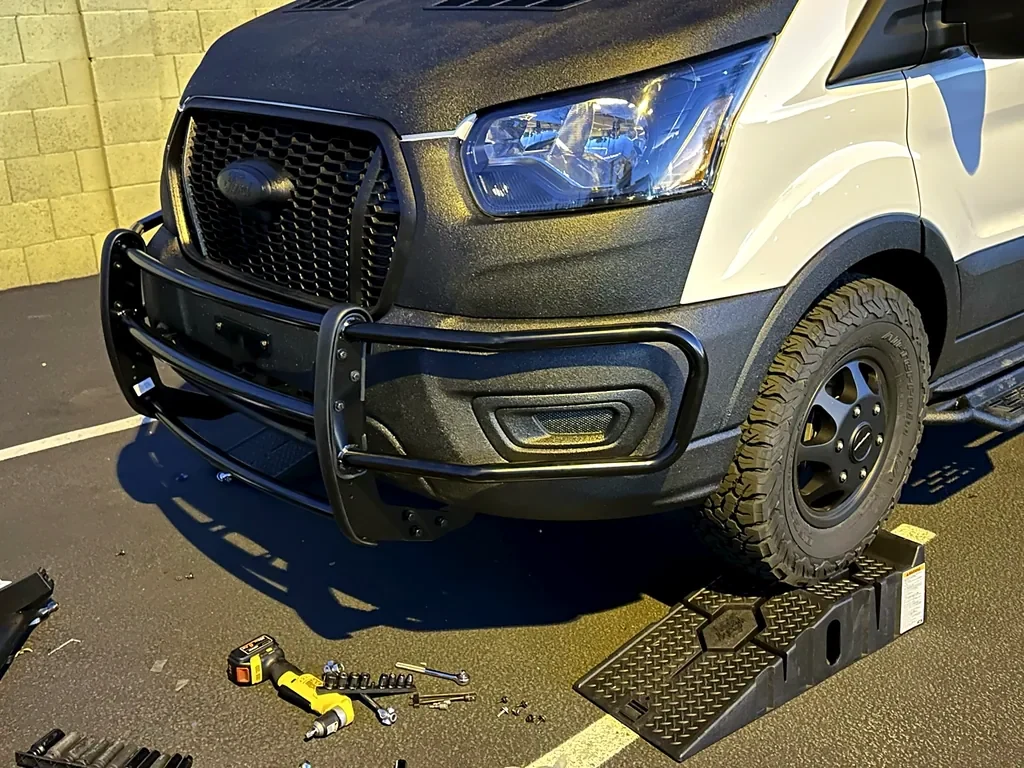
My own build is a 2023 Ford Transit 250 high-roof extended van. It uses aluminum extrusion, black and gray carpet, butcher-block countertops, a bed area and a computer area. Those are documented build choices. This guide takes the next planning question: how would I organize a trial month around the activities that have to continue when home becomes mobile?
The result I want is a practical transition record. It should show which routines work, which depend on outside facilities and which decisions remain open. That gives me something useful to improve instead of another shopping list.
Separate The Transition From Choosing The Van
My full-time camper selection guide focuses on choosing a layout that supports everyday activities. Here I would start after that shortlist, with an actual vehicle or a sufficiently detailed proposal. The question becomes how the arrangement works over repeated days, including the inconvenient ones.
I would keep the vehicle decision and the transition decision on separate pages. A van can meet the sleeping-space requirement while the plan for receiving a necessary delivery remains unresolved. Conversely, a workable travel routine does not make a cramped bed comfortable. Both decisions deserve their own evidence and neither should disappear because the other looks promising.
The trial should therefore have an explicit purpose. I would write that I am checking the operating routine, rather than claiming to test every season or every possible route. That keeps observations useful. A month spent near familiar facilities can answer real questions without being turned into proof of how the same arrangement will work somewhere else.
Choose A Representative Trial Month
I would choose a period that includes the kinds of days I expect to repeat: working, shopping, resting, traveling and staying in one area. A month made entirely from holiday activities would leave too many ordinary tasks unexamined. The trial needs enough normal life to reveal the recurring work of keeping the arrangement usable.
The calendar should include existing appointments and obligations before destinations are added. That could mean a day when a delivery is expected, a meeting that needs a quiet setting or a commitment that fixes the return location. These are planning entries, not reasons to abandon travel. They define the conditions the routine has to accommodate.
I would also choose what stays available outside the van during the trial. Access to a previous home, stored belongings or a familiar workspace changes the experiment. I would note that support rather than silently treating the month as fully independent. The useful outcome is understanding which resources were used and whether I want them in the longer-term plan.
Write A Baseline Week
Before changing anything, I would write out one ordinary week as it currently happens. Where do groceries come from? When does laundry get done? Which tasks need a reliable connection? What belongings are used daily, and what sits untouched? The baseline helps distinguish genuine requirements from habits that can be changed.
I would record the task and its result rather than assume the current location must be reproduced. Washing clothes is a requirement; owning the same laundry arrangement may be a preference. Having a quiet conversation is a requirement; taking it at the exact same desk may be negotiable. Separating these makes the transition more flexible.
This baseline also gives the trial a fair comparison. A difficult afternoon in the van should be compared with the complete alternative, including travel, chores and time spent organizing a larger home. Equally, an enjoyable evening outdoors should not erase an unresolved work or storage problem. I would compare actual routines rather than idealized versions of either setting.
Define What Must Continue Uninterrupted
Some activities can move around the week, while others have a fixed time or consequence. I would identify those early and give them named arrangements. The plan might include a scheduled work call, a regular supply collection or a personal commitment. Each needs a location, the necessary resources and a fallback that I can actually use.
I would avoid the vague entry “handle online.” Instead, I would note which device, connection and documents are needed, how long the task normally takes and what would prevent it from happening. The same approach works for a physical errand: record the opening hours, access needs and the items that must be taken along.
Only the relevant result belongs in the shared travel plan. Personal account details, identification numbers and private records can stay in their existing secure locations. The transition checklist can simply say which task has been completed and what remains. That makes it easier to use without turning the planning document into a second storage place for sensitive information.
Give Mail And Deliveries Their Own Plan
I would list the kinds of mail and deliveries I actually receive, then identify how each will be handled during the trial. A parcel, an ordinary letter and a time-sensitive document may follow different routes. I would resolve the actual receiving arrangement before ordering something that depends on a particular address or collection window.
The USPS forwarding information distinguishes temporary and permanent changes and explains that forwarding does not update every sender's records. I would use that source for the current service details, then keep a sender checklist appropriate to my situation. A mail service is one part of the transition rather than an answer to every address-related task.
For the trial, I would note which items arrived successfully, which needed direct collection and which required a changed arrangement. I would keep delivery timing separate from travel ambitions. If an item can only be collected on a particular day, that constraint belongs on the calendar before the route is finalized.
Make An Inventory That Includes What Stays Behind
A van inventory should include both what travels and what remains elsewhere. I would group retained belongings by their next action: keep accessible, store for later, give away or decide after the trial. This prevents the vehicle from becoming a temporary holding area for every unresolved possession.
I would also measure the actual storage arrangement at home or elsewhere. A removable camper component still occupies space when it is not in the van. Personal belongings left behind need the same honest accounting. The transition is easier to understand when every retained group has a named location and someone knows how it can be reached.
I would delay permanent decisions that depend on the trial's result. An item that seems unnecessary before departure may become important during an ordinary workday, while something packed as essential may never be touched. The month should produce evidence about those choices. It should not require irreversible changes simply to make the experiment look complete.
Pack For Repeated Use, Not A Photograph
My build has taught me to think about how a compartment opens and how its contents come out. For a trial month, I would apply that to the things used every day. Clothes, food, bedding and work items need reachable positions when the van is occupied, not just when the floor is empty.
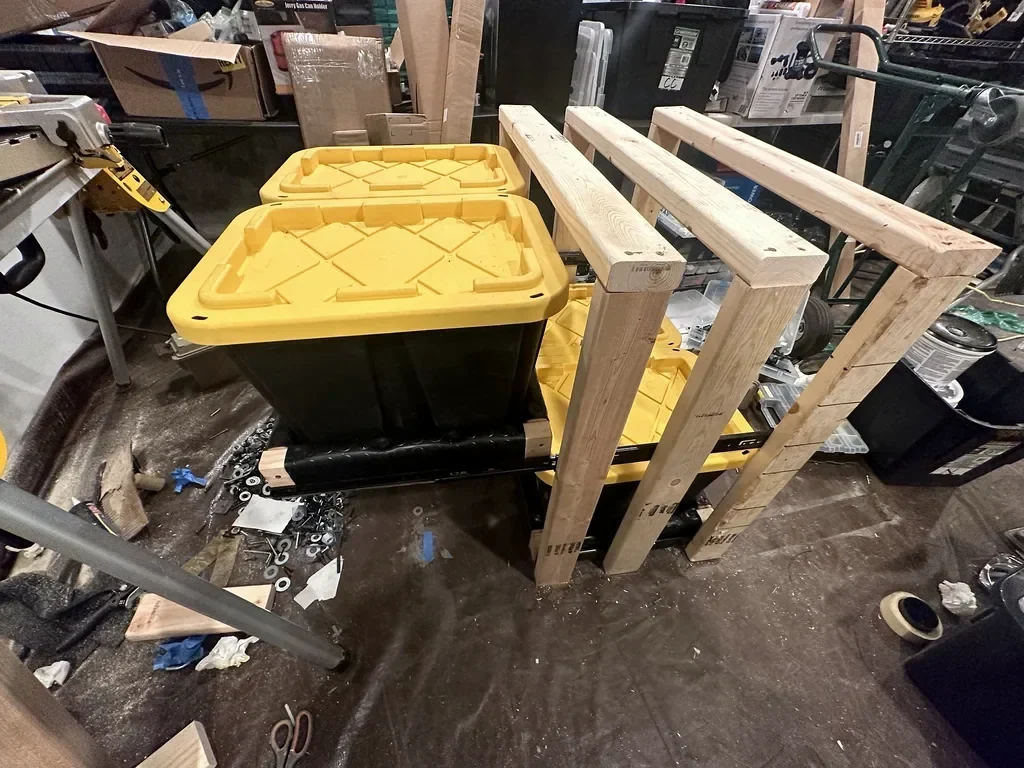
I would use the storage-zone guide for the physical locations, then add a use record during the trial. If the same bag moves several times a day, I would write down why. The answer may be a better location, fewer contents or a changed routine rather than another cabinet.
I would also leave room for the things acquired during ordinary life. Groceries, a parcel, used laundry and a wet coat all need temporary positions. A perfectly packed departure load can become awkward after the first errand if no space has been assigned to those incoming items. That is a transition issue worth discovering early.
Rehearse Arrival And Departure
I would rehearse arriving at a place, putting the van into living mode and returning it to travel mode. The sequence should include every object that changes position. A table, computer, loose container or bedding section needs a destination, and that destination needs to remain available when other tasks are happening.
The useful record is a short ordered list, not a performance target. I would note which steps were forgotten, which competed for the same standing area and which required something to be unloaded first. That gives the next revision a clear purpose. A faster routine is valuable when it results from fewer unnecessary movements.
I would repeat the rehearsal after an ordinary evening, with used dishes and normal belongings present. Departure from a staged interior can hide the work of restoring a lived-in space. The trial should show what happens after a real day, including the small items that otherwise get pushed into the nearest opening.
Plan Food And Resupply As A Cycle
Instead of packing an entire month's food, I would define a repeatable shopping and storage cycle. The cycle includes checking what remains, choosing meals, carrying purchases into the van and putting them away. A supply plan is useful when it connects the shopping trip to the available storage and the meals actually made.
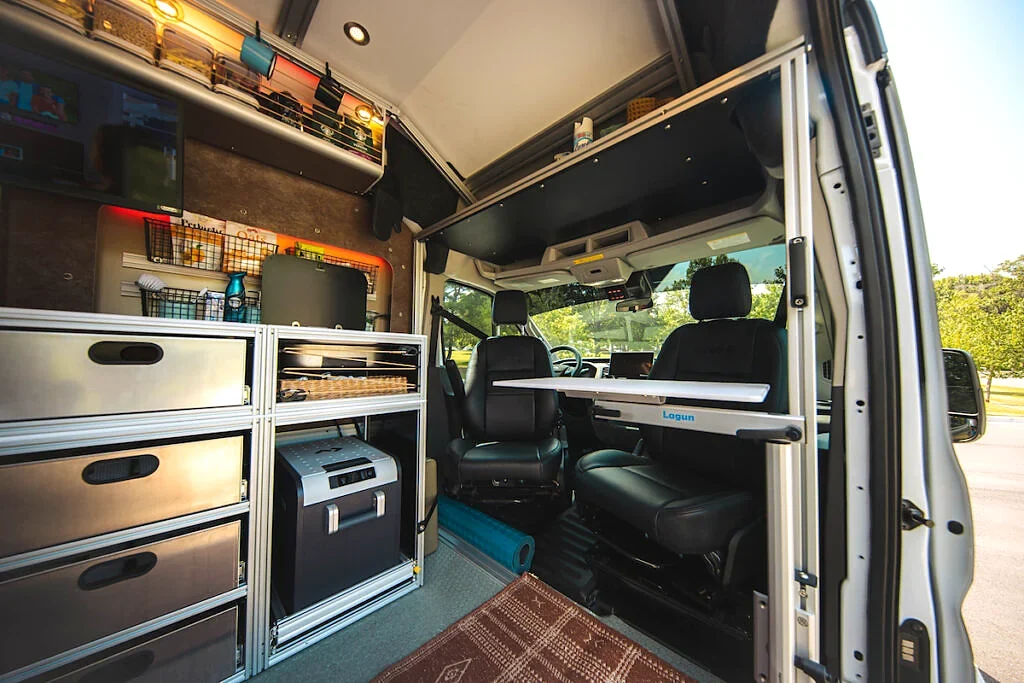
I would start with familiar meals and identify where the ingredients and utensils go. This keeps the trial focused on living with the arrangement rather than learning several new routines at once. After a few cycles, I could compare what was used, what occupied space unnecessarily and what repeatedly ran out before the next planned stop.
The galley workflow guide handles the kitchen movements. The transition record adds frequency and availability: how often I shopped, whether the stop fit the route and what changed when plans moved. Keeping those layers separate helps avoid redesigning the kitchen to solve a scheduling problem.
Record Water And Laundry Without Guessing Consumption
I would begin with an observation sheet rather than a promised number of independent days. The sheet would record the starting condition, activities, replenishment and any change in the routine. That creates a personal record for the actual setup instead of borrowing someone else's consumption figure.
Laundry needs a similar cycle. I would decide where clean and used clothing go, what triggers a laundry stop and how the items return to their normal locations. The time outside the van belongs in the calendar too. A task that requires a journey, waiting and repacking is larger than its machine cycle.
I would separate an inconvenient stop from a failed system. Some outside tasks may be acceptable parts of the lifestyle I want. Others may interrupt the week too often. The trial helps me identify which is which. I would make that decision from the repeated pattern rather than one unusually easy or difficult day.
Treat Work And Rest As Different States
The computer area in my Transit is part of the documented interior. For a transition trial, I would examine the whole workday around that area: setup, meetings, breaks, meals, finishing and putting work away. A desk footprint alone does not show whether work continues to occupy the living space all evening.
I would identify which tasks need quiet, which can be done offline and which require a dependable connection. Then I would match those tasks to the planned day. I would not let a scenic location become an assumed workspace without checking the resources needed for that particular job.
Rest deserves an equally deliberate arrangement. I would note what has to be moved before the bed or sitting area can be used normally. If work items remain spread across the only shared surface, the problem may be the end-of-work routine. That is something the trial can improve before any permanent interior change is considered.
Use A Spending Record With Useful Categories
The trial budget should distinguish one-time transition costs from recurring travel costs. A storage purchase, an initial supply load and a normal grocery stop do different jobs in the record. Combining them can make the first week look like a permanent spending pattern when it contains setup work that will not repeat.
I would record actual amounts privately under categories that help decisions: travel, overnight arrangements, food, facilities, maintenance and transition items. I would also note why an unusual expense happened. The useful comparison is between similar weeks or repeated routines, rather than a headline daily average stripped of its context.
My conversion-cost planning guide keeps the build estimate separate. Here, the focus is operating the arrangement after departure. A lower build cost does not automatically establish a lower monthly routine, and buying an item during the trial does not make it a recurring expense. Keeping those boundaries clear makes the numbers more useful.
Test A Changed Plan Deliberately
A trial becomes more informative when it includes an ordinary change: a destination becomes unavailable, an errand takes longer or weather shifts an outdoor activity inside. I would use such a day to observe what the routine depends on, without treating every disruption as a reason to redesign the van.
I would keep the response small and specific. If a planned shopping stop changes, can the remaining meals carry the next day? If a work location is unavailable, which alternative has already been checked? If arrival is later, which setup steps still need to happen before the living space works?
The National Park Service's before-trip planning page is a useful starting point for checking destination conditions and facilities. I would record the current information for the actual destination rather than assume the previous stop's arrangements apply. The trial plan should make those checks repeatable.
Keep A Daily Note Short Enough To Use
I would use five prompts at the end of each day: what worked, what moved repeatedly, what was unavailable, what cost time and what I would change tomorrow. A short record completed consistently is more valuable than an elaborate journal abandoned after the first few evenings.
I would photograph a specific problem only when the image helps explain it. An open drawer competing with the aisle is useful evidence. A general interior photograph may not show why the routine stalled. I would connect the image to the note and keep the layout version or packing state with it.
The notes should include successful routines as well as problems. Otherwise, the final review becomes a list of everything that went wrong and loses the arrangements worth preserving. I would identify what I want to keep unchanged before choosing improvements, so the next revision does not undo a part of the system that already works.
Review The Month By Repeated Patterns
At the end, I would sort the notes into recurring issues, isolated events and decisions that are still untested. Repetition matters. Moving the same container every morning points to a different priority from one awkward stop caused by an unusual delivery. Both can stay in the record without receiving the same response.
I would choose a small number of changes and explain what each is expected to improve. A different storage location can be tried immediately. A permanent furniture alteration needs its own mockup and build decision. The transition review should produce a practical next version rather than an unlimited list of upgrades.
I would also decide whether the trial should be repeated under different conditions. The answer may be another week with fewer outside supports, a work-focused period or a different season. I would state the remaining question clearly. That is more useful than calling the entire lifestyle proven or unsuccessful after one limited experiment.
Work Through A Trial-Week Example
For a simple planning example, I would put two workdays, one supply stop, one laundry stop and a travel day on the calendar. I would then add the evening and morning routines around them. These are example tasks, not a record of a trip I took. Their purpose is to expose the connections between commitments.
On the workdays, I would check the workspace before the scheduled task begins and identify where lunch items go while equipment is out. On the supply day, I would follow the purchases all the way into storage. On the laundry day, I would include the return of clean items rather than ending the task when washing finishes.
After the travel day, I would repeat arrival with the same packed belongings. If one task displaces another, I would change only that relationship and run the sequence again. The example becomes useful when it produces a concrete revision: a different collection time, an accessible clothing location or a clearer end-of-work reset.
Build A One-Page Transition Record
My one-page record would have a trial period, the resources available outside the van, fixed commitments and the routines being tested. Below that, I would keep a compact list of observations and next actions. Each action would identify the actual problem it addresses and whether it changes a routine, storage location or built component.
I would include links to the relevant build record rather than repeat every drawing and photograph on this page. That keeps the transition document readable while preserving the detail needed for a later change. A kitchen issue can point to the galley plan; an access problem can point to the existing maintenance-access record.
The final line would state the next decision: continue as arranged, make a small revision, repeat a particular trial or resolve a named dependency. A useful transition plan ends with a decision that can be acted on. It does not need to claim that every future situation has been answered.
Set A Clear Decision Date
I would choose the date for reviewing the trial before it begins and decide what information needs to be ready then. That creates a useful endpoint without forcing the lifestyle decision itself. The review can conclude that another specific test is needed, provided the unanswered question and the next action are clear.
I would keep commitments made during the trial visible on the same calendar. A later collection, appointment or return visit can affect the next period even after the original month ends. Closing the trial means carrying those real obligations forward, not simply filing the notes and starting another route from a blank page.
I would finish by preserving the version of the packing and routine that produced the observations. That gives the next trial a baseline. Without it, a later improvement can be hard to explain because several small changes happened at once and nobody recorded which arrangement was actually used.
Questions Before Starting A Full-Time Trial
Does The Van Have To Be Completely Finished?
I would define the trial around the functions that are actually ready and the tasks I intend to evaluate. An unfinished decorative detail is different from an unavailable everyday function. The important point is to record the starting arrangement accurately, so the result describes what was tested rather than an imagined finished version.
How Much Should I Change After One Difficult Day?
I would record the difficulty, try the smallest practical routine change and look for repetition. One event may reveal an important problem, but it may also depend on a particular location or timing. The note should preserve that context. Permanent alterations deserve a clearer problem statement than an overall impression that the day was awkward.
What Is The Most Useful Result Of The Trial?
For me, it would be a repeatable week I can describe clearly: where essential tasks happen, which resources they need and what remains unresolved. The conversion provides the space. The trial turns that space into an operating routine, with enough evidence to choose the next improvement deliberately.