The AMOMD bar is the eight-stud entry in my distribution-hardware purchases. Its wider connection layout makes it easy to distinguish from the four- and six-stud bars also in the kit.
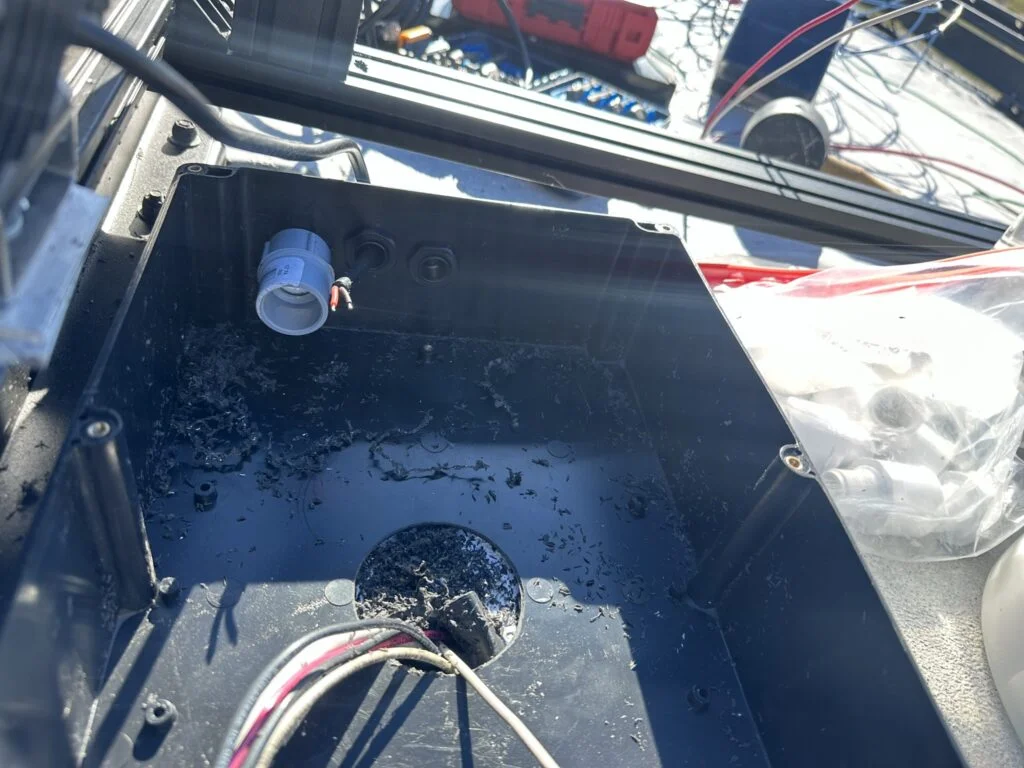
The larger roof enclosure during my cable-entry work.
The item in my kit
I bought AMOMD Eight-Stud Covered Bus Bar as part of my camper van equipment.
The AMOMD bar is the eight-stud entry in my distribution-hardware purchases. Its wider connection layout makes it easy to distinguish from the four- and six-stud bars also in the kit.
Where it fits my build
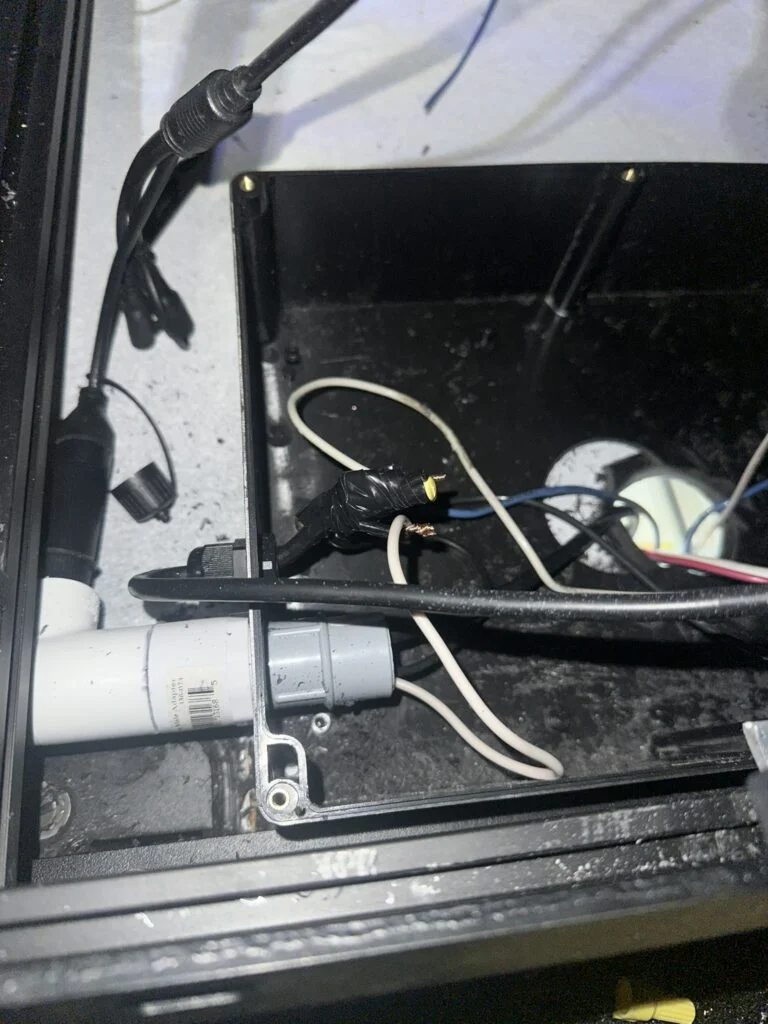
I brought the roof light wires and camera cables into a PVC conduit layout. That work included drilled enclosures, threaded fittings, cable glands, solder-seal splices and grouped wiring.
During the small-box stage, I drilled for a male PVC fitting and used a fitting inside as a retaining nut. I routed the camera cable through a gland into a tee and brought the light-wire groups toward the van entry.
A grouped roof-wire connection before the final conduit work.
My build notes
The wiring project was a sequence of individual connections and routes. The photographs show the intermediate stages, including open boxes and wrapped wire groups, before the remaining covers and conduit joints were finished.
I built the cable route a section at a time, bringing local connections into the larger conduit system.
Alternative products
Two alternatives to compare
DAIERTEK uses six M8 studs per bar, while the four-post set uses 5/16-inch studs; terminal count and physical stud size are the main layout differences.
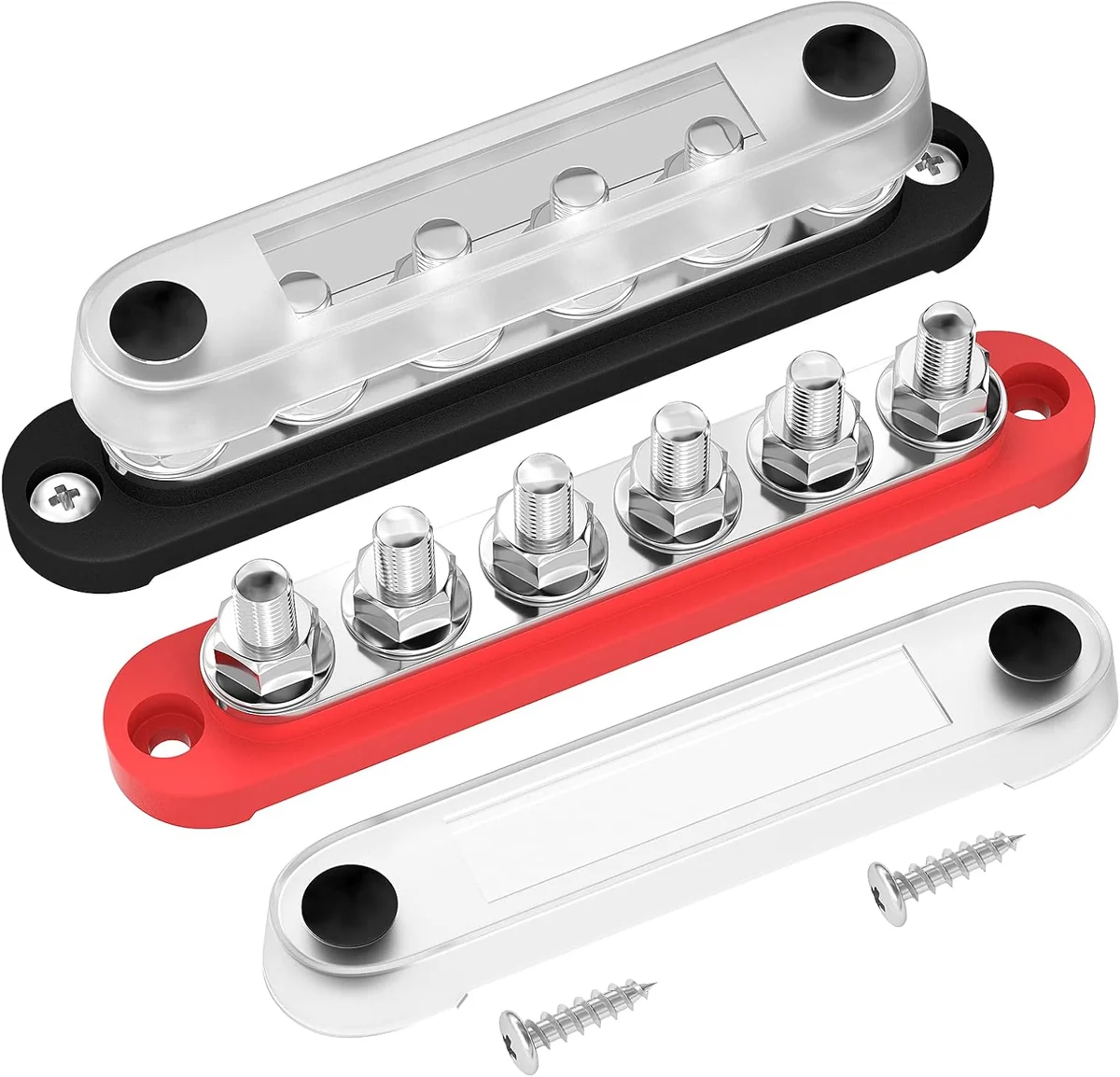
DAIERTEK Six-Stud Bus Bar Set
This positive-and-negative bus bar set has six M8 threaded studs on each bar. Removable covers enclose the connection rows.
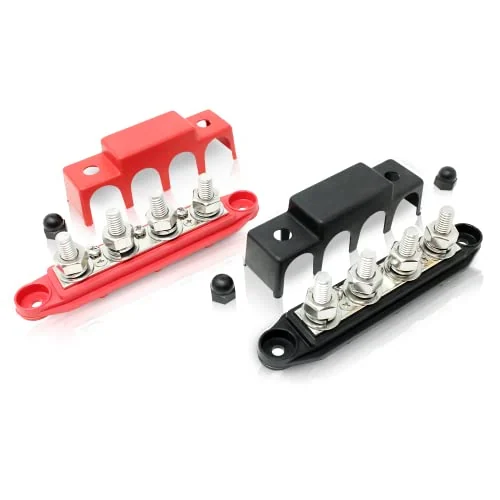
This pair of covered bus bars provides four threaded connection posts on each bar. The posts have 5/16-inch stud threads for ring-terminal connections.