PVC bends were part of shaping the wiring route around the roof rack. I fitted elbows beside junction boxes as I joined the straight pipe runs together.
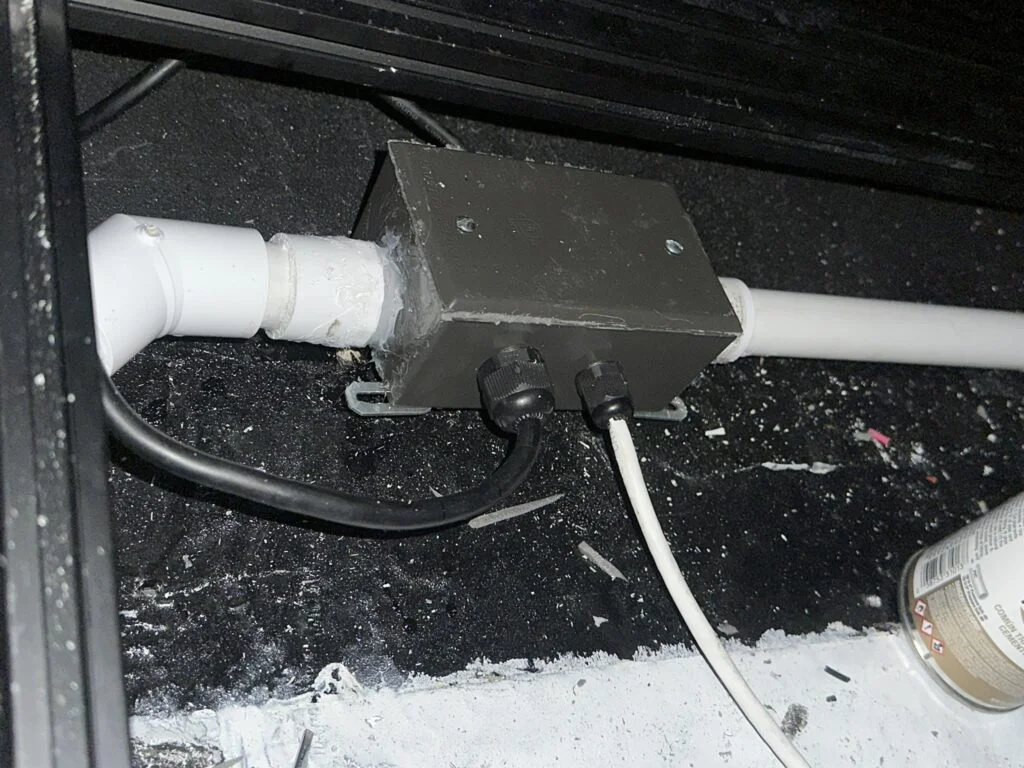
A bend and straight pipe section beside a junction box in my roof route.
Why I bought it
The roof route could not be made from straight pieces alone. Boxes, rack positions and the direction of the next run all influenced the bends.
The ANPTGHT three-quarter-inch 45-degree fittings were included in my materials for the route. My photos show angled PVC connections alongside the metal boxes.
How I used it in my camper van
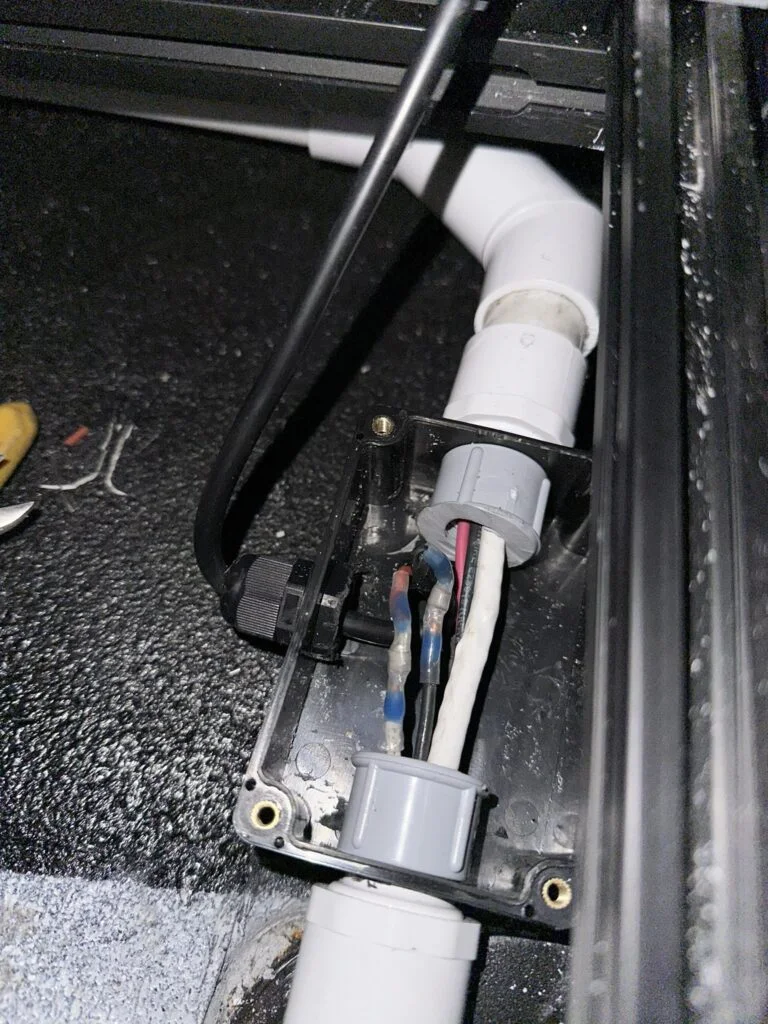
I connected a PVC elbow at the driver-front junction-box section. I fitted adjoining pipe, mounted the assembly along the extrusion and ran the light wires through the route.
Further sessions continued with cutting pipe, installing box adapters, pulling wires and joining the remaining PVC parts. The elbow connections were part of that repeated work around the rack.
Another box-and-pipe section during assembly along the rack.
My review
The useful role of the bends was joining the physical sections of the layout. A box location determined more than its own mount: it also affected where the pipe needed to turn.
The photographs show that relationship between a small box, its adjacent bend and the straight run. Completing one connection often set up the next section to measure and fit.
Each box position helped determine the direction of the next pipe section.
Alternative products
Two alternatives to compare
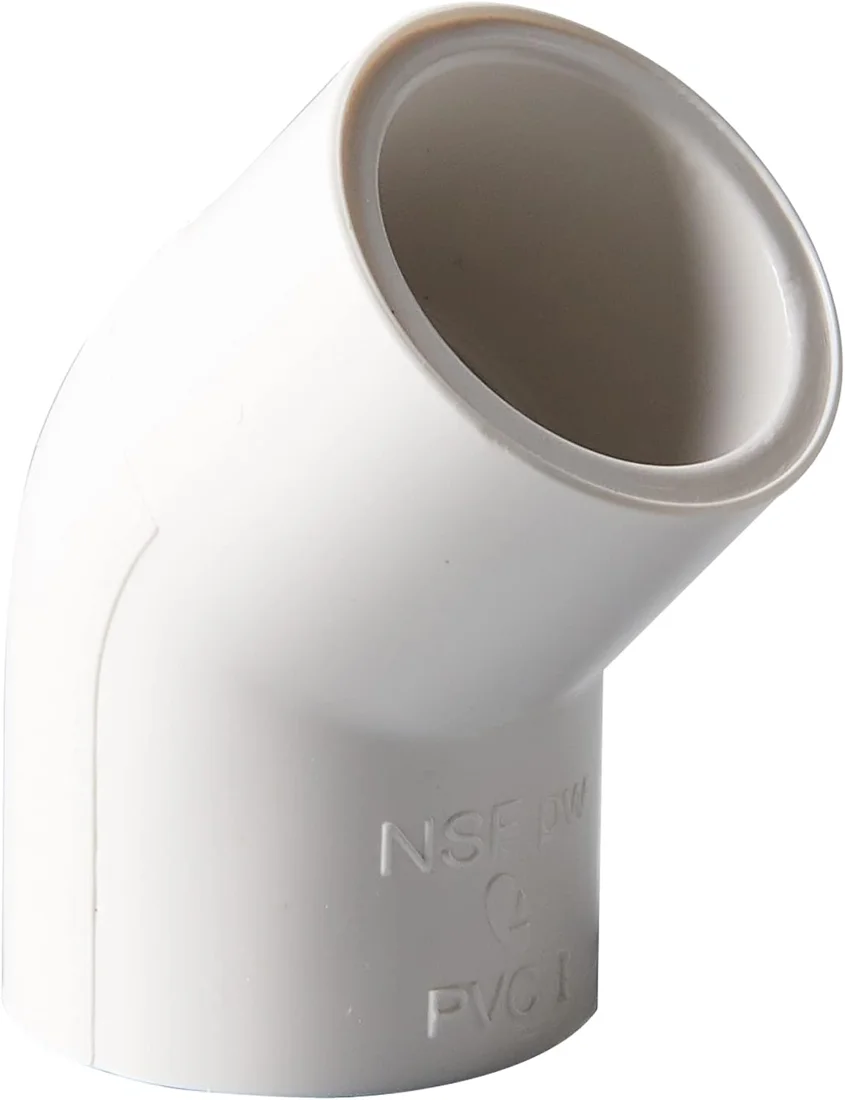
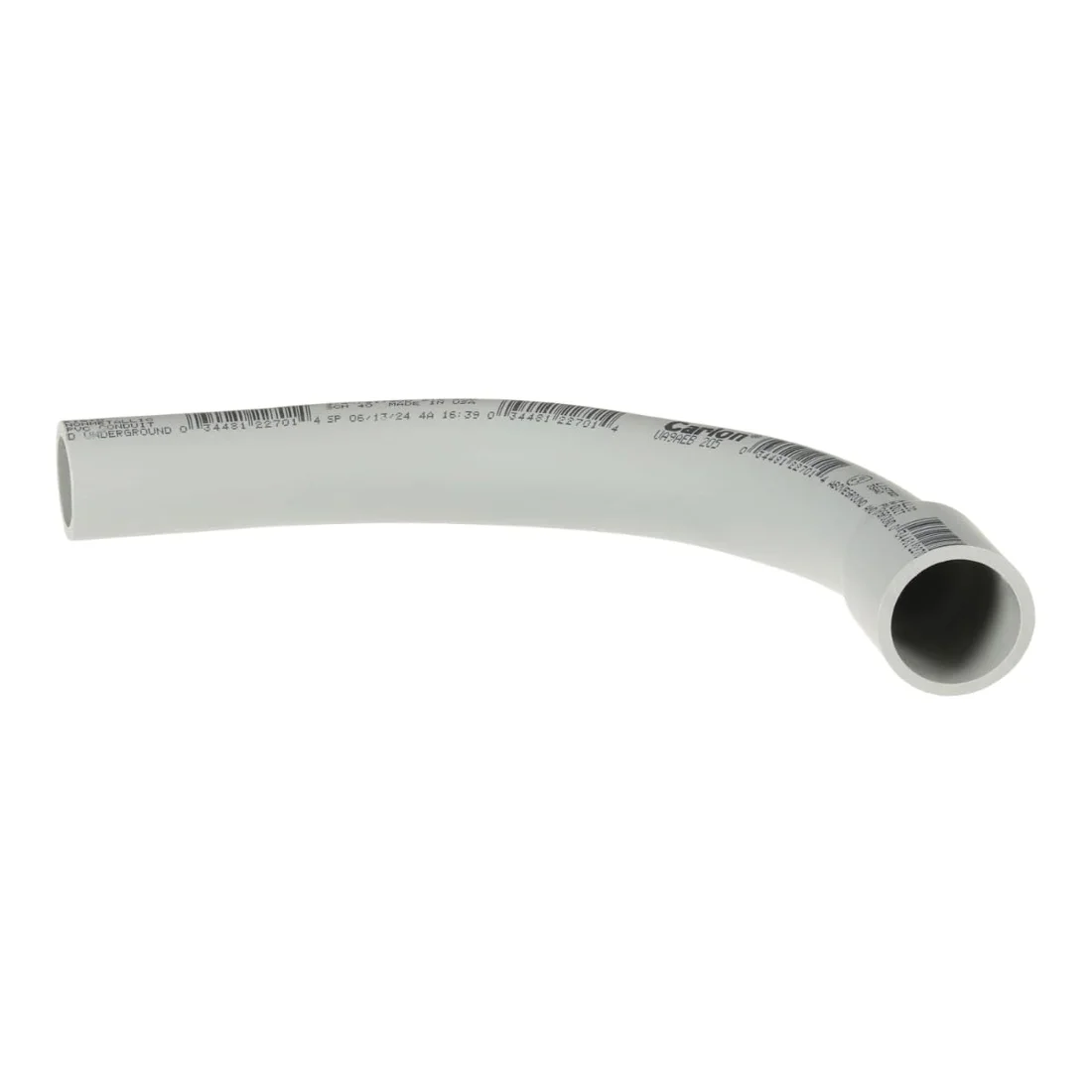
The Rainbow Dream fitting is another 45-degree socket elbow. The Carlon option takes a different routing approach: a sweeping 90-degree conduit bend with a belled end. These are two geometry choices for laying out a turn, with different angles and space requirements.
Rainbow Dream 45-Degree PVC Elbows
These white PVC elbows change a pipe route through a 45-degree bend. Their socket ends join the angled fitting to straight pipe sections.