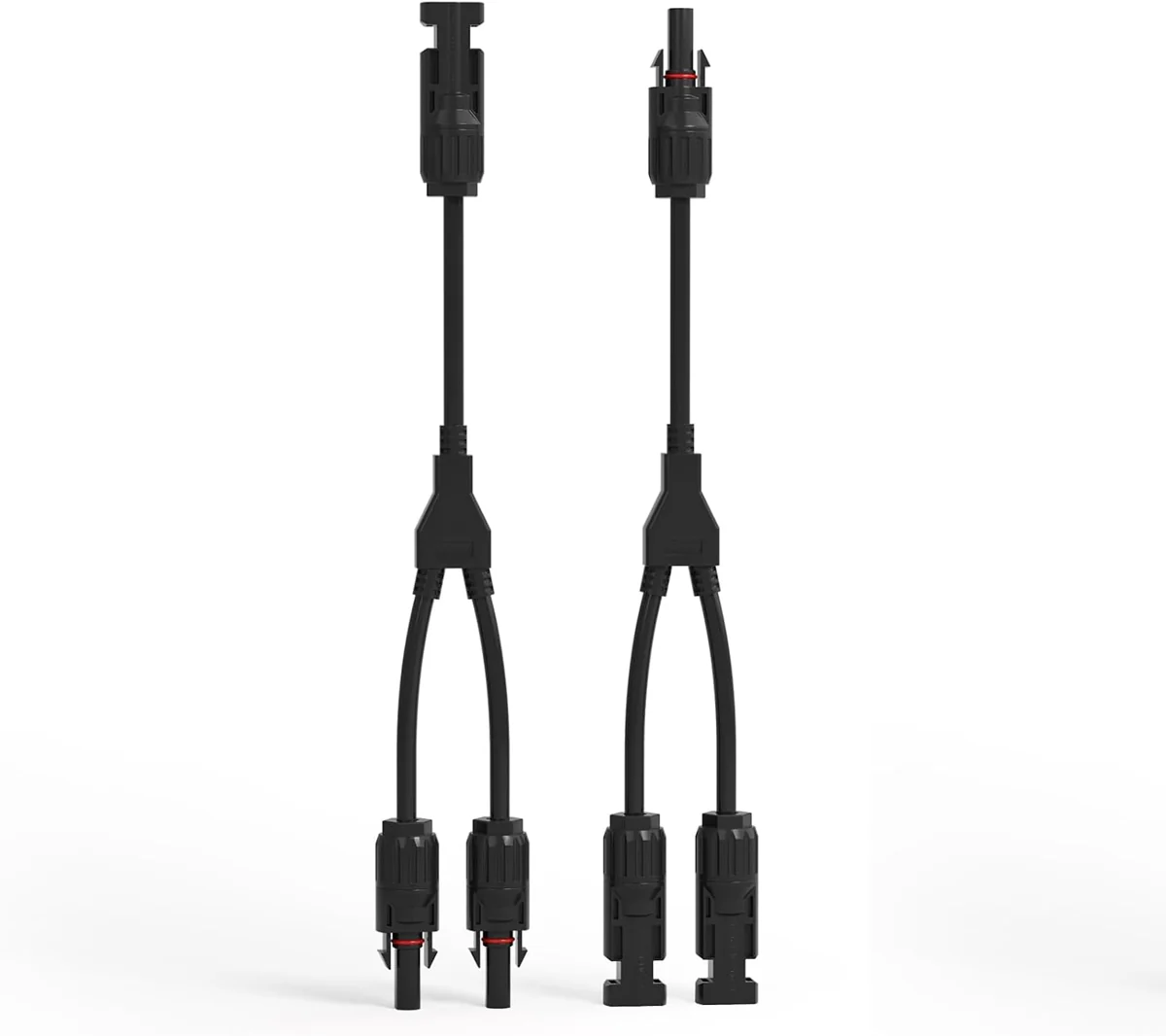
The BougeRV branch connectors are part of my roof-solar wiring equipment. Their flexible Y-shaped leads give the connector junction a different layout from a rigid T-branch pair.
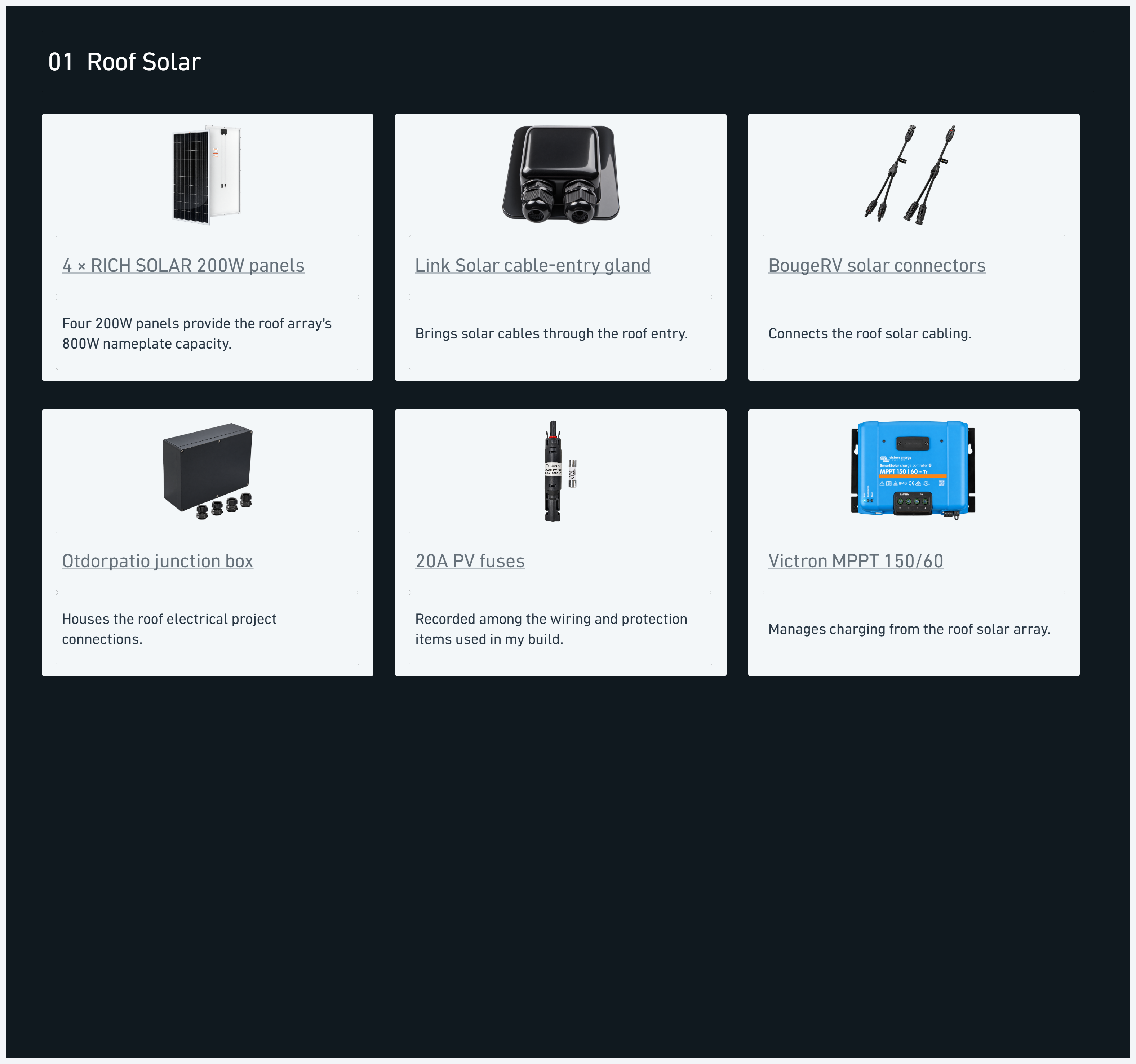
My build uses four RICH SOLAR 200-watt roof panels and a Victron SmartSolar controller. I used the BougeRV connectors shown in the solar part of my original electrical drawings.
A branch connector joins a cable branch; it is a different item from the roof gland, the conduit and the controller. Keeping those items separate in the kit made it possible to document both the electrical equipment and the route into the van.
My Build Context
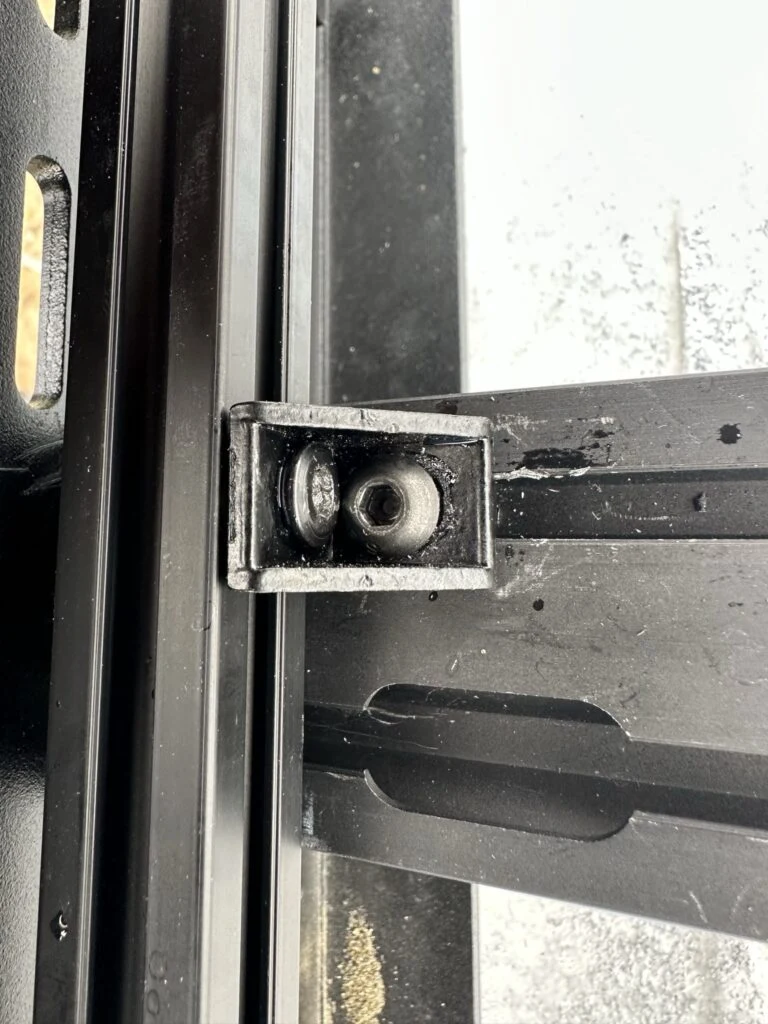
during the Roof Wiring and Devices Project Day 1 session I moved roof-rack crossbeams to suit the panel length and added 2020 extrusion. I brought two panels onto the roof for fitting during that day’s work. Panel fit, cable positions and the rest of the roof equipment all shared that space.
Later, my roof-wire work included junction boxes, glands, grouped light wires and PVC conduit. during the Roof Wiring and Devices Project Day 8 session I used a fish tape to pull the roof wires through the conduit and finished the entry details. The BougeRV page belongs to the solar-connection part of that wider roof project.
The solar detail from my electrical-system diagram, including component E11.
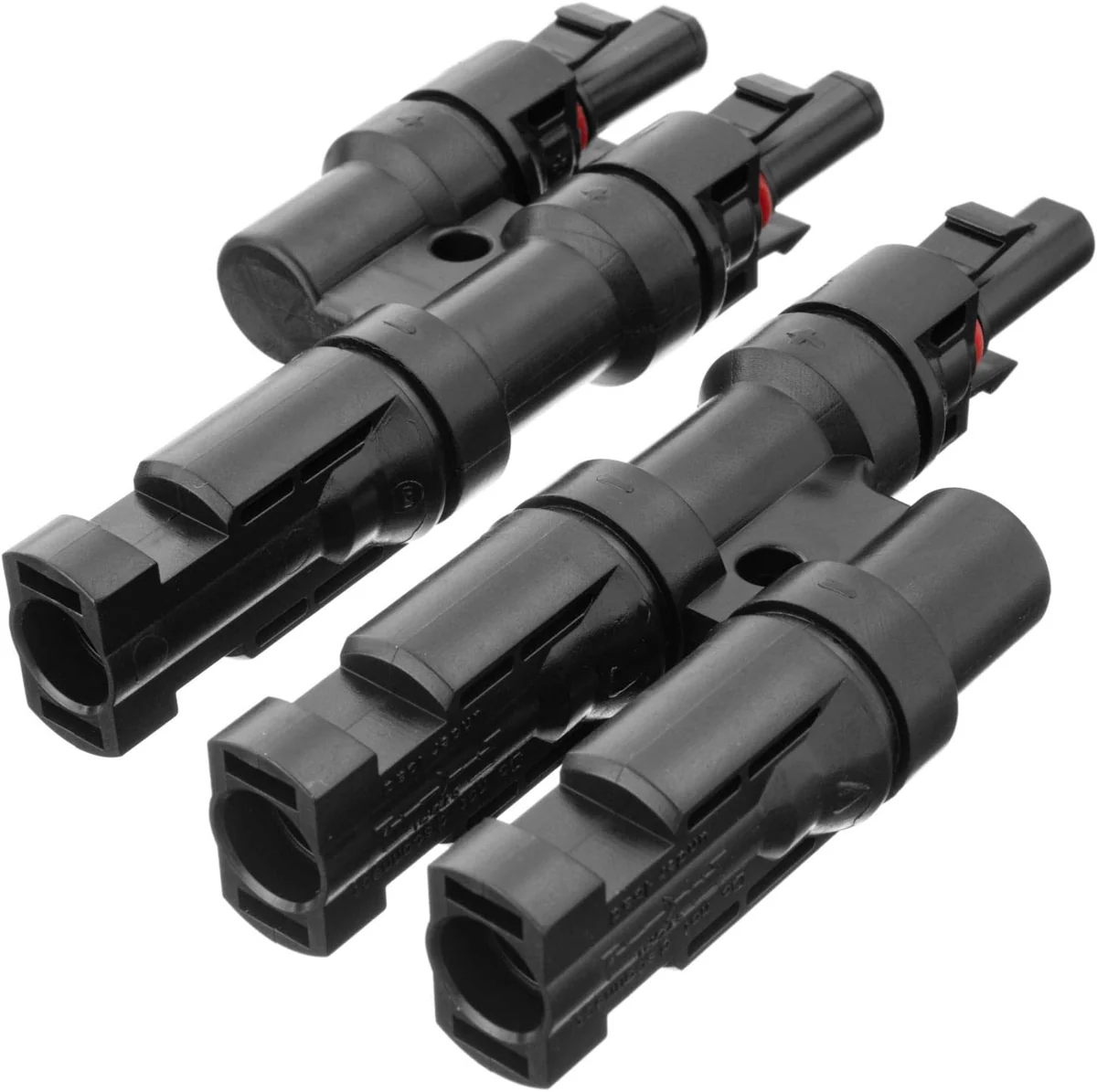
The practical difference I would compare first is the shape of the junction. The BougeRV has short flexible branch leads, while a rigid T-style connector places the branch ports directly on its body.
That affects how the junction can sit around panel leads and mounting hardware. My roof project involved moving crossbeams and adding extrusion, so the physical cable layout deserves attention alongside the connector count.
Draw the branch-junction shape together with the panel leads and roof hardware.
Product Details And Van-Build Uses
Specification
Product Detail
Connection Layout
One-to-two parallel branches
Pair Types
M/FF and F/MM
Construction
Flexible branch leads
These BougeRV Y branches bring two solar-panel connections into a parallel arrangement. The pair provides the complementary connector layouts needed for the two polarities, rather than acting like a single extension cable. The manufacturer’s product page includes connection illustrations and identifies the flexible lead design. For a camper-van roof, the branches form part of the cable layout between the panels and the route to the controller. Keeping the branch position visible on the drawing makes later panel removal and connector identification easier. The existing panel and controller records remain the description of my particular array.
Their one-to-two branch layout is intended for parallel panel connections; the pair provides complementary connector arrangements.
Alternative products
Two Alternatives to Compare
Spartan Power uses a rigid T-branch body. The Renogy pair is another parallel-branch option with its own connector body and locking details. Compare the exact connector family, branch count and cable layout when selecting the assembly.
This connector pair combines two solar cable branches into one connection on each polarity. The rigid T-shaped bodies provide male and female connector ends.