I used male-thread PVC adapters at junction-box entries along the roof route. They connected the straight pipe and fitting layout to the openings I prepared in the boxes.
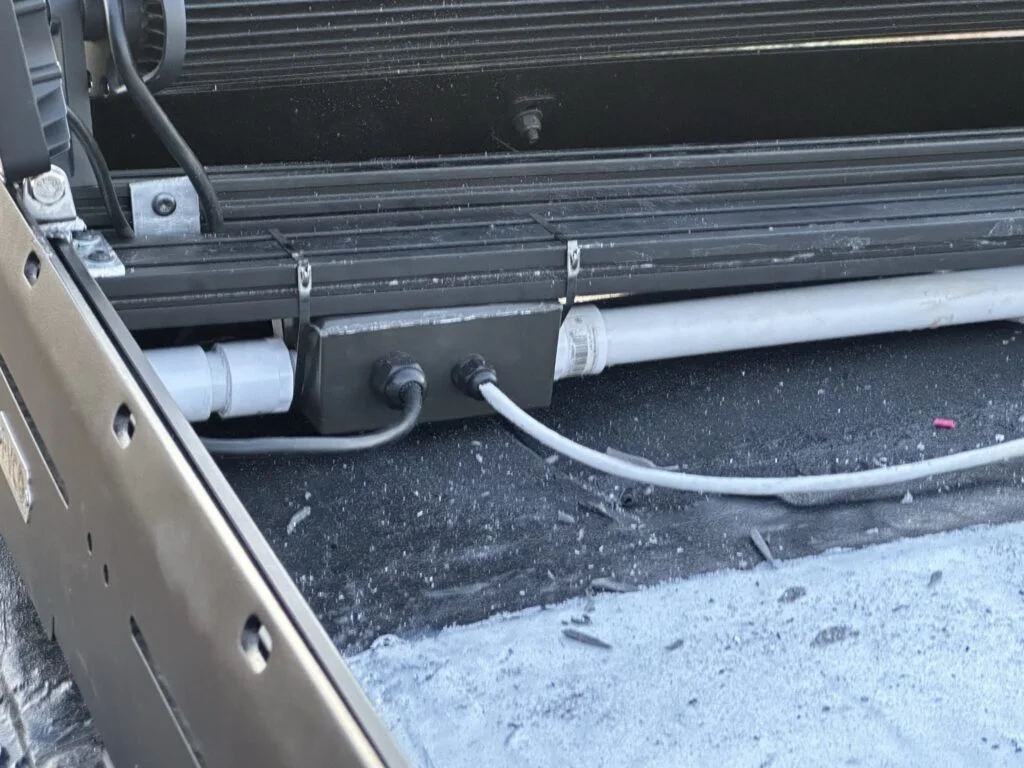
PVC entry fittings and a cable gland at a small box in my roof route.
Why I bought it
The route used pipe sections between several boxes. Threaded adapters were part of changing from those pipe sections to the box entries.
The FangKingNo three-quarter-inch male adapters were listed with the roof-wiring materials. Their role was separate from the cable glands used for individual wire entries.
How I used it in my camper van
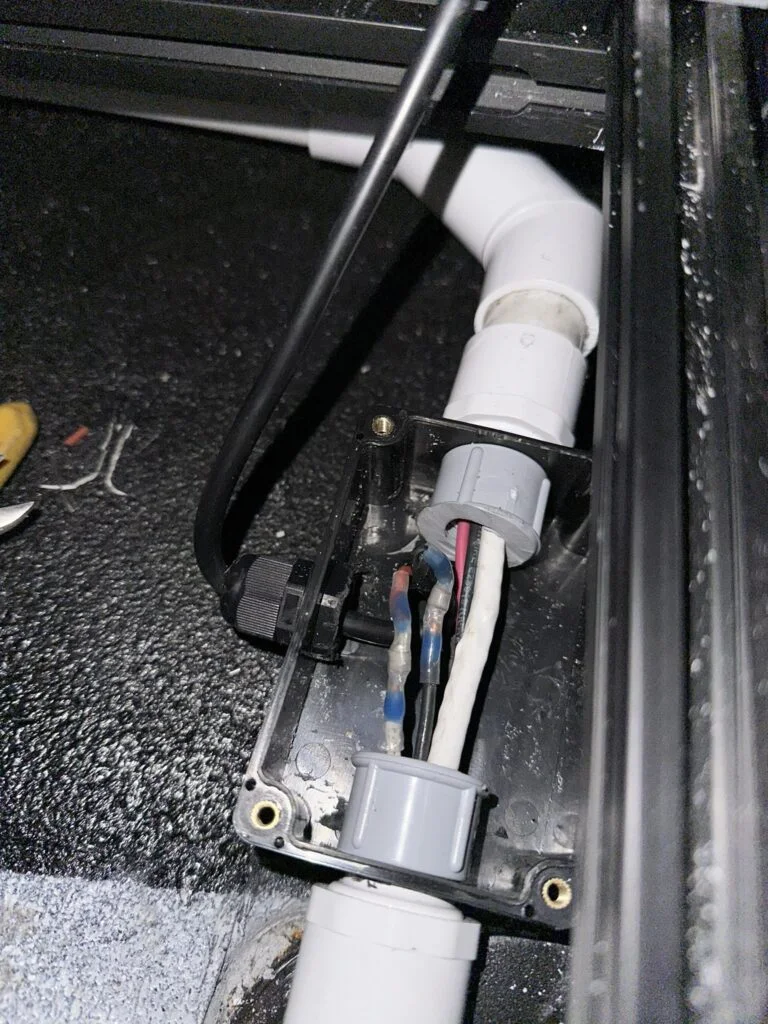
I drilled the metal boxes and installed male-thread PVC connectors and wire glands. At the passenger-front box I also threaded female PVC connectors onto the male parts, using them as nuts in that assembly.
I cut the adjoining pipe to length, ran the wires through and connected the route toward the larger box. The diary records PVC cement at pipe connections and clear sealant at the threaded entries into boxes.
The passenger-side box with pipe fittings during assembly.
My review
These adapters sat at the boundary between the pipe layout and each box. Their positions affected where the next straight section or bend could go.
Fitting the adapters was therefore tied to drilling the box and planning the wire path. The photos show the fittings as part of an assembled route rather than as isolated plumbing parts.
The box opening and the next pipe section had to be laid out together.
Alternative products
Two alternatives to compare
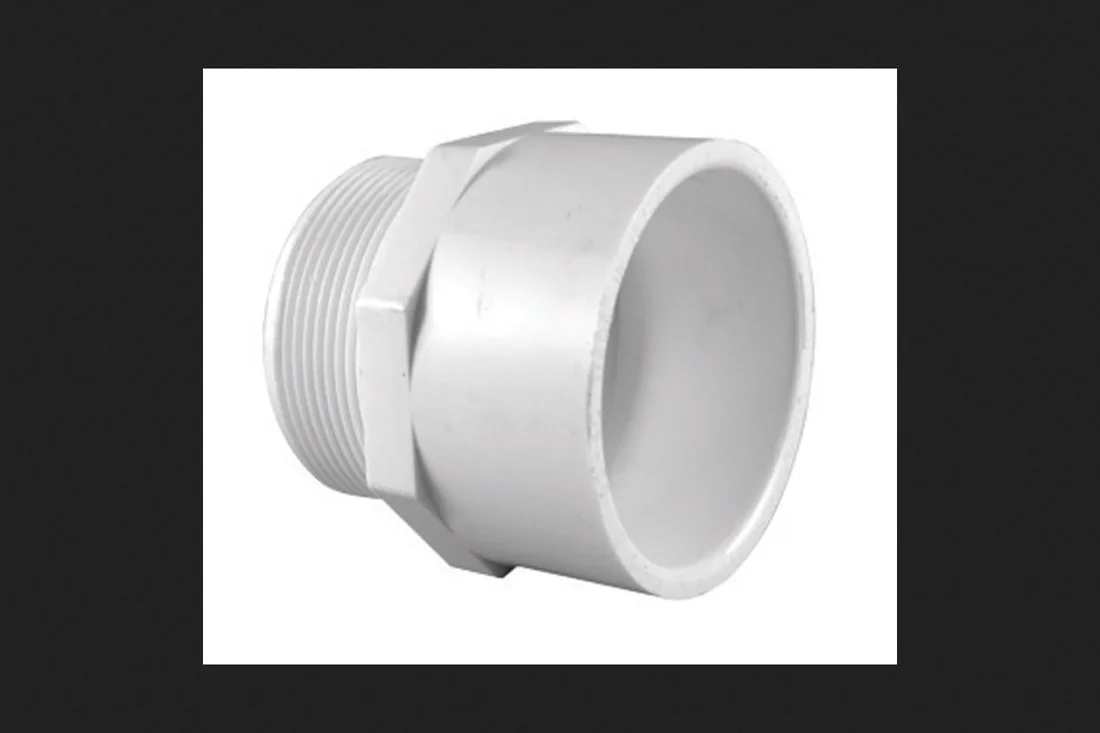
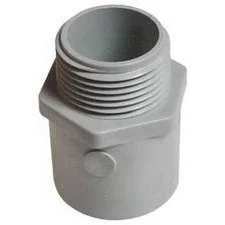
The Charlotte fitting is a white socket-to-male-thread PVC adapter. The Cantex fitting is a gray conduit terminal adapter with the same basic socket-to-thread transition. Their body shapes and intended pipe systems distinguish these two approaches to a threaded box entry.
Charlotte 3/4-Inch PVC Male Adapter
This white PVC fitting transitions from a slip socket to a male pipe-threaded end. Its hex-shaped body provides a grip around the threaded connection.
This gray PVC terminal adapter has a socket end and a male-threaded end. Its body provides a transition between a conduit section and a threaded entry.