The combiner box is part of the solar equipment I bought. My roof-fitting diary records the work of arranging panel space and cable routes together rather than treating them as separate layout problems.
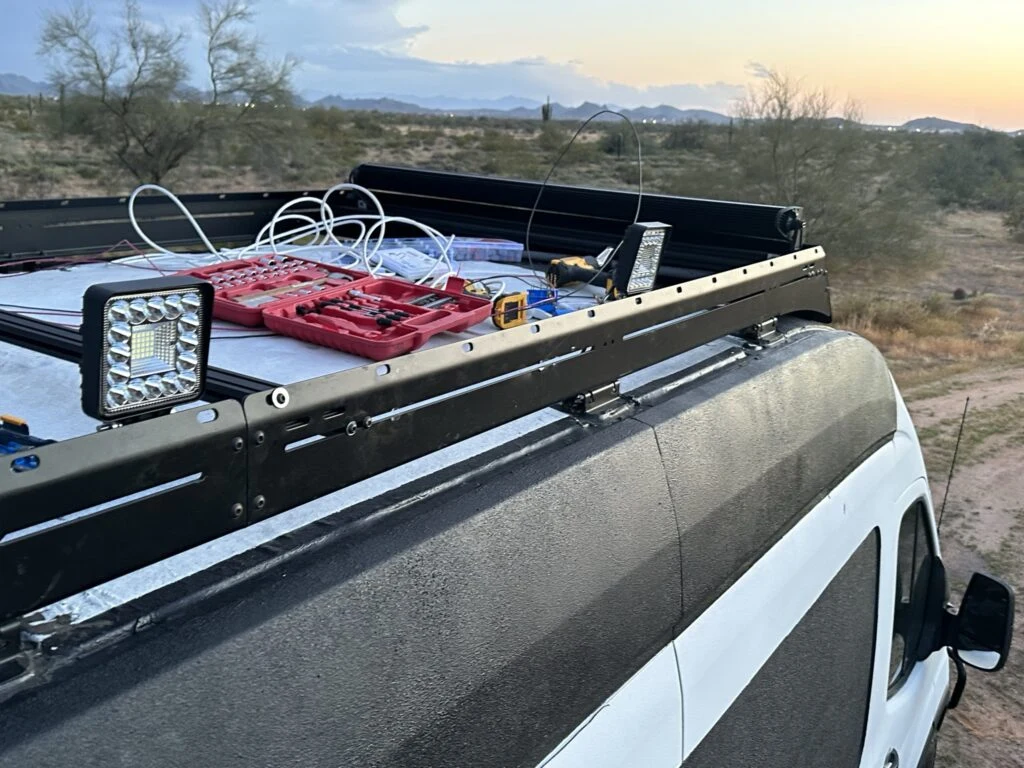
Lights, cables and tools laid out during my roof work.
The item in my kit
I bought QL-LINRUN Six-String PV Combiner Box as part of my camper van equipment.
The combiner box is part of the solar equipment I bought. My roof-fitting diary records the work of arranging panel space and cable routes together rather than treating them as separate layout problems.
Where it fits my build
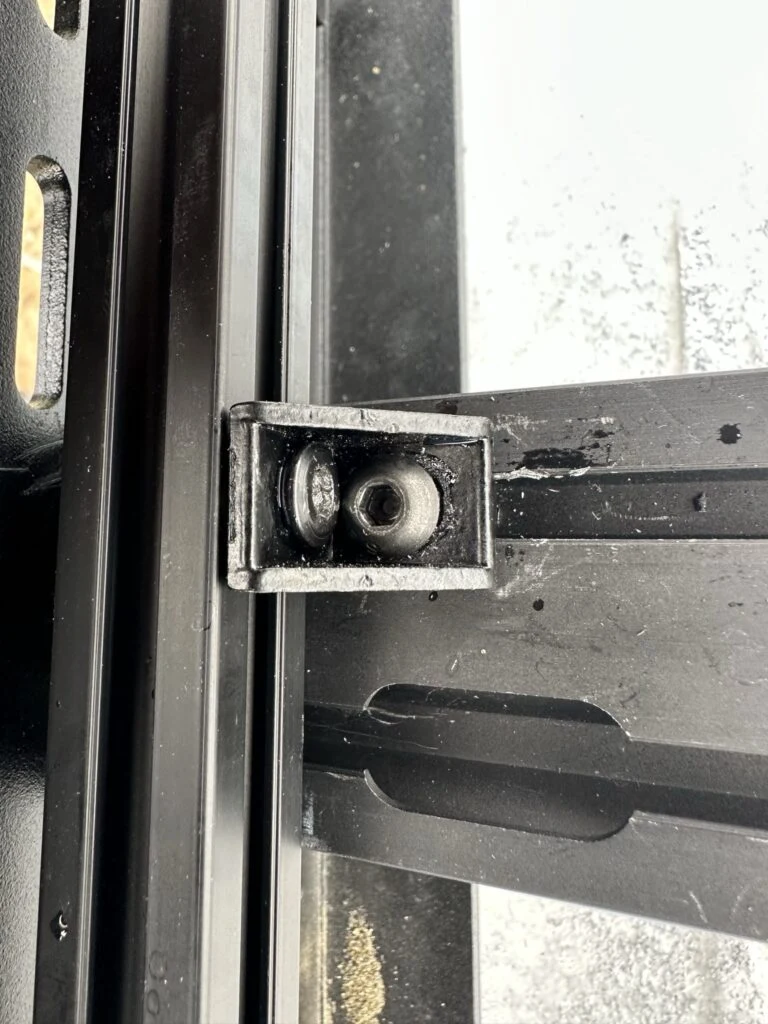
On Day 95 I moved the Flatline rack cross beams to suit the solar-panel length, then added 2020 extrusion above the existing rack extrusion. I brought two solar panels onto the roof to work through the fit.
That same session included junction-box assembly, cable glands and routing power and Ethernet cables. The physical layout of the rack and the cable routes developed together.
Rack extrusion and mounting hardware during the fitting stage.
My build notes
The roof session took twelve hours, and fitting the panels was only one part of it. Cutting extrusion, positioning brackets and organizing the cables all used the same limited working area.
My useful takeaway from that day is the value of laying out the real parts before settling their positions. Moving a cross beam and checking the panel fit gave me a concrete reference for the next stage.
I worked through panel position, rack spacing and cable routes together on the roof.
Alternative products
Two alternatives to compare
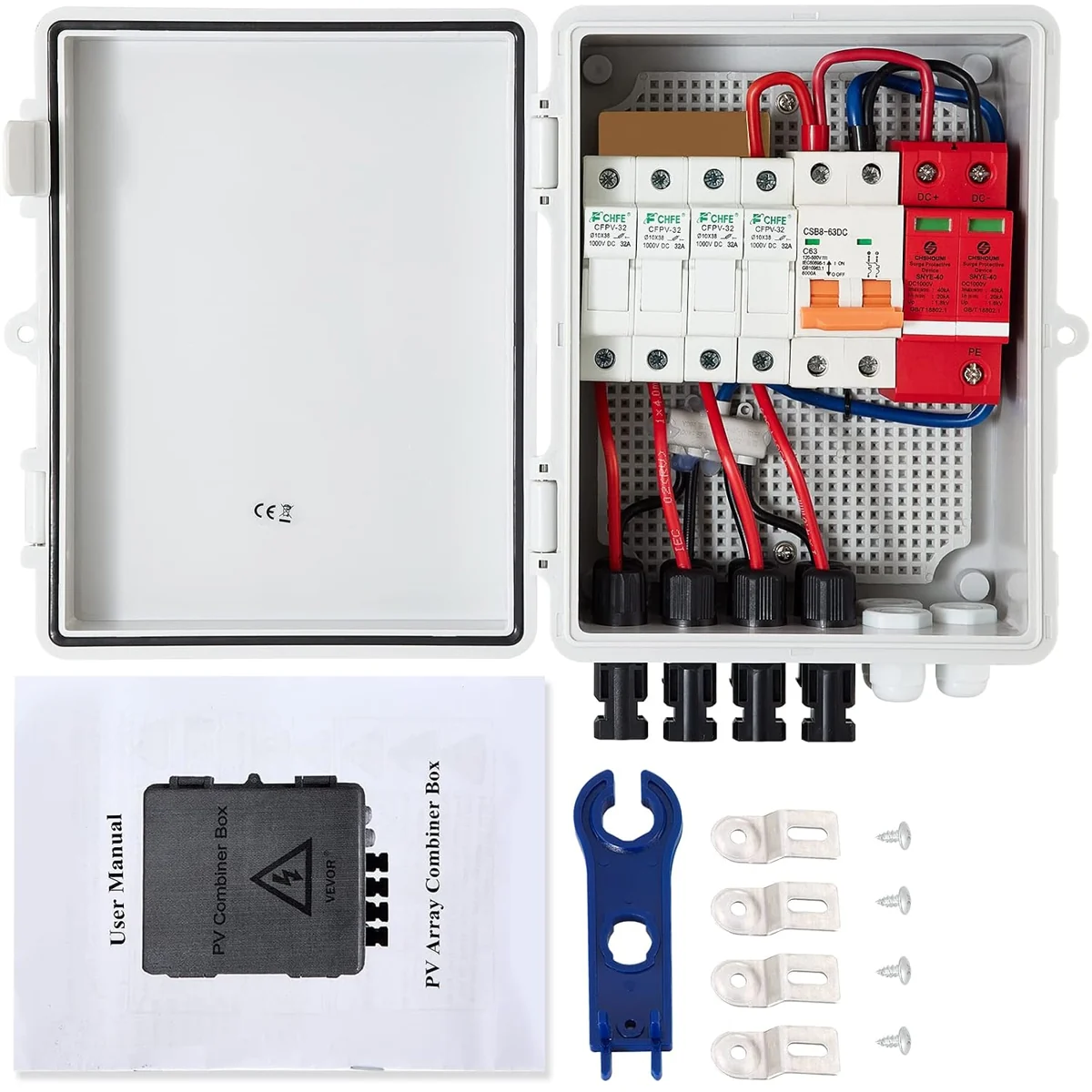
ECO-WORTHY and VEVOR offer other enclosed PV combiner layouts; their terminal positions, enclosure construction and internal component arrangements differ.
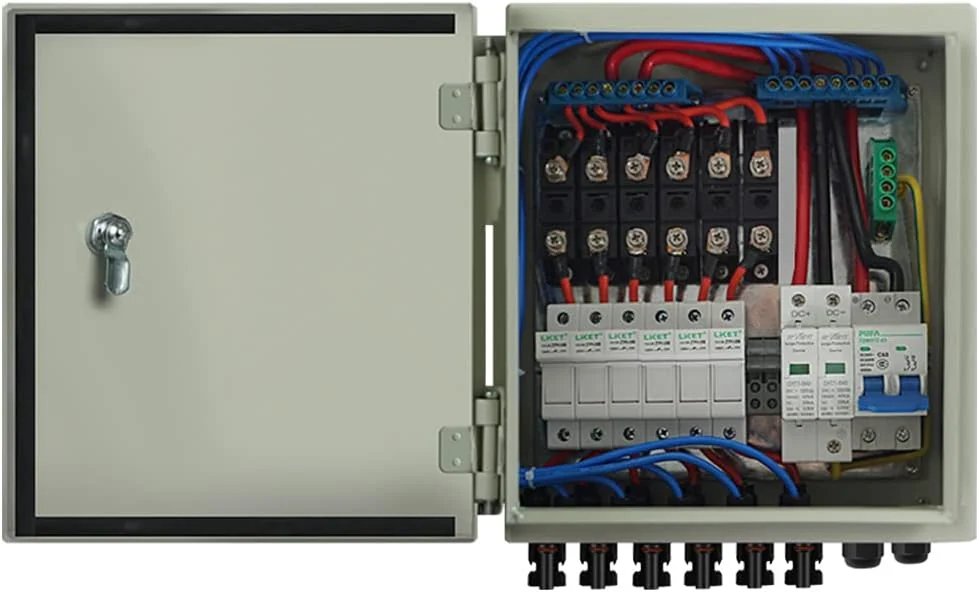
ECO-WORTHY Six-String Combiner Box
This metal enclosure groups six solar-string inputs into a combiner assembly. Internal fuse holders and a circuit breaker organize the input and output connections.