The roof-equipment build made me pay attention to where bolt heads and slot nuts sit around each joint. My right-angle brackets are one of the connector formats in the purchased extrusion hardware.
I bought 2020 Right-Angle Corner Brackets as part of my camper van equipment.
The roof-equipment build made me pay attention to where bolt heads and slot nuts sit around each joint. My right-angle brackets are one of the connector formats in the purchased extrusion hardware.
Allowing Space Around the Adjoining Faces
I made the roof-mount connecting pieces with cutting and drilling tools.
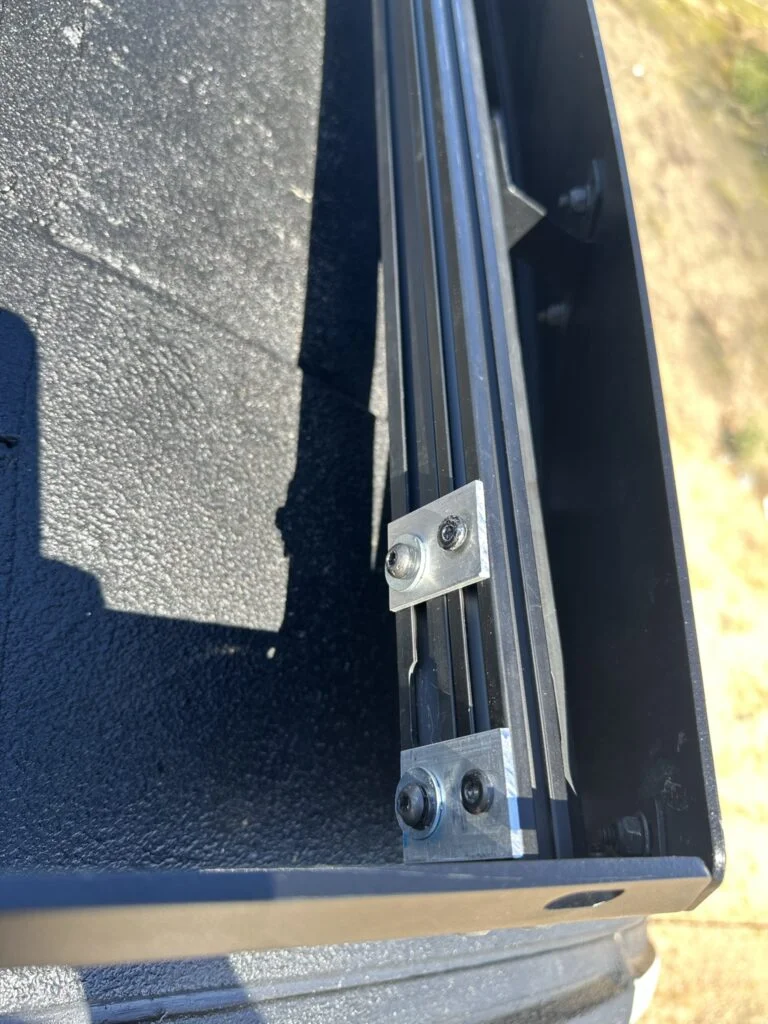
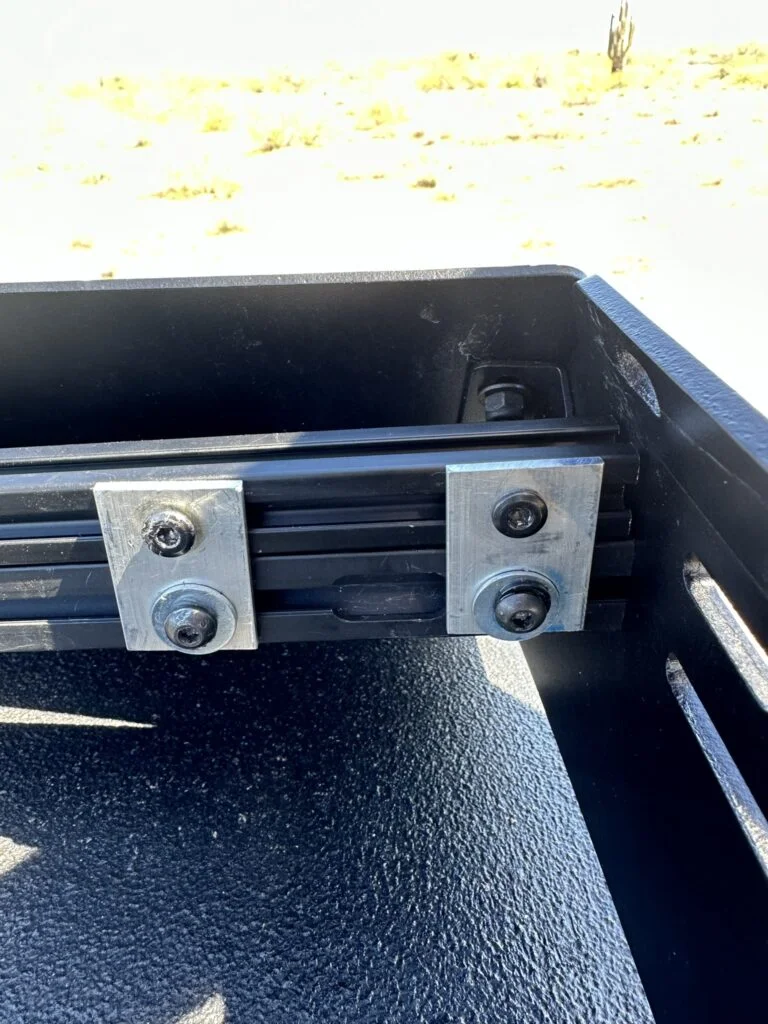
I fitted the bolts and slot nuts around the joined extrusion profiles.
I used an Allen key to move the small nuts into position before starting the bolts.
The profiles and joint hardware during my roof-mount assembly.The drilled connectors and fasteners joining my added extrusion to the roof rack.
My Takeaway from This Job
The roof work made access around the joint as noticeable as the connector itself. My right-angle bracket purchase puts fastening holes on adjoining faces; the comparison plates and inside-corner connector occupy different positions around the same type of corner.
The profile, connector shape, bolt and slot nut all contributed to the assembly sequence.
Product Details And Van-Build Uses
Specification
Product Detail
Joint
Right angle
Kit Hardware
M5 screws and sliding nuts
Plate
Holes on adjoining faces
The bracket sits across two adjoining faces rather than lying flat across the outside of a joint. Show that position on the extrusion drawing before choosing the bolt and slot-nut locations. For a van shelf or frame, allow room to reach the screw heads after the neighboring rails are added. Keeping the bracket orientation with the parts list helps distinguish this corner connection from a flat L plate that can have a similar outline when viewed from above.
It has adjoining faces at a right angle, while a flat L plate spans the outside face of a joint.
Alternative products
Two Alternatives to Compare
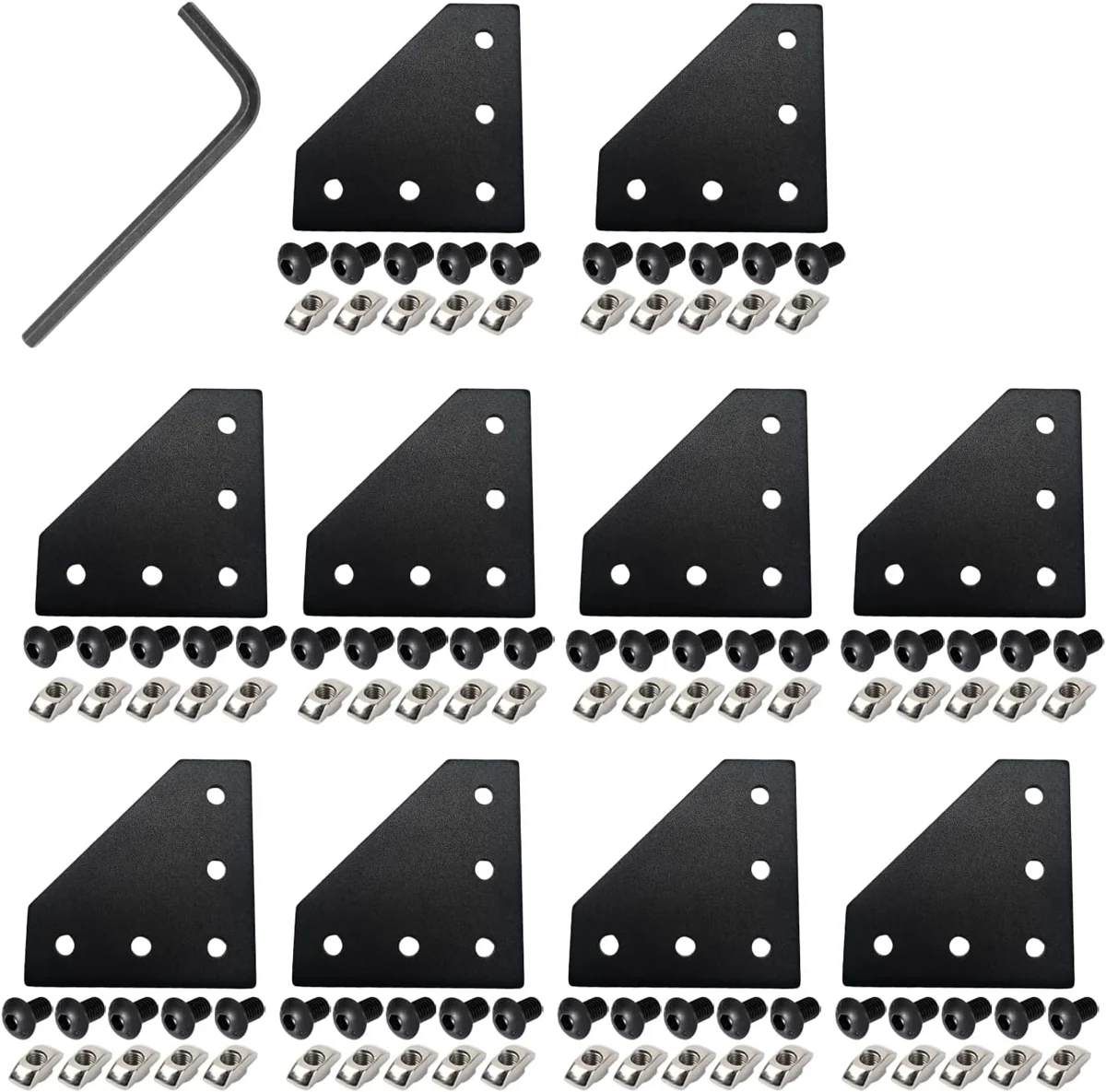
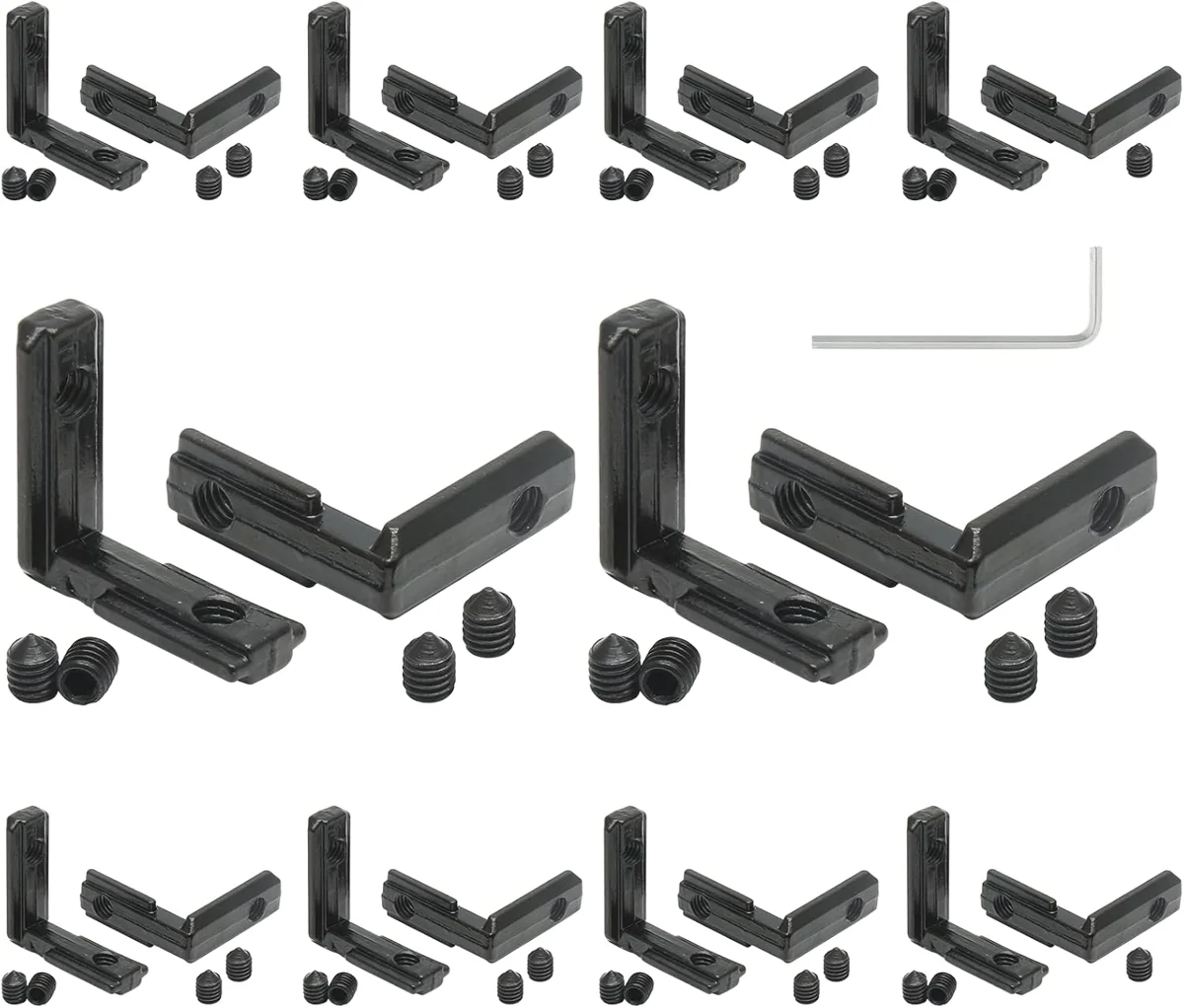
The five-hole L-plate adds a different hole layout across the face of the joint. The inside-corner connector changes the location of the connection entirely, keeping the hardware within the corner.