2020 L-Bracket Plates: Choosing My Extrusion Joints
Five-hole L-plates are among the connectors I bought for the van. My roof assembly shows why the position of a connector and access to its slot nuts matter alongside the profile length.
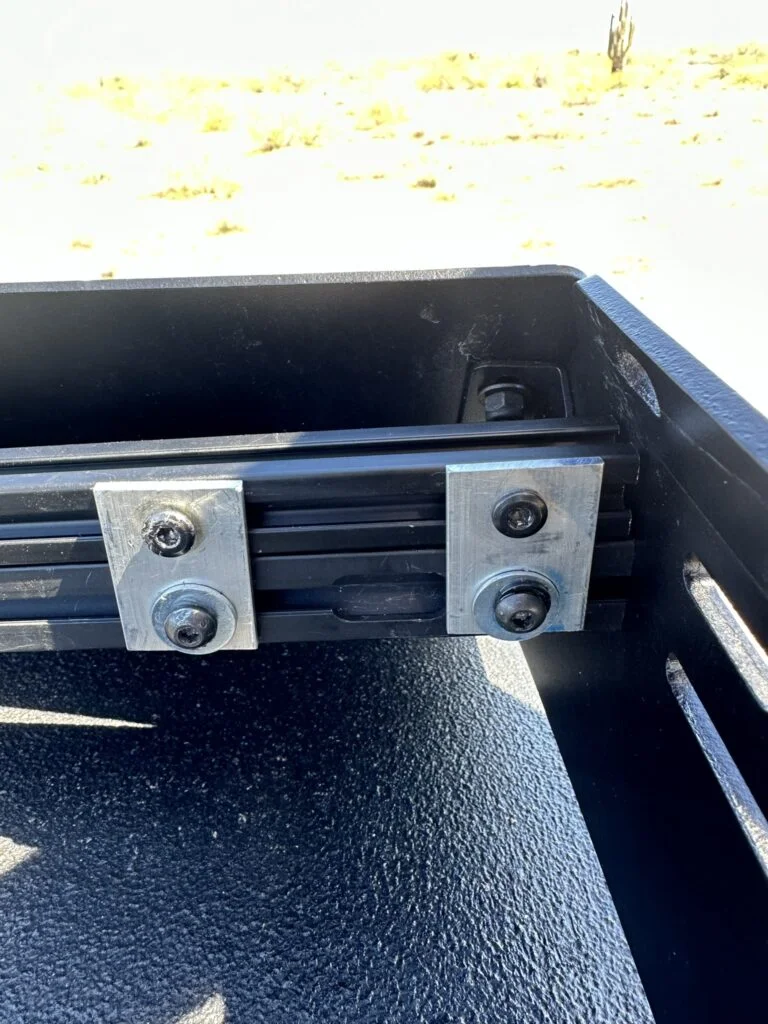
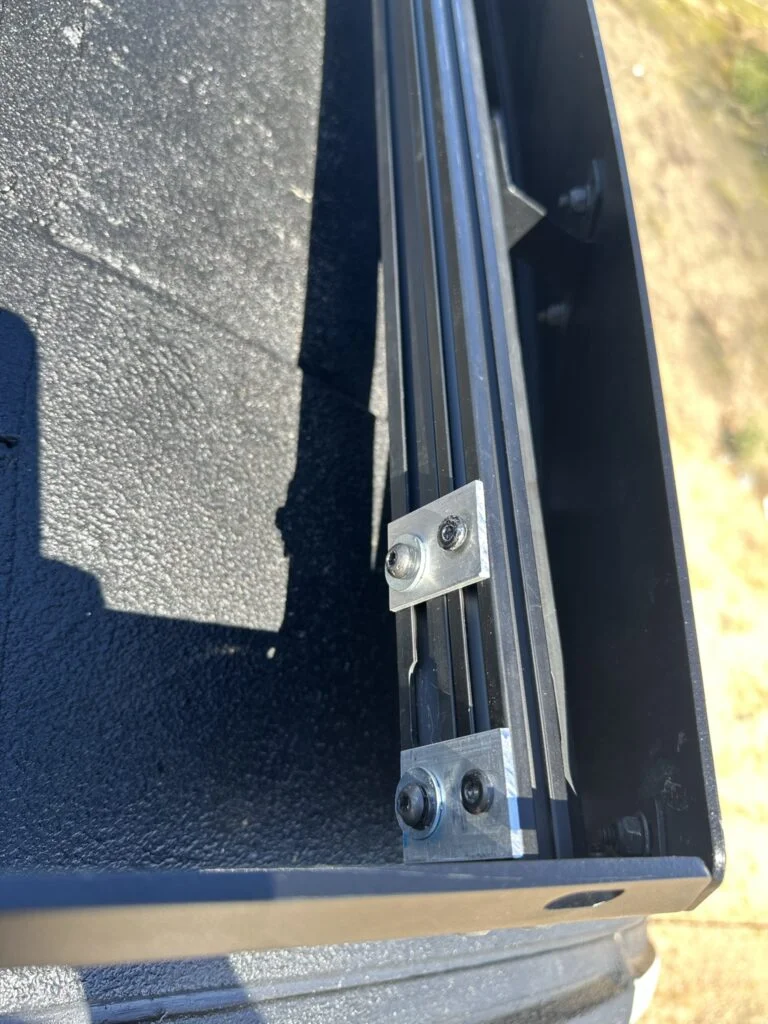
I added a 2020 beam above the existing rack using short aluminum connectors that I cut and drilled. The two profiles used different fasteners, and getting the nuts into position affected the order of assembly.
The L-plates in my connector purchases give another joint layout to compare with that work. Their flat face arrangement differs from a bracket with adjoining faces or a connector tucked into the meeting corner.
The drilled connectors and fasteners joining my added extrusion to the roof rack.
Comparing the Plate Shape with the Available Hardware Access
I cut the added light-bar beam and made short drilled connectors.
I used quarter-twenty hardware at the rack and M5 hardware at the 2020 extrusion.
I repositioned small nuts with an Allen key when they moved while I started the bolts.
The profiles and joint hardware during my roof-mount assembly.
My Takeaway for Choosing the Kit
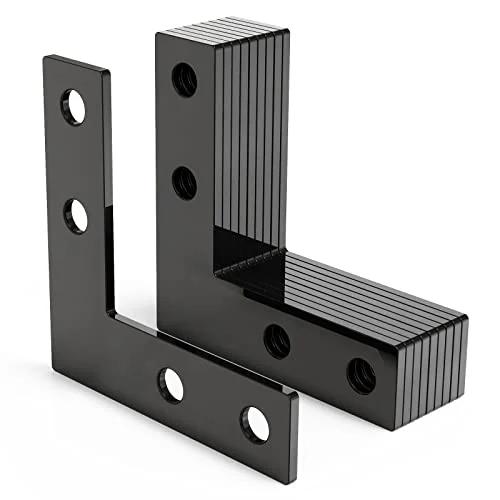
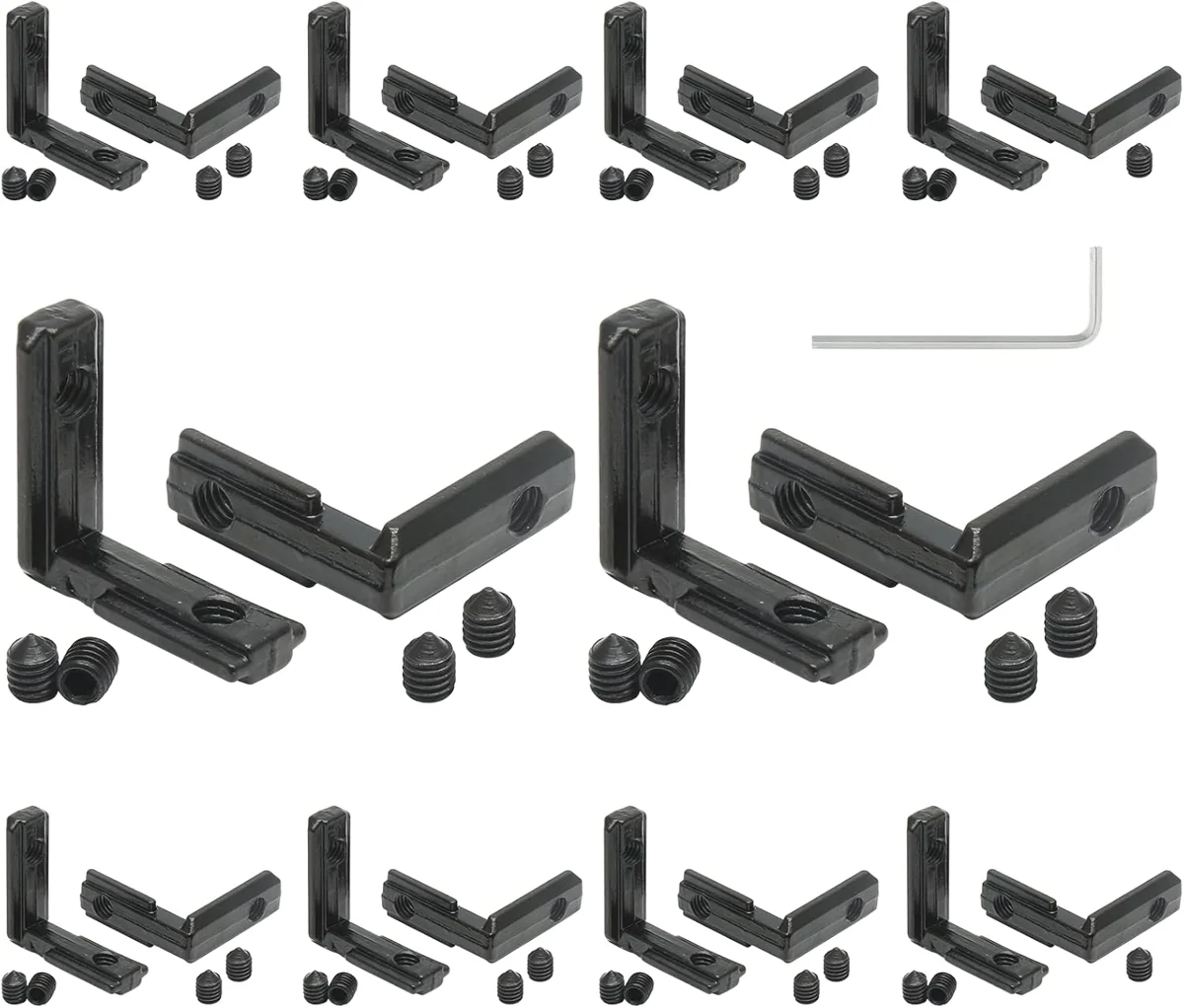
I would decide where the two profiles meet, then compare the room occupied by the connector and the access needed to start its fasteners. The five-hole L-plate, right-angle bracket and inside-corner option put their attachment points in different places. My roof photos provide the assembly context; the product cards show the purchased connector and the two alternatives.
Product Details And Van-Build Uses
Specification
Product Detail
Outline
Flat L shape
Holes
Five
Kit
Screws and slot nuts
The five-hole plate forms an outside-face corner connection across the rail slots. Mark the plate orientation and screw positions on the frame drawing before adding panels around it. During my extrusion work, nut positioning and access were part of the fitting process, so the hardware arrangement matters alongside the plate outline. Keeping those details together makes the chosen L connection easier to compare with T plates and bent corner brackets in the same framing kit.
Leave a route for inserting the slot nuts and reaching the screw heads during assembly.
Alternative products
Two Alternatives to Compare
The right-angle bracket uses two adjoining faces with a different hole arrangement. The inside-corner connector moves the joint hardware into the corner, changing the space occupied around the profiles.