Screen mesh is among the interior and opening-finishing materials I bought. The custom-cover photographs show my process of marking and fitting material around an opening, including the passenger-seat vent face.
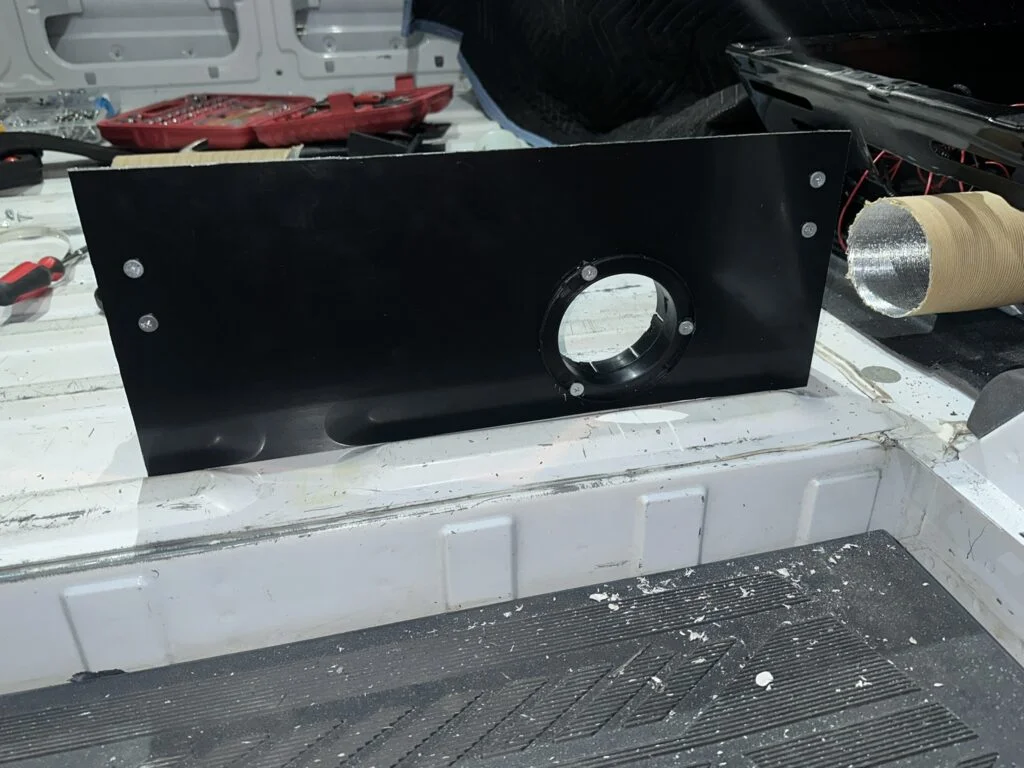
My black composite cover panel during the heater-cover work.
The item in my kit
I bought QWR Window Screen Replacement Mesh as part of my camper van equipment.
Screen mesh is among the interior and opening-finishing materials I bought. The custom-cover photographs show my process of marking and fitting material around an opening, including the passenger-seat vent face.
Where it fits my build
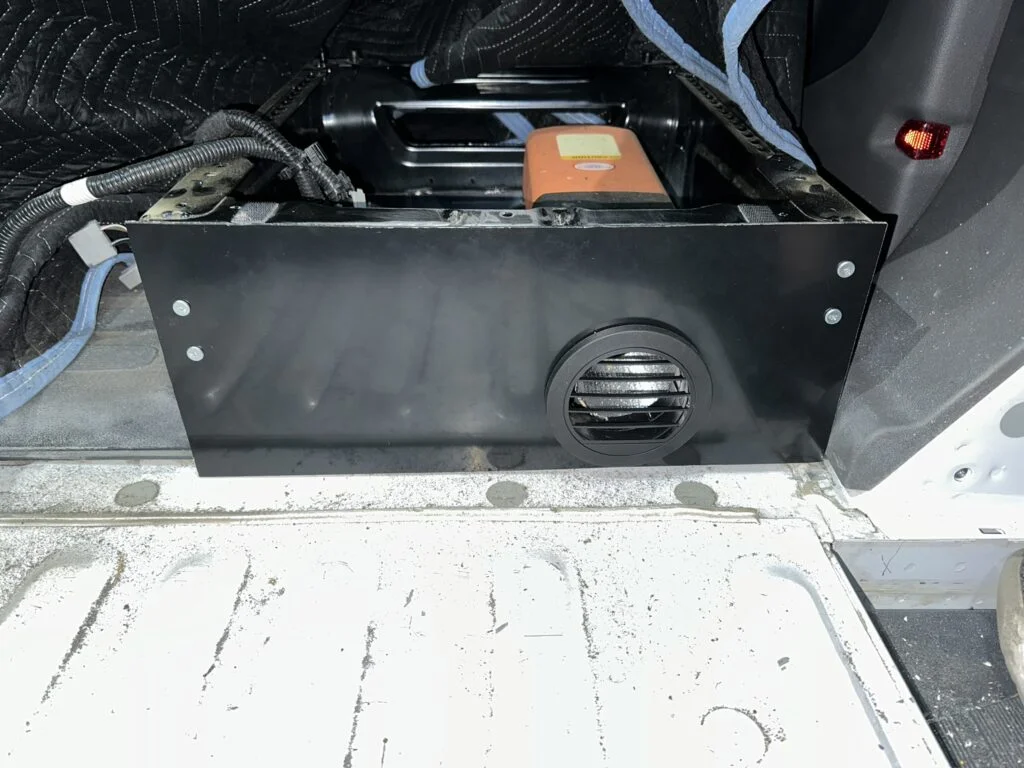
I made a front panel and two triangular side pieces from black aluminum composite sheet. The cover let me orient the heater vent toward the van interior instead of following the sloping back of the seat platform.
I joined the panels with brackets and self-tapping screws, then fitted the assembly at the seat base. The angle of the platform made drilling awkward, and one screw position left a hole that I planned to cover with a larger washer.
The cover and vent arrangement behind the passenger seat.
My build notes
I liked the black composite sheet: it was easy to work with and cut, and I liked how it looked. The difficulty came at the angled fastening positions, where access mattered as much as the shape of the cut panels.
The finished panel shape and the access for fastening it had to work together.
Alternative products
Two alternatives to compare
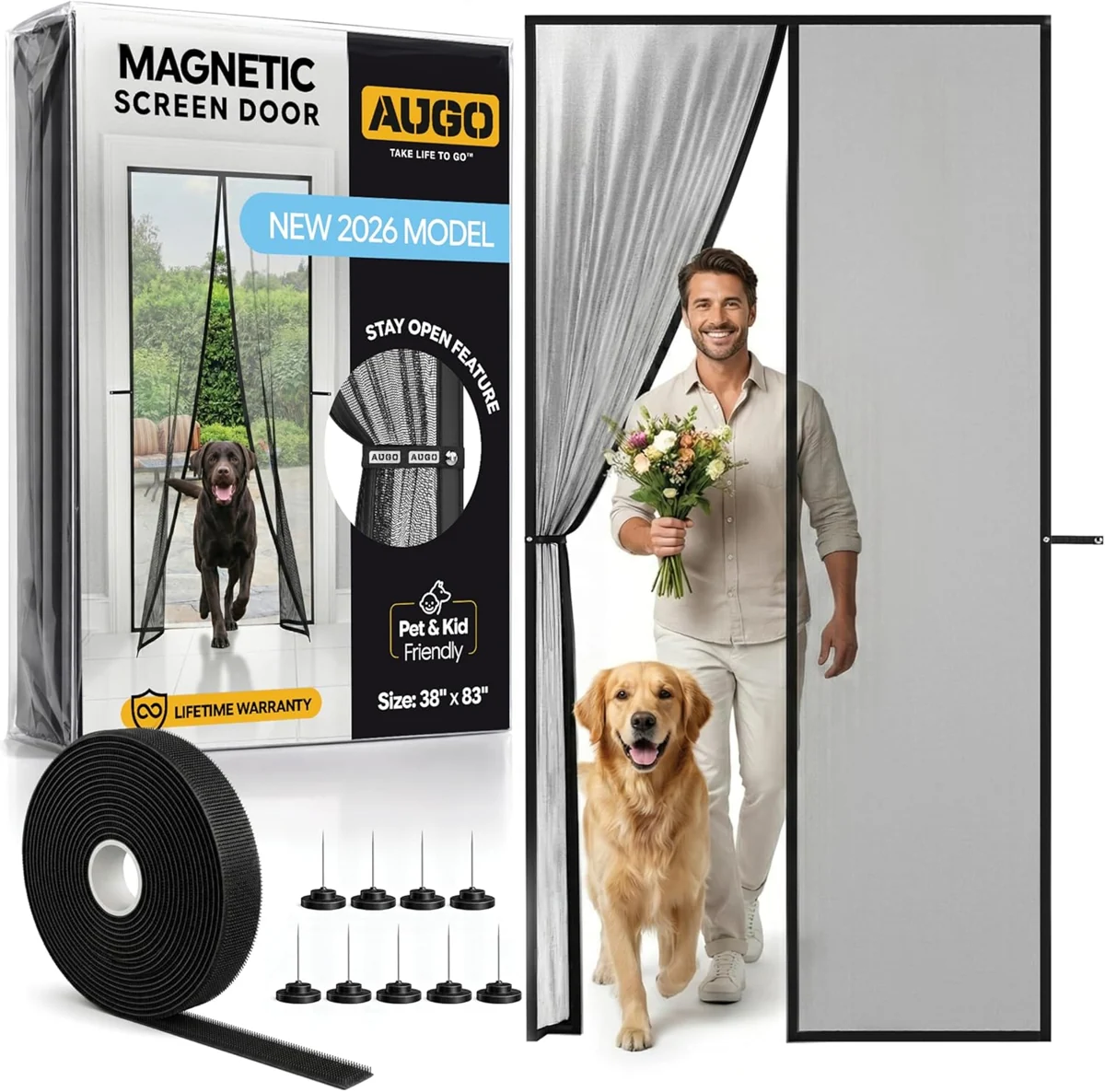
Phifer supplies a wider solar-screen mesh roll for custom fabrication, while AUGO supplies a completed magnetic doorway screen rather than raw replacement mesh.
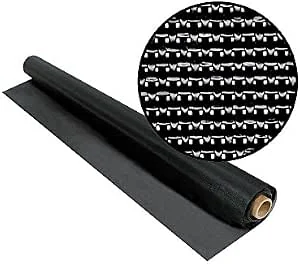
Phifer Black Solar Screen Mesh
This black solar-screen mesh is supplied as a wide roll for custom screen fabrication. The material is cut to the dimensions of the frame or opening.
This doorway screen uses mesh panels with a magnetic center closure. The supplied assembly hangs across a doorway rather than fitting into a conventional window-screen frame.