This collection brings together several different electrical references. Start with the question each chart addresses, then keep its units, legend and assumptions beside any value you record.
Choose the relevant reference
- DC resistance table: conductor resistance by size and material, with its stated length and temperature basis. Resistance is a different quantity from a cable's allowable current.
- Wire, fuse and holder PDF: the original linked document retained below alongside the other references.
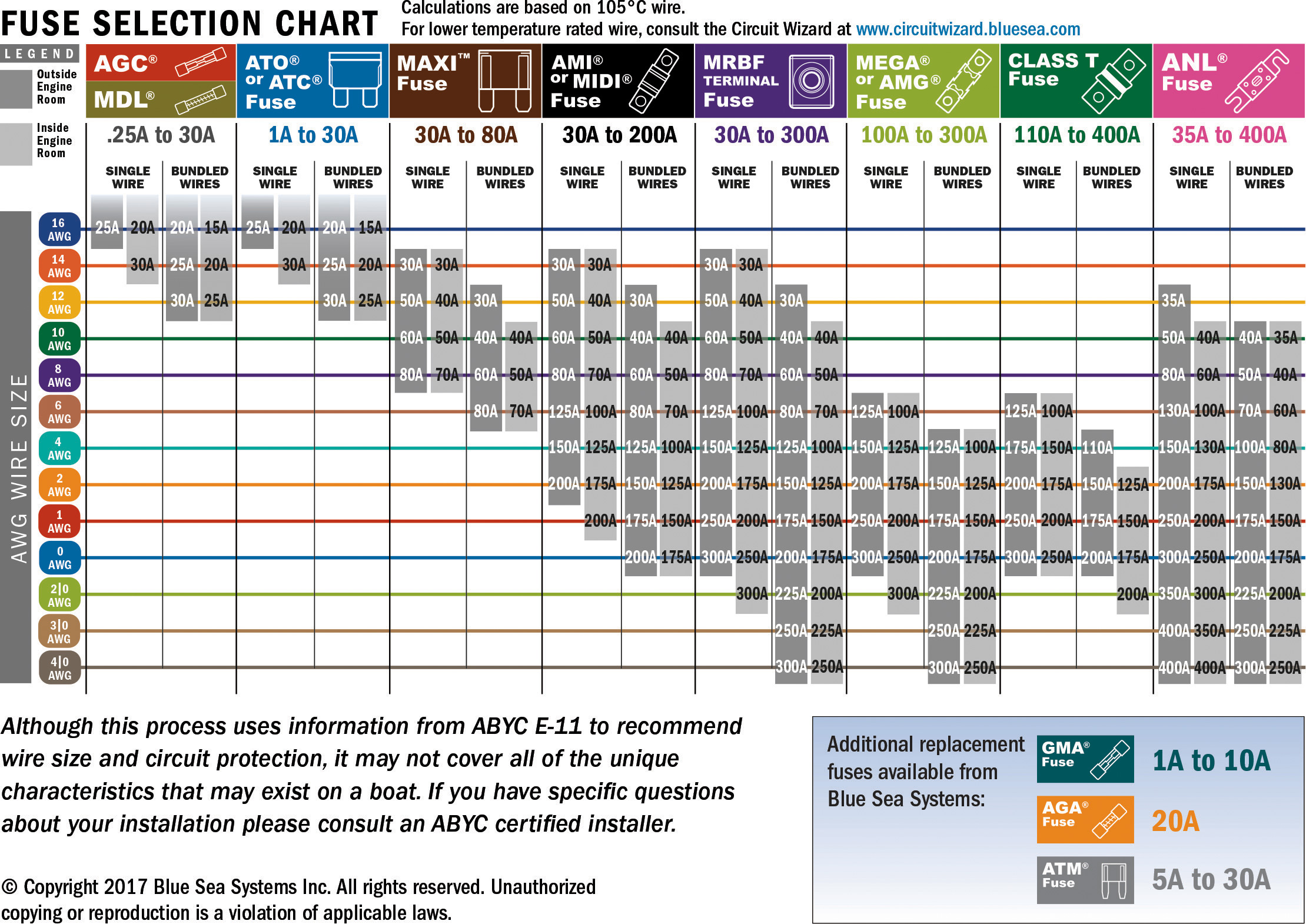
- Blue Sea fuse-selection image: a chart with wire-size, fuse-family and installation-condition distinctions. Its printed note identifies a 105°C wire basis and a marine installation context.
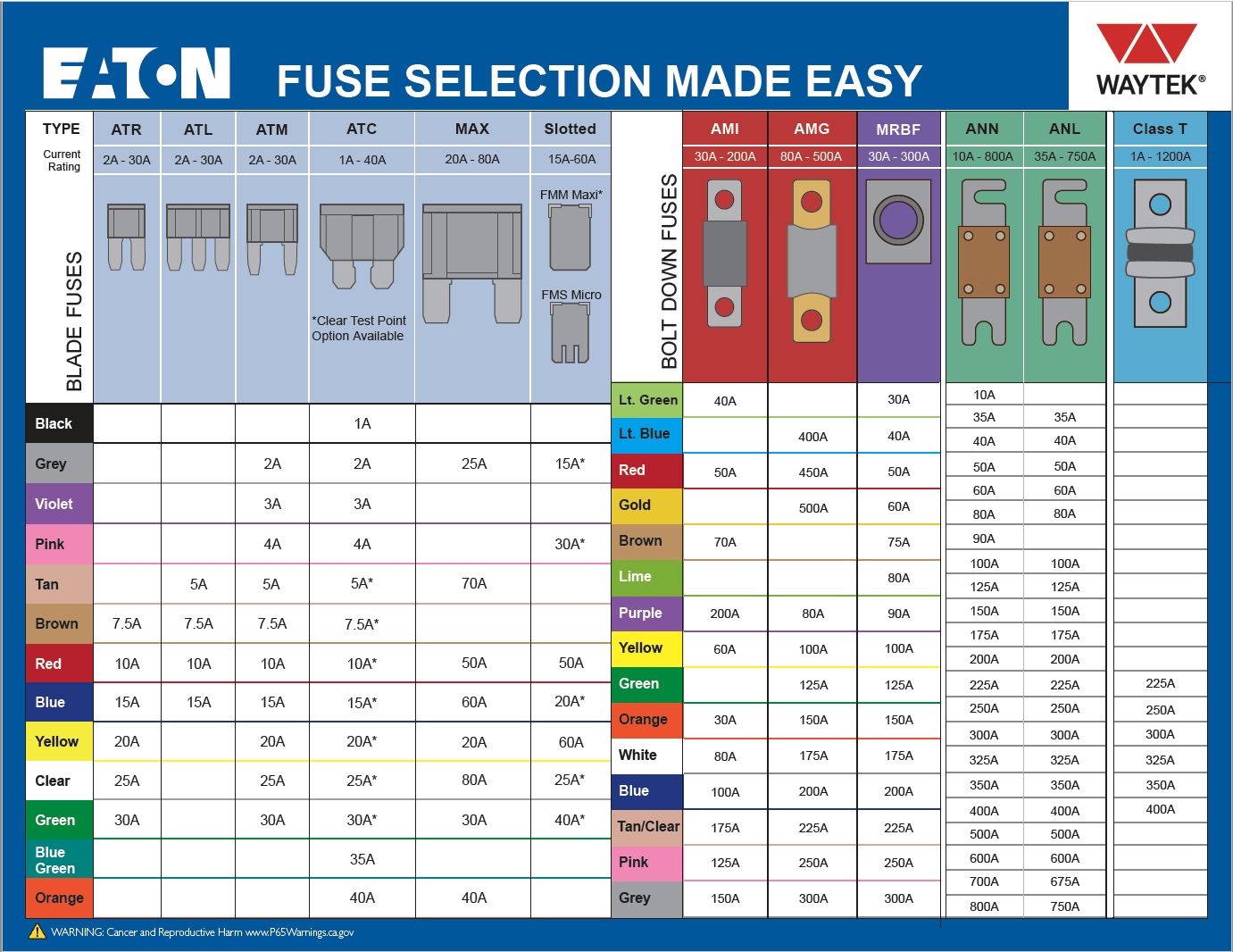
- Waytek/Eaton image: fuse-family illustrations and a colour/rating comparison.
Preserve the context when recording a value
The resistance image states ohms per 1,000 feet at 25°C and separates conductor materials and construction. Keep the unit and column heading with the number instead of copying a value on its own. The fuse-selection image has a different purpose and its own notes; one chart's assumptions should not silently become another chart's assumptions.
For a proposed circuit, collect the equipment instructions, cable specification, route, installation conditions, protective device and holder documentation.
The DC wire-sizing guide brings circuit length, chart assumptions and protection checks into one reading path.
DC Resistance Table

BlueSea Wire, Fuse, And Fuse Holder Sizing Chart
BlueSea Fuse Selection Chart
Waytek Fuse Selection Chart
Keep the design question traceable
Attach the source image or PDF, relevant row/column headings and component part numbers to your decision log. Keep the equipment and installation scope together in the cost worksheet. Use the original references below their headings with their complete notes.
Reference guide expanded October 20, 2026. Original publication date and archived references retained.