My electrical build includes exterior lights, cameras, audio equipment and controls that connect several different parts of the van. A circuit drawing helps explain the connections, but it is not the same thing as the information needed while standing in front of a switch. I want the visible controls to make sense without reopening the whole electrical drawing.
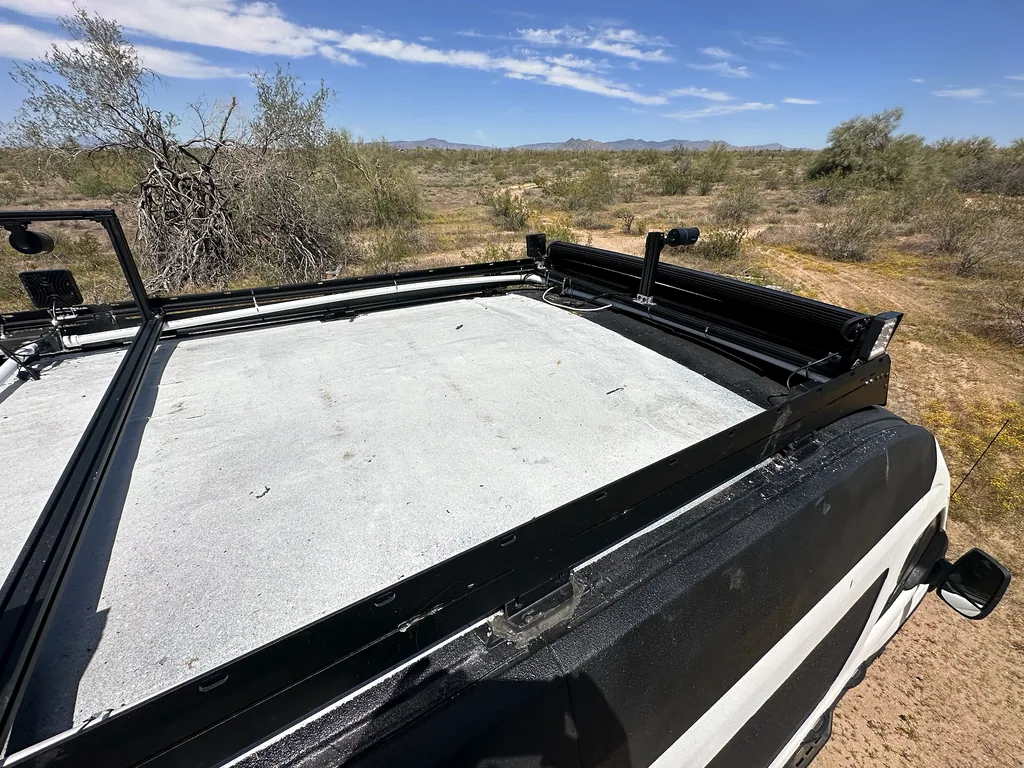
During my roof-wiring project, the work moved from individual lights and cameras to pulling the wires through the conduit and closing the junction boxes. The photographed roof layout helps me identify the locations, but the control record still needs to connect each visible name with the circuit it commands. I would keep both views together: the equipment location and the meaning of its control.
That is the job of a control-panel legend. It gives each control a clear name, explains its available positions and connects it to a more detailed record when needed. The useful result is not a panel covered in technical abbreviations. It is a small set of labels that helps me understand what I am about to change.
I would build that legend from the actual control behavior and the current electrical records. This guide explains the process, including how I would distinguish command from status, handle manual and computer control and keep the panel understandable after changes. My lights, cameras and loads page provides the build context.
Begin With The Person Using The Panel
I would start by writing the questions someone faces at the panel. Which light does this operate? Does this position turn it on directly or permit another controller to operate it? Does the indicator show a command, available power or the actual state of the load? Those questions are more useful than beginning with a label font.
The location matters as well. A control near the bed is encountered differently from one at the front or rear door. I would describe the view from which the label will be read and the task being performed at that moment. A term that is obvious on a drawing may be confusing in that physical position.
I would also consider how the panel is used when attention is divided. The name should help identify the function quickly, while a nearby legend or linked record carries the detail. That separation gives the everyday label a focused job instead of making it serve as a miniature electrical manual.
Separate The Visible Name From The Circuit Identifier
A circuit identifier is useful for tracing wires and drawings. A visible label is useful for operating the van. I would connect the two without insisting that they be identical. A short human-readable name can sit on the panel while a stable identifier connects it to the documentation.
For example, a proposed label might say rear work light while the underlying record uses a compact circuit reference. The reference can appear in the panel schedule or inside an accessible documentation area. The example describes a naming method rather than the confirmed name of a particular control in my van.
This separation also makes changes easier to manage. A circuit can retain its identifier when a clearer display name is chosen. Conversely, a familiar panel name should not conceal a change in the connected load. The schedule should show which function, circuit and revision belong together.
Name The Actual Function Clearly
I would prefer a name that identifies the controlled thing and its useful location. Light is too broad when the van has several lighting groups. Auxiliary can become equally vague once several accessories have been added. A clearer name reduces the need to experiment with switches just to learn what they do.
Direction words need a consistent viewpoint. Front, rear, left and right should mean the same thing in the panel schedule, drawings and wire records. I would define that convention once and apply it everywhere. If a label is read from outside the van, the name should still remain consistent with the recorded convention.
The same care applies to equipment grouped behind one control. If a switch affects several loads, I would name the group accurately and list its members in the schedule. A label for one device should not quietly operate other unrelated equipment that the name does not explain.
Record Every Available Control Position
Before writing the finished legend, I would list the physical positions or actions available at each control. A maintained two-position switch, a momentary button and a selector with several positions need different descriptions. Their appearance alone does not explain their operation.
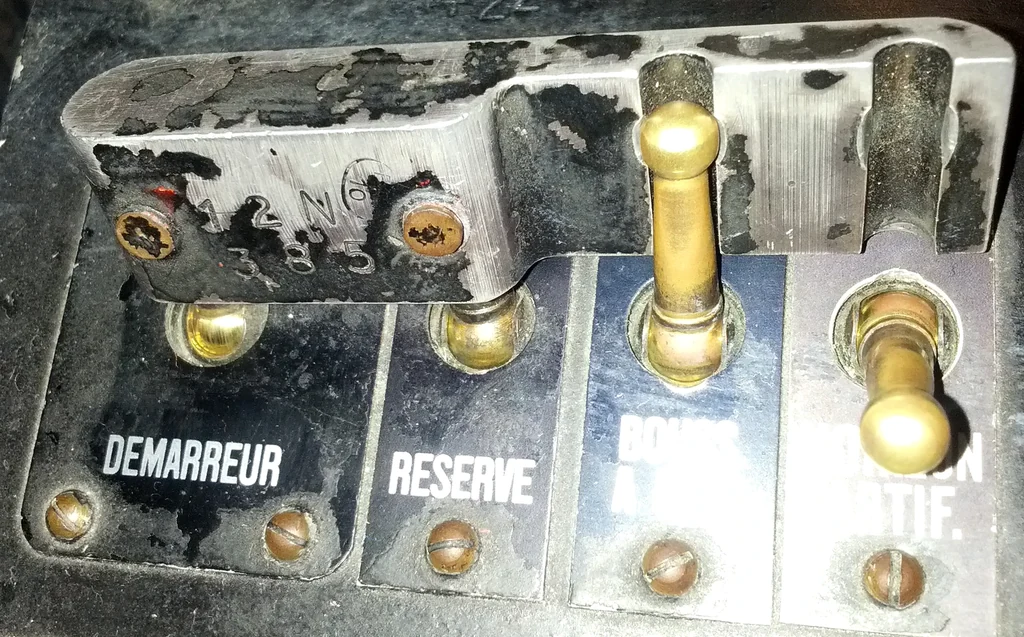

For each position I would write the intended result in plain language, then compare it with the actual design record. That step catches ambiguous words before they are printed. A label saying automatic is not useful unless the record explains which controller, input or condition is responsible.
A short position table can live beside the detailed panel schedule. The visible panel may only need the position names, but the underlying record should say what those names mean. That creates a reliable reference if the control is revised or if a similar-looking switch is fitted in another location.
Distinguish A Command From An Observed State
A control can request an action without confirming that the connected equipment performed it. I would keep that difference visible in the legend. A switch position, an indicator supplied by the control circuit and a genuine feedback signal can represent different facts.
For a proposed indicator, I would record exactly what supplies it and what that connection establishes. If it shows that a command is active, I would describe it as a command indication. I would not rename it equipment running unless the design actually provides that information.
This distinction is especially useful when a load has its own switch, controller or power path. A tidy green light on a panel can otherwise create more certainty than the circuit supports. The schedule should connect each indicator's meaning to its source so the label remains accurate after later electrical changes.
Keep Manual And Computer Control Understandable
My build evidence includes manual and computer-control ideas for lighting. Where more than one control path exists, I would write down how they interact before choosing the panel names. The user-facing question is simple: what does this control change, and what can still act independently?
I would distinguish a direct manual command from enabling another control path. Those are different actions even if they use similar switches. A label should not suggest that a position disables all other behavior unless the actual design establishes that result.
The diode OR control guide addresses the logic question separately. The panel legend has a different purpose: translating the confirmed behavior into names that make sense at the point of use. The two records should agree while each remains focused on its own task.
Use A Small, Consistent Vocabulary
I would choose a limited set of terms and use each one consistently. On, off, enable, manual and automatic should not change meaning from one part of the panel to another. If a function needs a different term, I would explain why in the schedule rather than borrowing a familiar word loosely.
Abbreviations should be tested against the actual audience. A short code that is clear during construction may be forgotten months later. I would keep unavoidable abbreviations in a small legend and use a longer readable function name where space permits.
Consistency is also visual. Similar kinds of labels should follow the same pattern for capitalization, placement and alignment. That does not require every line to have the same length. It means the reader can recognize the relationship between a name, a control and any associated indicator without solving a new layout each time.
Place Labels Where Their Association Is Obvious
A label between two controls can be ambiguous even when the wording is excellent. I would draw the panel at actual size and check which control each label appears to belong to. Spacing, alignment and grouping can do much of the work before color is considered.
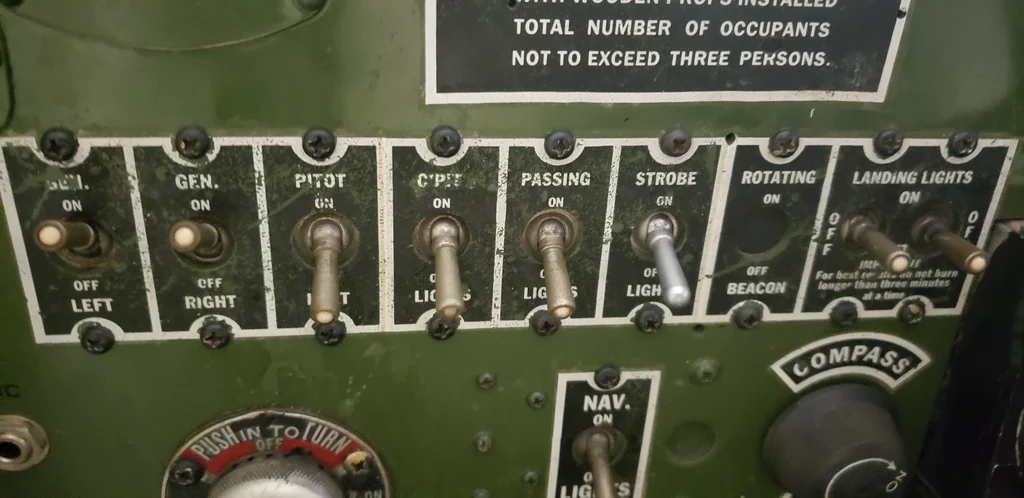

I would keep each name close enough to its control to preserve the association while leaving room for fingers, switch movement and the visible position marks. The available space should be checked with the actual control geometry, not just a small icon on a planning screen.
For a crowded panel, grouping may be more useful than smaller text. Exterior functions, interior lighting and monitoring can be arranged into understandable areas if the actual wiring and layout allow it. I would use the panel schedule to describe those groups rather than adding decorative borders that do not correspond to the functions.
Read The Panel From Its Real Viewing Position
I would review a full-size draft from the places where the panel will actually be read. Standing at a door, sitting at a desk and lying near a bed create different angles and distances. A label readable on a computer monitor may be difficult to see in one of those positions.
The review should include nearby objects that can hide the text. A hand on a switch, an open cabinet door or equipment resting on the counter may obscure a label that looked clear in an empty drawing. I would record the problem and adjust placement before printing a finished set.
Lighting also changes the appearance of text and surfaces. I would inspect the actual label sample in the intended location rather than assuming that a preferred color combination remains readable everywhere. The goal is a practical panel that can be understood during normal use, including the ordinary changes in light inside a van.
Build A Panel Schedule Behind The Visible Labels
My panel schedule would include a control reference, visible name, physical location, device identity, available positions, behavior, connected circuit reference, indicator meaning and drawing revision. It would also identify where the supporting electrical information can be found.
Download The Blank Control Panel Labels (CSV) to connect each visible name with its positions, behavior, indicator meaning and circuit reference.
That schedule is the place for details that do not fit beside a switch. A note about a second command path or a specific monitoring relationship can remain readable in the documentation without making the panel crowded. The visible label should point to a clear function, while the schedule explains the rest.
I would keep the schedule in the same record set as the interior wire-route plan. The wire record explains where the connections travel; the panel schedule explains the interface presented to the person using them. Matching identifiers connect the two without forcing either document to do both jobs.
Walk Through A Complete Operating Scenario
I would test the legend with a written scenario before making it permanent. Choose a real task, identify the control someone would reach for and describe what should happen in each relevant position. Then compare that description with the actual circuit and control records.
For an exterior-light example, the scenario might begin with arriving at a campsite and wanting illumination in one area. I would check whether the name identifies that area, whether the position labels explain the available commands and whether an indicator's meaning is clear. These are planning checks, not a claim about a completed test in my van.
A second scenario should cover returning the controls to the intended travel state. If the legend makes the first action clear but leaves the ending state ambiguous, the wording needs more work. The complete routine is a better test than asking whether each individual label looks attractive.
Make Similar Controls Deliberately Different
Several identical switches can be convenient to install and confusing to use. I would give each one a distinct function name and enough separation or grouping to make its role obvious. The schedule should reflect the order actually seen on the panel.
I would avoid relying on color alone. A name and a consistent position in the group provide useful information even when color is difficult to distinguish or lighting changes its appearance. Color can reinforce a relationship without being the only way to identify it.
Where two controls operate related functions, I would explain the relationship directly. Main and auxiliary are weak names if they hide which equipment is affected. A readable pair of specific names is usually more useful than a short pair that requires remembering a private construction nickname.
Keep Label Revisions Connected To Electrical Changes
A wiring change can make a correct label inaccurate without changing the panel's appearance. I would therefore include the label set in the same revision process as the circuit drawing. The change record should identify which controls and descriptions need checking.
The van-build decision log is useful for preserving the reason behind the change. The panel schedule then records the resulting current behavior. Keeping those roles separate makes it possible to understand both what the panel does now and why it was arranged that way.
Old label artwork can remain in the project history, but the current file needs an unambiguous revision. I would not leave two similarly named print files beside each other without identifying which one matches the installed arrangement. A small revision note in the documentation is enough to prevent that confusion.
Photograph The Finished Legend With Its Context
Once a label set is fitted, I would photograph the complete panel and closer views of any dense area. The wide view shows the control order and surrounding location; the close views preserve the wording and position marks.
A useful photograph also shows the relationship to nearby switches and indicators. Cropping each label into isolation can remove the very association the record is meant to preserve. I would keep a full panel image beside the schedule and use detail images only as supplements.
If the panel is changed, I would update the current photograph while preserving the earlier version in the history. The image should match the schedule's revision rather than simply being the sharpest photograph available. That creates a dependable reference when comparing a drawing with the physical van.
Create A Clear Record For Unfinished Functions
An unfinished control should remain distinguishable from a working function in the private build record. I would identify what is physically present, what is connected and what still needs to be completed. Those are separate facts during construction.
For a panel being built in stages, I would avoid printing a finished operational name that implies a connection has already been completed. Temporary identification can describe the intended location while the schedule preserves its actual status. The final label set follows the confirmed arrangement.
This is particularly useful when a panel opening is reserved for future equipment. The space, the future idea and the current wiring state should not collapse into one assumption. A clear record helps the next work session begin with the actual state of the build rather than the appearance of a finished panel.
Keep The Legend Useful When Troubleshooting
When a function does not respond as expected, the legend should help identify the correct record quickly. I would use the visible name to find the panel-schedule row, then follow its circuit identifier to the drawing and route information.
The schedule should explain what the control and indicators actually establish before any conclusion is drawn. That keeps the first observation precise. A commanded-on position is one fact; a monitored state is another; an unresponsive load is a separate observation.
I would record any later correction against the same identifiers. The aim is to preserve a coherent trail from the panel to the circuit and back. A well-maintained legend becomes more valuable over time because each change updates the same structure rather than creating a disconnected set of notes.
Questions I Would Ask Before Printing
Does every control have a specific readable name? Are the physical positions described accurately? Is the label clearly associated with the correct switch? Does each indicator's wording match the information its circuit provides? Can the panel be understood from its real viewing position?
I would then compare the panel schedule with the current drawing and wire records. A polished label set should not get ahead of the confirmed design. Any unresolved behavior belongs in the private work list until it is established, while the finished legend describes what is actually known.
Finally, I would walk through both a normal task and the return to the intended resting or travel state. If the legend supports those complete actions, it is doing useful work. If it requires a long spoken explanation, I would simplify the wording or grouping before making it permanent.
Write A Plain-Language Behavior Table
Before laying out the artwork, I would write a sentence for each available action. The sentence begins with what the person does and ends with what the confirmed design commands or indicates. This makes vague terms easier to spot before they become permanent labels.
A proposed manual position might command a named lighting group, while another position permits a separate controller to issue its command. The exact relationship belongs in the design record. I would use the table to make sure the visible names preserve that relationship rather than suggesting a broader action.
The table should also describe what remains unchanged. That information belongs in the detailed record when it is needed to understand two related controls. The visible panel can remain concise, while the schedule explains why operating one control does not necessarily alter another function.
Once the sentences are clear, I would shorten them into readable panel names and position marks. Then I would read the shortened version back against the full table. If the shorter wording changes the meaning, it needs another revision before printing.
Plan For A Familiar Function In An Unfamiliar Moment
A label is often read when something differs from the usual routine. I might be using the van from a different position, returning after time away or looking for a function that is rarely operated. The legend should remain understandable without relying entirely on muscle memory.
I would therefore test the wording independently of the physical order. Cover the neighboring labels and ask whether the remaining name still identifies a function. Then view the whole group and check whether the order and spacing reinforce that meaning. Both individual clarity and group organization matter.
A small reference card can carry the position table for functions that need more explanation. It should use the same names and identifiers as the panel schedule, not introduce a second set of abbreviations. That gives occasional-use functions a fuller explanation without crowding the panel itself.
When the routine changes, I would update that card with the schedule and photographs. The useful system is a consistent set of records that remains readable in an unfamiliar moment, rather than a beautiful panel whose meaning only survives in the builder's memory.
My Control-Label Takeaway
A good panel legend translates electrical behavior into a usable interface. It tells me which function I am changing, what each available action means and where to find the deeper record. That is more useful than filling a panel with abbreviations copied from a schematic.
I would start with the actual behavior, choose consistent names and review the layout at full size in the van. The visible labels, panel schedule, circuit drawing and photographs should then move through revisions together.
For component behavior, continue with the relay reference or switch-type reference. For the complete system, return to my electrical overview. The legend sits between those technical records and the everyday act of using the van.