Manufacturer reference
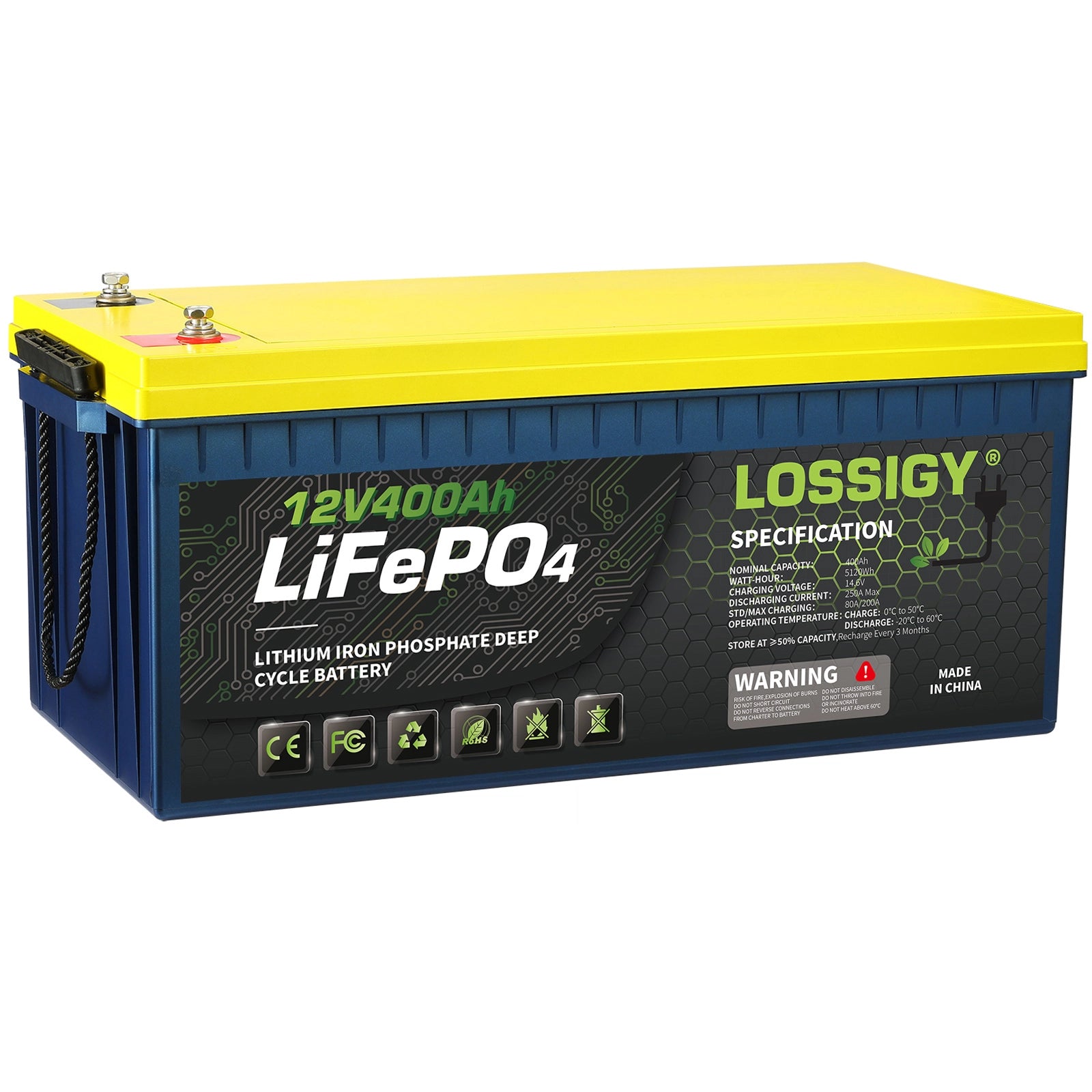
LOSSIGY 12V 400Ah Battery
LOSSIGY identifies this battery as a 12V 400Ah LiFePO4 model. I used two Lossigy 400Ah batteries for house-power storage in my van.
View manufacturer detailsI used two Lossigy 400Ah batteries for the living-area electrical system. They store energy between charging opportunities, while the original Ford Transit starter battery serves the vehicle.
LOSSIGY identifies this battery as a 12V 400Ah LiFePO4 model. I used two Lossigy 400Ah batteries for house-power storage in my van.
View manufacturer details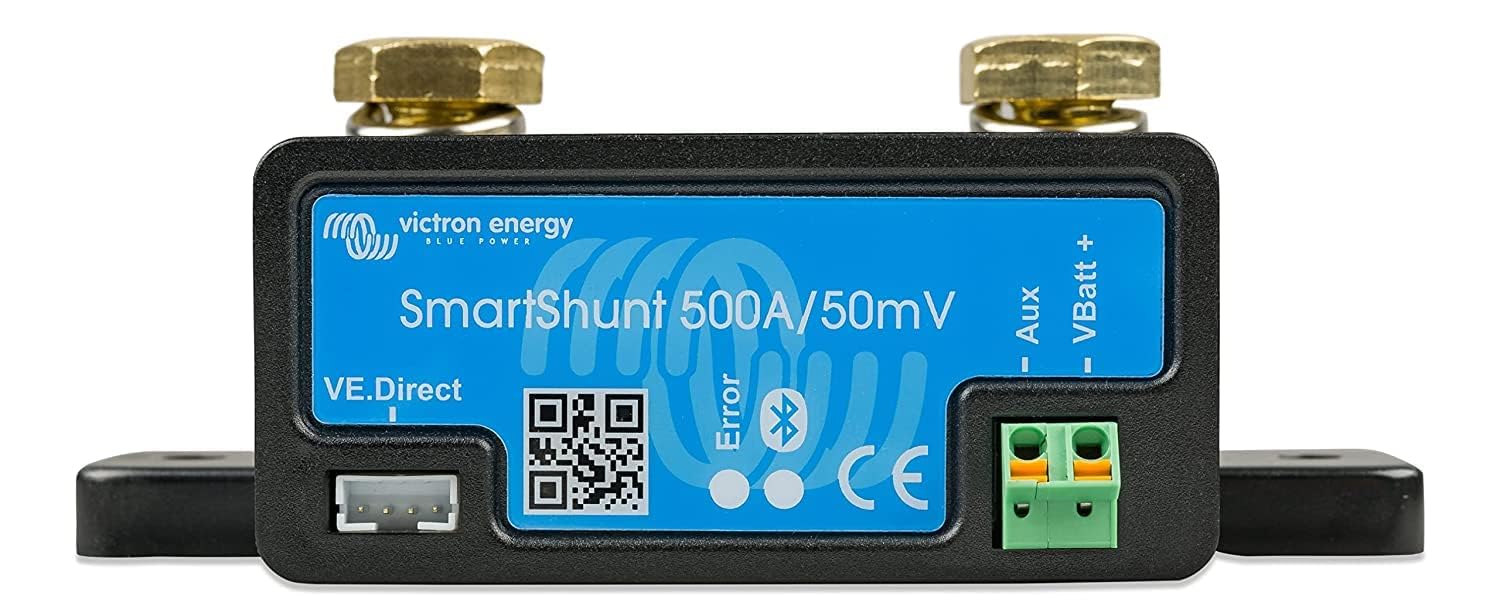
The Victron SmartShunt combines a current shunt with Bluetooth battery-monitoring electronics. Its readings are viewed through the VictronConnect app rather than a dedicated front-panel display.
View on AmazonAmp-hours describe charge capacity at the battery’s stated conditions. To express nominal stored energy in watt-hours, multiply nominal voltage by amp-hours.
Energy delivered to an appliance also depends on operating limits, the load and conversion losses. A battery label supplies a capacity figure; runtime describes how long a particular load operates.
The hub’s energy-budget example turns operating watts and time into daily watt-hours. Compare that demand with stored energy, using the same measurement point throughout the calculation.
For cycling devices, use energy measured over the day rather than multiplying the largest printed wattage by twenty-four hours. For short-duration devices, include the number of uses as well as the length of each use.
The MultiPlus converts stored DC energy into AC. Its output rating describes the AC loads it can supply; the battery capacity helps determine how long those loads can run.
Adding battery capacity does not change the MultiPlus output rating, and fitting a larger inverter does not add stored energy. The AC power guide explains the inverter and charger ratings.
My batteries are supported by three charging routes: roof solar through the SmartSolar MPPT 150/60, vehicle charging through two Victron Orions, and external AC through the MultiPlus inverter charger.
I used a Victron SmartShunt 500A to monitor the battery system. The monitoring guide explains current readings, energy totals and state-of-charge estimates.
| Component | Confirmed build detail |
|---|---|
| Lossigy batteries | Two batteries, each labeled 400Ah |
| Vehicle starter battery | The Ford Transit starter battery |
| Battery monitor | Victron SmartShunt 500A |
| Solar charger | Victron SmartSolar MPPT 150/60 |
| Vehicle chargers | Two Victron Orion DC–DC chargers |
| AC inverter charger | Victron MultiPlus |
Four Rich Solar 200W roof panels, the SmartSolar MPPT 150/60, connectors and cable entry.
Why I bought the Renogy charger first and replaced it with two Victron Orion chargers after the input-terminal failure.
The SmartShunt 500A, Raspberry Pi and Victron USB interfaces in the monitoring equipment.