Replacement charger
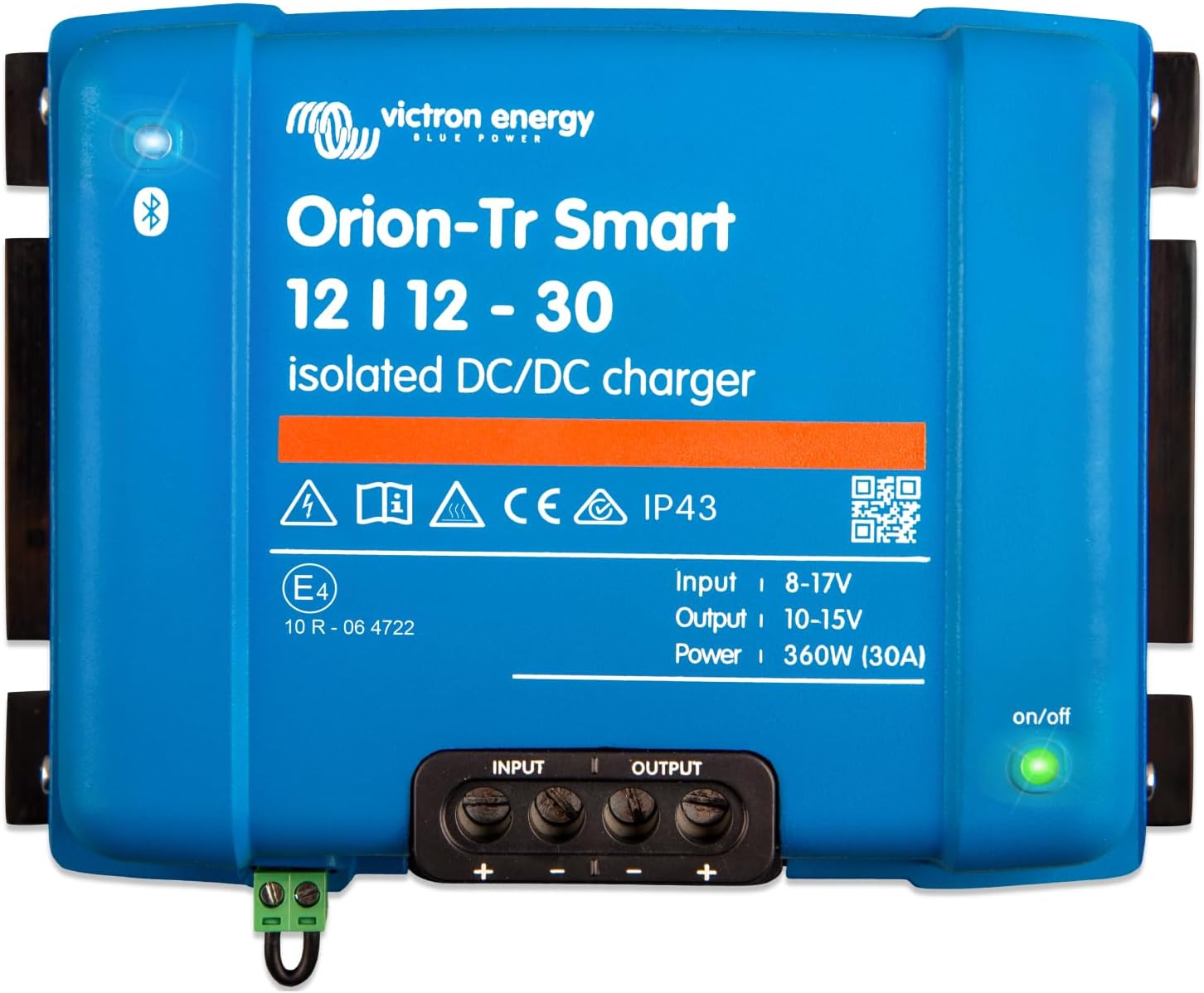
Victron Orion-Tr Smart 12/12-30 Charger
This isolated DC-to-DC charger transfers charging power between 12-volt battery systems. The Orion-Tr Smart 12/12-30 model includes Bluetooth access to its settings.
View on AmazonI first bought and tried a Renogy 60A DC–DC charger because it was less expensive than the two Victron Orion chargers.
This isolated DC-to-DC charger transfers charging power between 12-volt battery systems. The Orion-Tr Smart 12/12-30 model includes Bluetooth access to its settings.
View on Amazon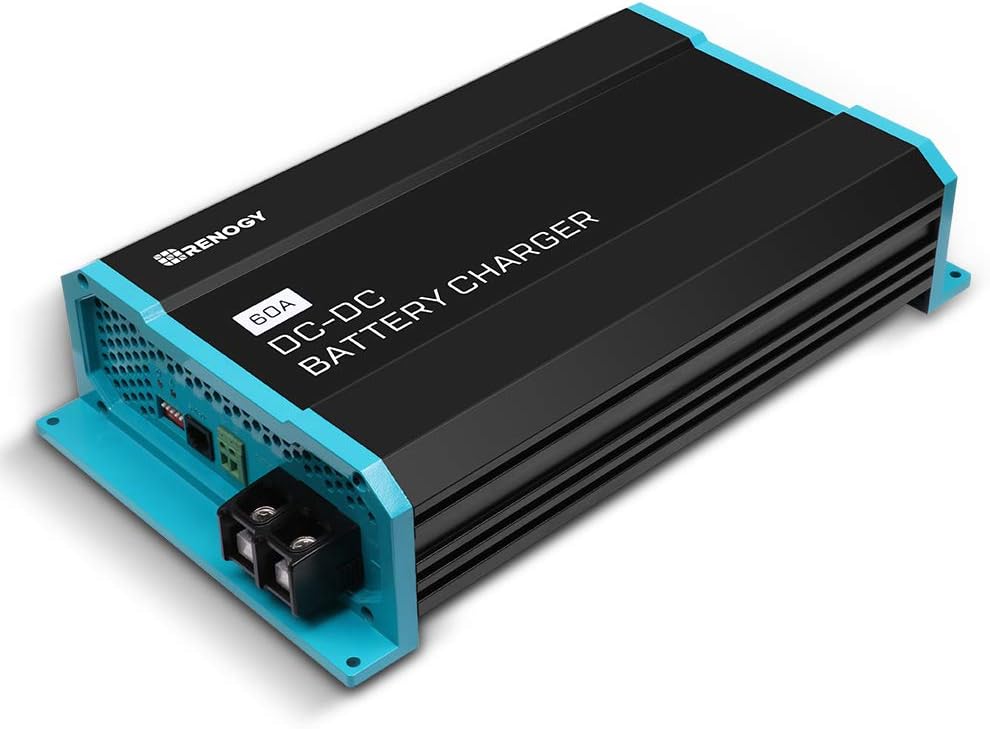
This DC-to-DC charger transfers charging power between 12-volt battery systems. Its enclosure provides separate input and output terminals for the two sides of the charging circuit.
View on AmazonThe Renogy burned out at the input terminals connected to the vehicle battery. I replaced it with two Victron Orion DC–DC chargers.
A DC–DC charger manages charging from the vehicle electrical system into the house batteries.
The Ford Transit retains its original starter battery. The two Lossigy house batteries supply the living-area system.
Vehicle charging sits alongside roof solar through the SmartSolar MPPT controller and AC charging through the MultiPlus. These are the three charging routes described in the main hub.
For battery readings during a drive, note the active sources and running loads. The battery-monitoring guide explains how to interpret those measurements, and the battery guide covers house storage.
| Stage | Equipment and decision |
|---|---|
| Original choice | Renogy 60A DC–DC charger |
| Reason for the first choice | It cost less than the two Orion chargers |
| Problem encountered | Burnout at the vehicle-battery input terminals |
| Replacement | Two Victron Orion DC–DC chargers |
The two Lossigy 400Ah batteries I used, their storage role, and the charging and monitoring equipment around them.
The SmartShunt 500A, Raspberry Pi and Victron USB interfaces in the monitoring equipment.
Four Rich Solar 200W roof panels, the SmartSolar MPPT 150/60, connectors and cable entry.