The small nuts inside the 2020 channel could move and spin while I tried to start a bolt. That detail made nut positioning an important part of my roof-mount assembly.
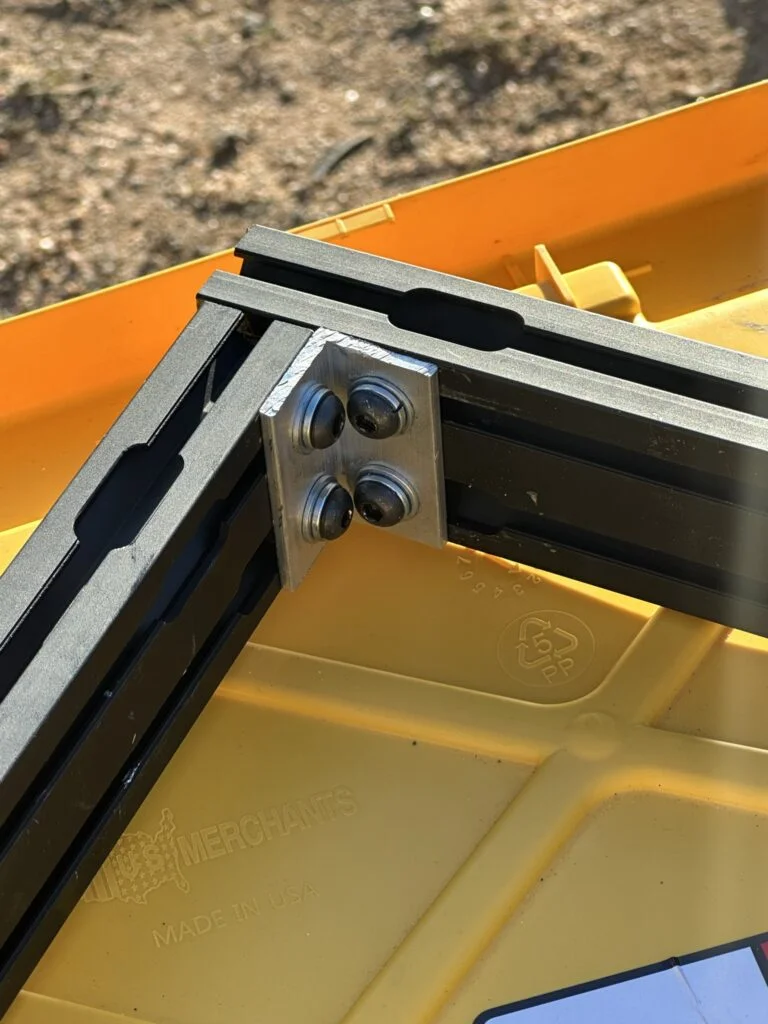
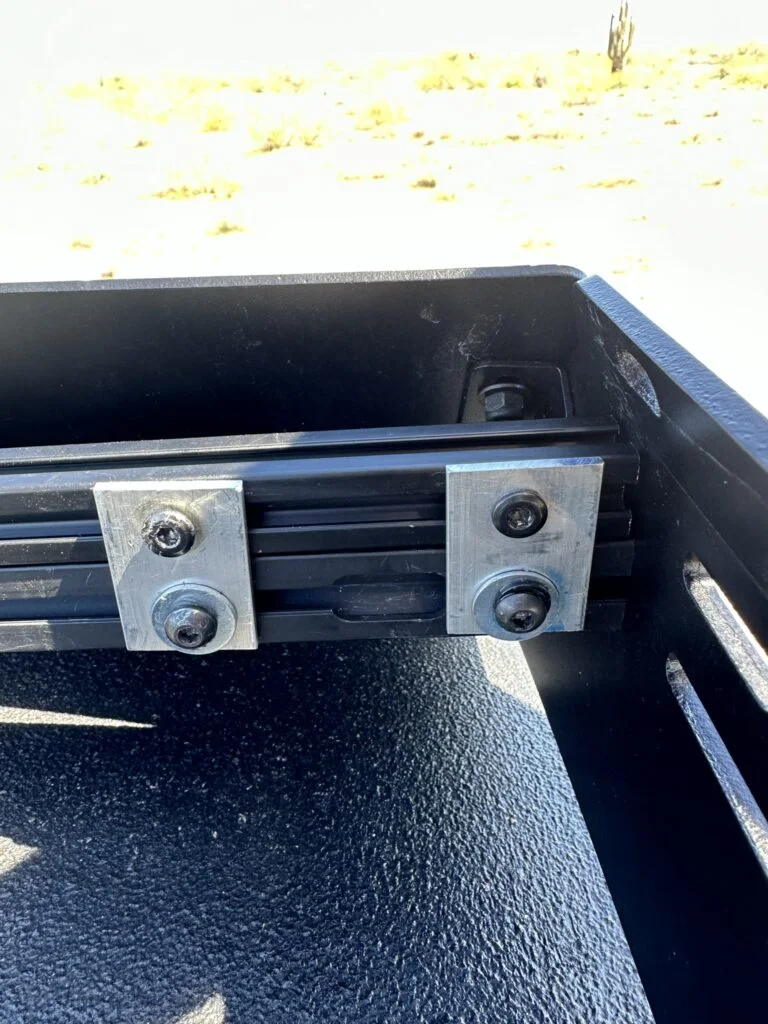
The short drilled connectors joined two different extrusion profiles. Working on the smaller 2020 side meant positioning a nut beneath a bolt while the surrounding parts limited access.
Dropping a nut into the channel was convenient, but that did not hold it in the right place. I used the thin bars of an Allen key to move the small nuts while starting the bolts. The close joint photographs show the confined area around those connections.
Another drilled angle connection in the extrusion mounting work.
Starting Bolts When the Small T-Nuts Moved in the Slot
I fitted short drilled mounts using M5 hardware on the 2020 extrusion side.
The small nuts moved and spun while I tried to start the bolts.
I used the thin bars of an Allen key to reposition the nuts in the channel.
The small mounting connections between the 2020 extrusion and my roof rack.
My Takeaway for Choosing the Kit
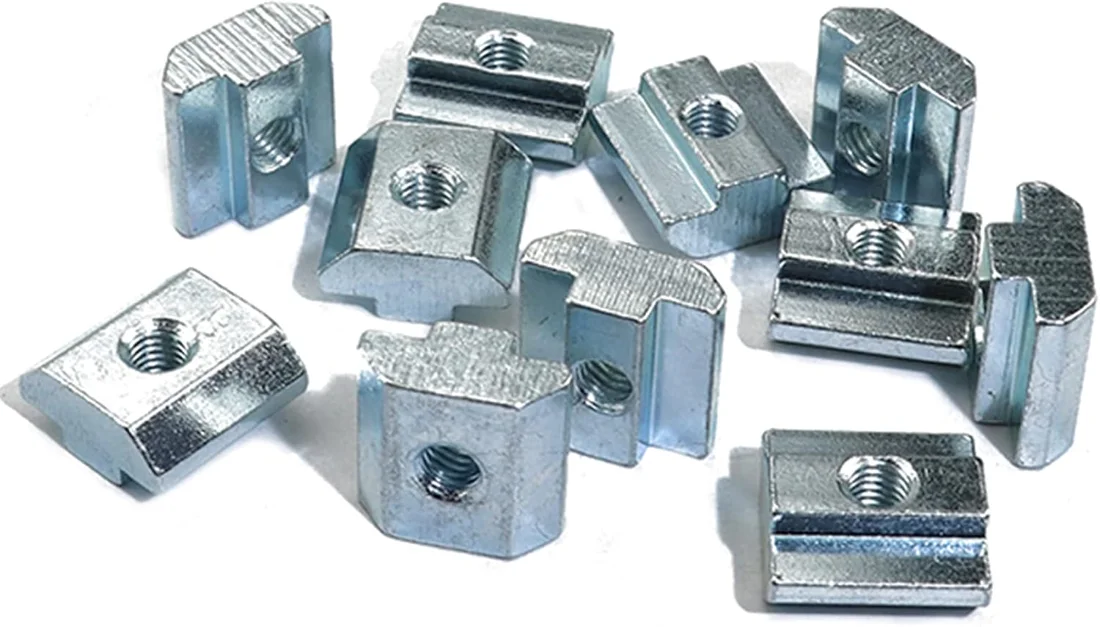
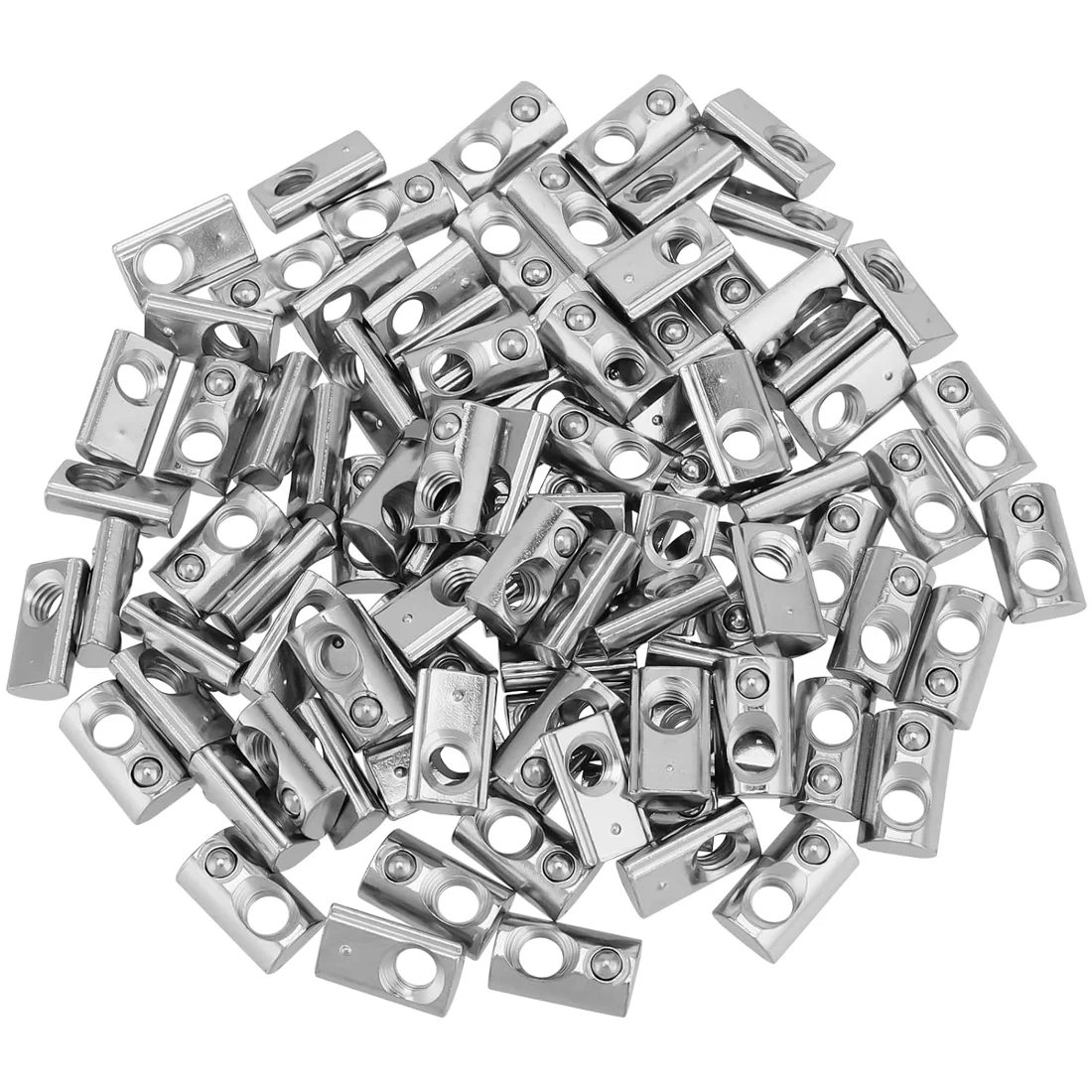
The useful comparison is how the nut gets into the slot and stays positioned while the bolt starts. QIJINTRID uses a sliding-nut body; HOZEON offers a spring-loaded roll-in arrangement. All three cards here use M5 threads, so the insertion and positioning details stay visible in the comparison.
Product Details And Van-Build Uses
Specification
Product Detail
Thread
M5
Head
Hammer-head slot form
Profile Context
2020 extrusion
My mounting notes show how awkward slot-nut positioning could be when nearby parts limited access. The hammer-head form belongs inside the channel, while the bolt reaches it through the attached component. Draw that relationship before closing the joint and keep the nut orientation with the assembly sequence. For a van frame, the useful record connects the exact nut, bolt and profile rather than assuming every M5 nut will locate the same way inside the extrusion slot.
Keep the head form, profile slot and assembly access with the M5 thread identity.
Alternative products
Two Alternatives to Compare
The QIJINTRID option uses a sliding-nut profile; the HOZEON option uses a rounded roll-in shape with a spring-loaded design. Those mechanisms differ from the hammer-head nuts in my materials. Insertion method and position control are directly relevant to the assembly problem I encountered.
These M5 sliding T-nuts provide threaded attachment points for 2020-series extrusion. Their sliding-nut shape offers a different insertion arrangement from a hammer-head nut.
These M5 roll-in T-nuts use a spring-loaded design for 2020-series extrusion. Their rounded profile provides another nut arrangement for positioning threaded attachment points in a slot.