2020 Inside-Corner Connectors: My Joint-Access Choices
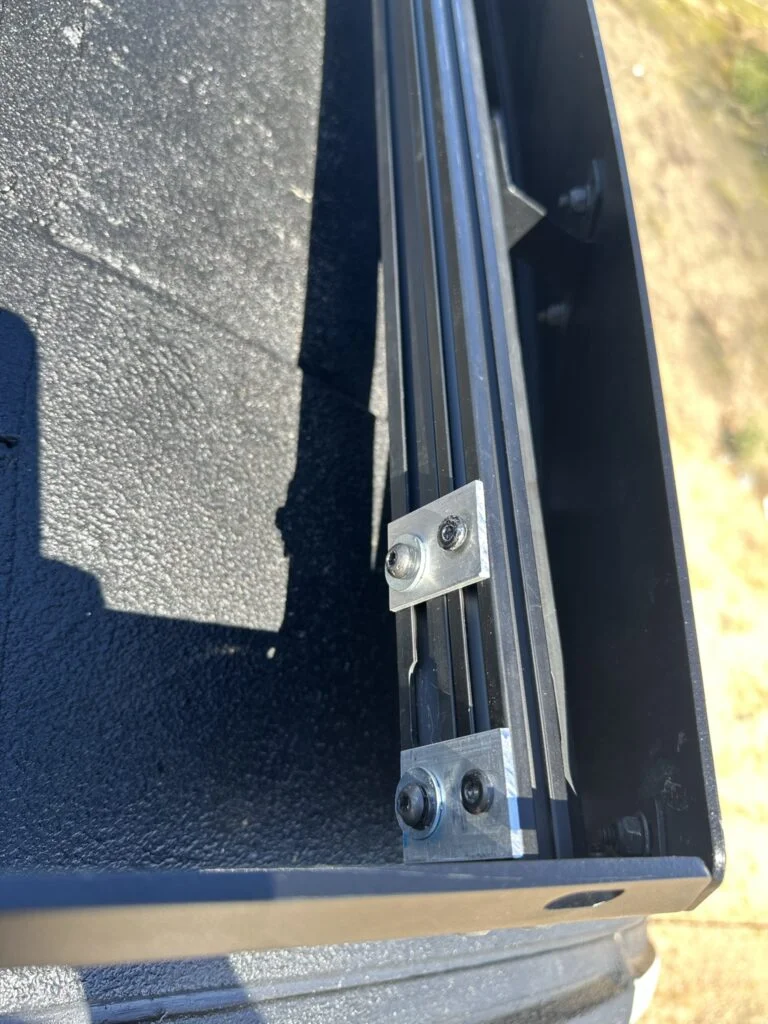
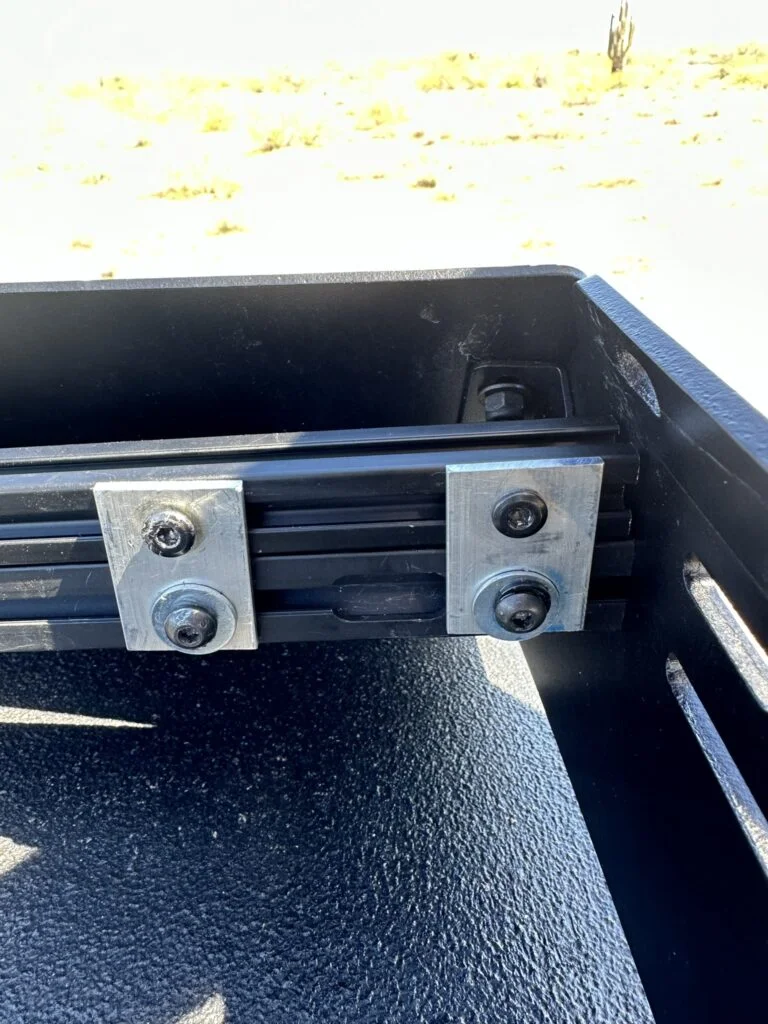
I bought these compact inside-corner connectors for the extrusion hardware kit. My actual roof joints used custom drilled connectors, and that assembly showed how connector position affects access to the screws and nuts.
The roof-mount work required me to align several small pieces while keeping the fasteners reachable. Some nuts moved inside the slot as I tried to start a bolt, and the larger rack nuts needed their own entry sequence.
That experience gives me a practical way to compare the corner connectors in my purchases. A connector tucked into a meeting corner puts its screws in a different place from an external right-angle bracket or a flat plate across the faces of the profiles.
The profiles and joint hardware during my roof-mount assembly.
Starting with Where the Connector and Screws Sit
My roof mounts combined extrusion members, drilled connectors and small fasteners.
I worked around the space available to position the hardware.
Small slot nuts could move or spin while I tried to start a bolt.
The drilled connectors and fasteners joining my added extrusion to the roof rack.
My Takeaway for Choosing the Kit
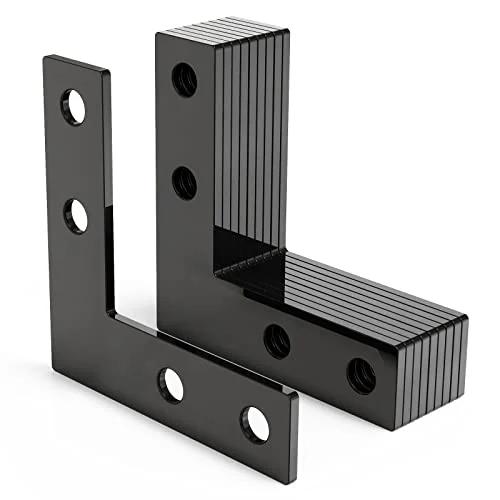
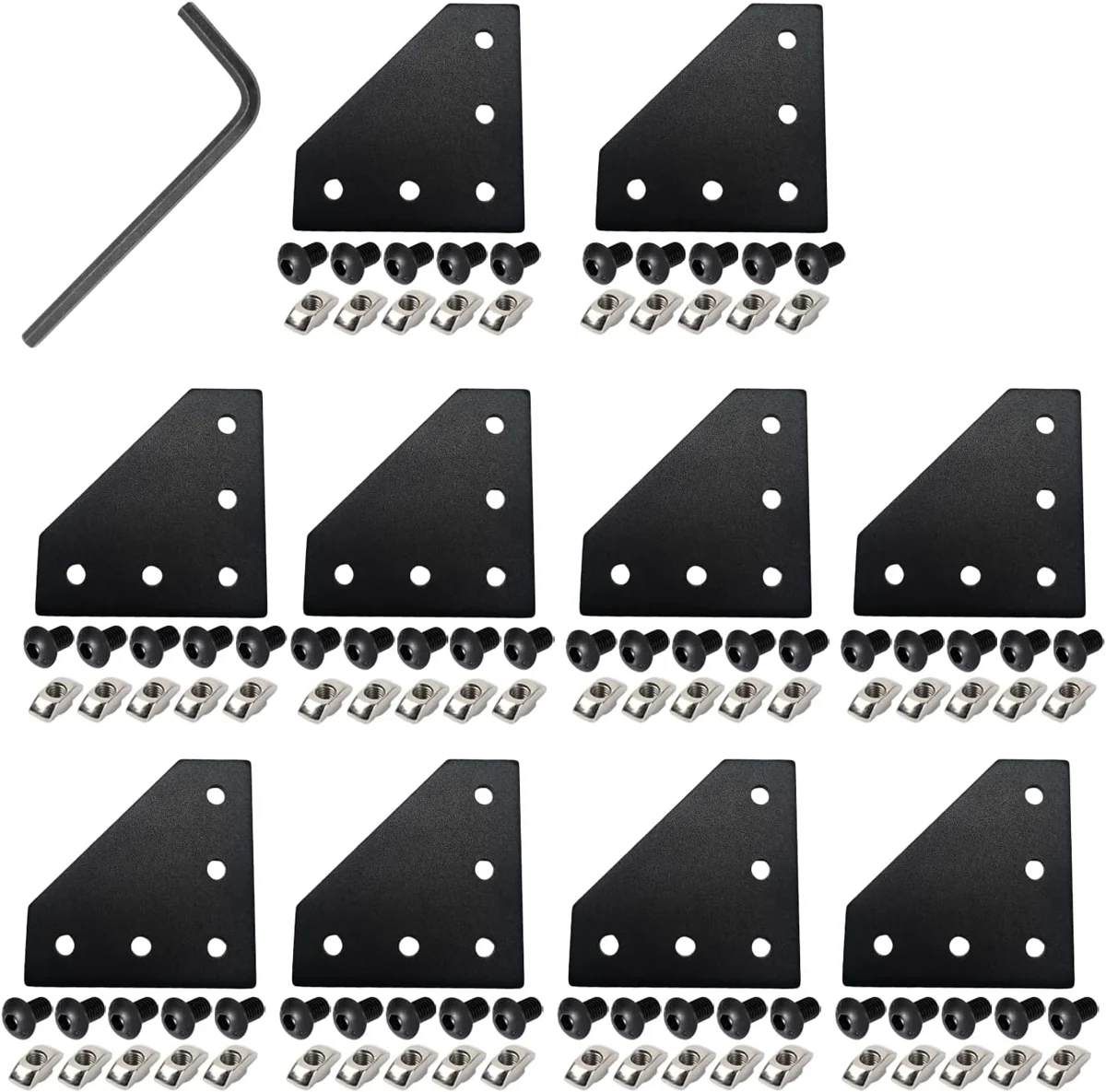
I would sketch where the profiles meet and where the fastening tool has to reach before choosing the connector shape. The Qjaiune inside connector, the external angle kit and the five-hole flat L-plate represent three visibly different joint arrangements. The shape comparison is useful without treating them as identical connections.
Product Details And Van-Build Uses
Specification
Product Detail
Brand
Qjaiune
Profile Context
2020 extrusion
Position
Inside adjoining profile corner
The compact connector sits inside the meeting corner rather than spanning the outer faces as a flat joining plate does. My roof-joint notes show why driver access mattered when small parts were already close together. For a van extrusion frame, draw the connector and screw approach before adding neighboring members. Keep the selected connector with the actual slot and profile record so the internal connection can be distinguished from the external bracket alternatives on this page.
The inside connector occupies the meeting corner; a flat plate spans the outside faces of the joined rails.
Alternative products
Two Alternatives to Compare
The right-angle bracket and five-hole L-plate use different shapes around the joint. Their external plate layout differs from a connector positioned inside the corner.
Product
Why compare this option
Purchase link
Qjaiune 2020 Inside-Corner Connectors
Compact connector positioned inside the meeting corner.