Slide-in vs Roll-in T-Nuts: My Roof-Rack Experience
Adding one more rack nut meant undoing bolts I had already tightened. My roof work made the difference between a slide-in nut and a nut that can enter elsewhere in the channel very real.
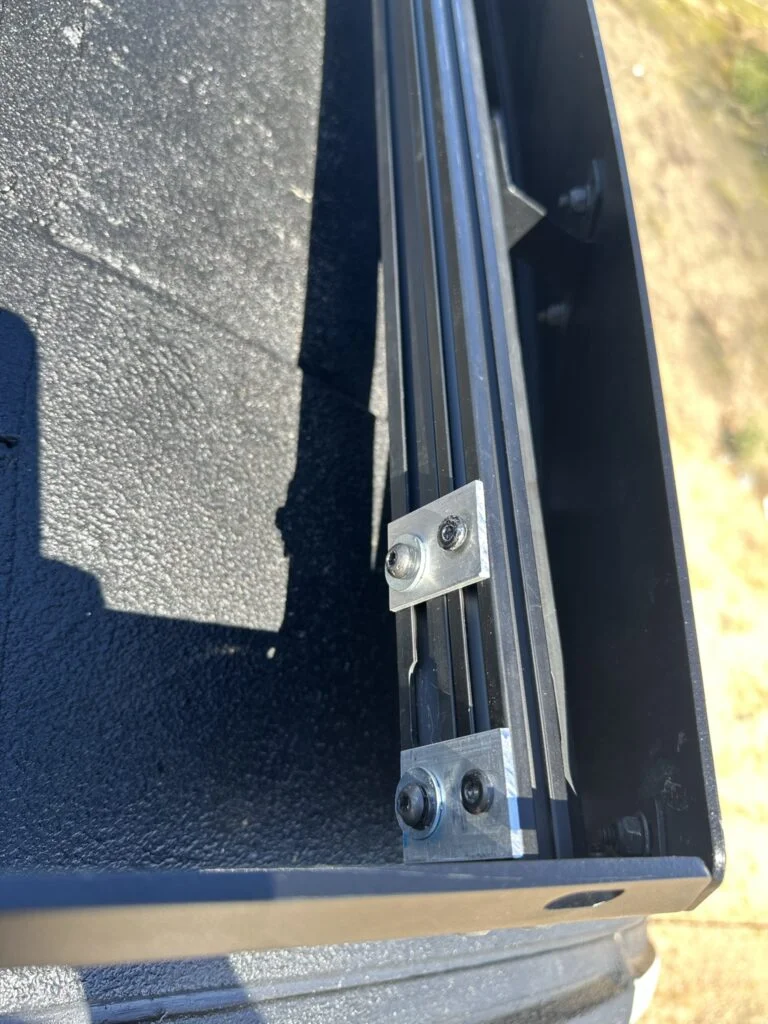
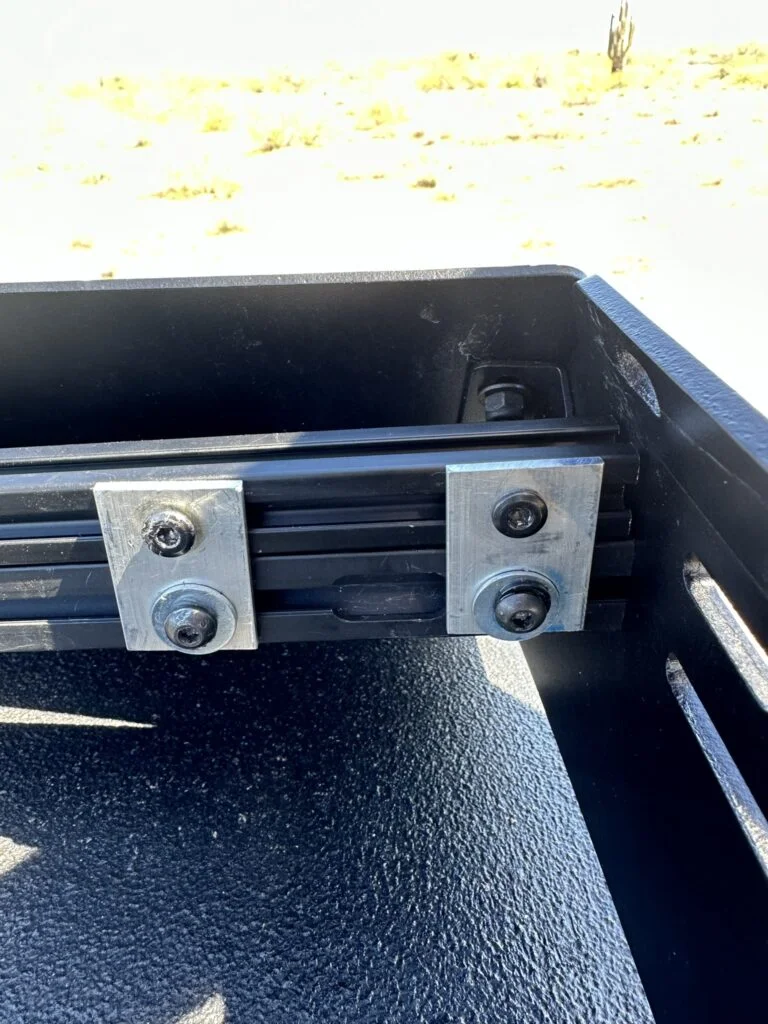
I was joining the added light-bar beam to the rack with short drilled connectors. The larger rack nuts had to reach a wider opening to enter the channel, while the smaller 2020 hardware had a different insertion and alignment problem.
The quarter-twenty slide-in nuts in my mounting purchases fit into that comparison. The time-consuming part of my documented assembly was the order of adding nuts and starting the connections, rather than simply tightening the last bolt.
The profiles and joint hardware during my roof-mount assembly.
The Insertion Order That Made Me Undo Tightened Bolts
I joined the added light-bar beam to the roof rack.
The rack nuts had to slide in through a wider opening instead of dropping into place.
I undid already-tightened bolts to add another rack nut before completing the assembly.
The drilled connectors and fasteners joining my added extrusion to the roof rack.
My Takeaway for Choosing the Kit
I would plan every attachment along the rail before closing off the entry path. The 80/20 roll-in alternative keeps quarter-twenty threads but changes the body and insertion arrangement. The M5 hammer-head option changes both the thread and the extrusion-hardware family; it is a separate comparison, not the same fastener in a different pack.
Product Details And Van-Build Uses
Specification
Product Detail
Brand
Xadnitu
Thread
1/4-20
Entry Type
Slide-in
Slide-in T-nuts need an entry path into the extrusion channel. That becomes a practical difference once cross-pieces, end caps or other fittings close off the end of a slot. For a roof-rack or interior-extrusion layout, put the required nuts in place before assembling the pieces that block access. The quarter-twenty thread identifies the bolt thread; it does not identify every compatible slot profile. Compare the nut body with the actual extrusion channel as well as the bolt size.
An assembled joint can block the slot end. Planning the nut count and positions before closing the assembly can avoid taking the extrusion apart again.
Alternative products
Two Alternatives to Compare
The 8020 roll-in nut offers quarter-twenty threads with a different insertion method. The M5 hammer-head nuts belong to the smaller metric profile hardware in my kit; their thread and profile geometry differ.
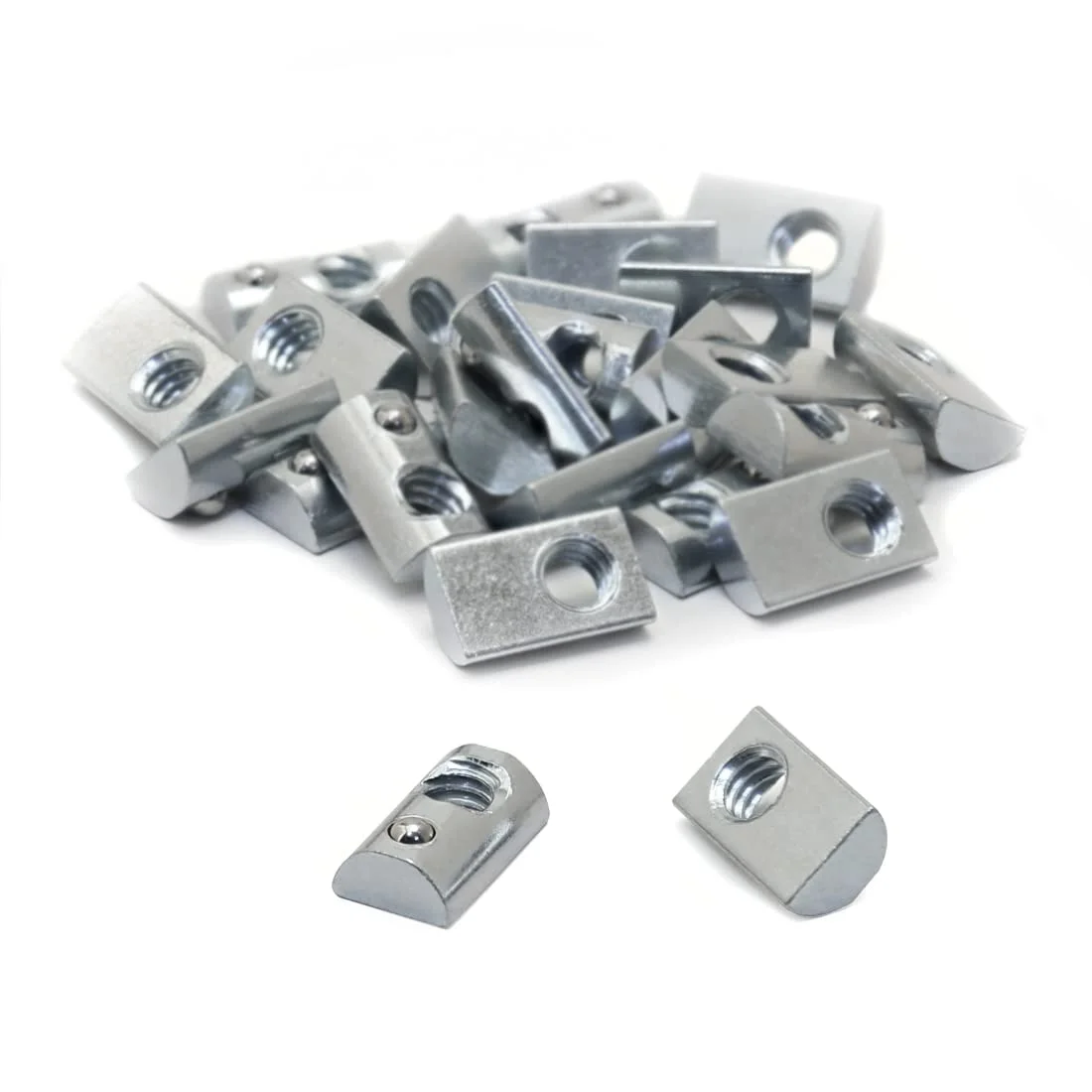
These quarter-twenty steel T-nuts use a roll-in profile with a ball spring. Their rounded shape provides another insertion arrangement for 10-series extrusion slots.
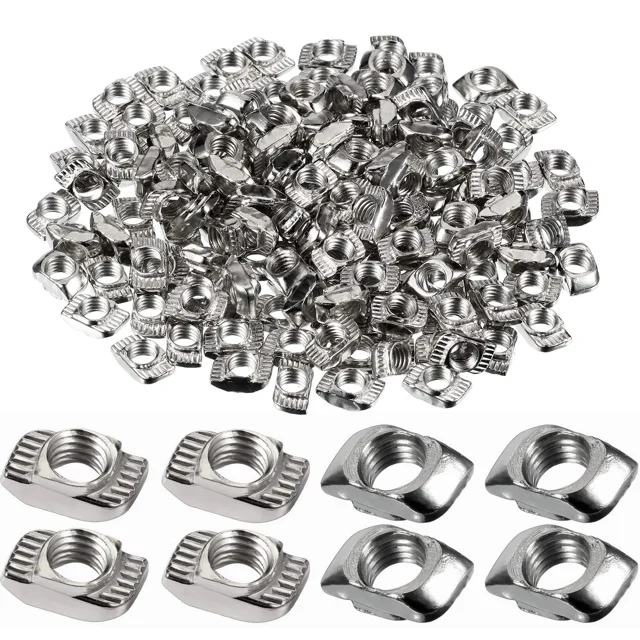
These M5 hammer-head T-nuts provide threaded attachment points in 2020-series extrusion slots. Their shaped heads sit inside the channel while bolts fasten the attached parts.