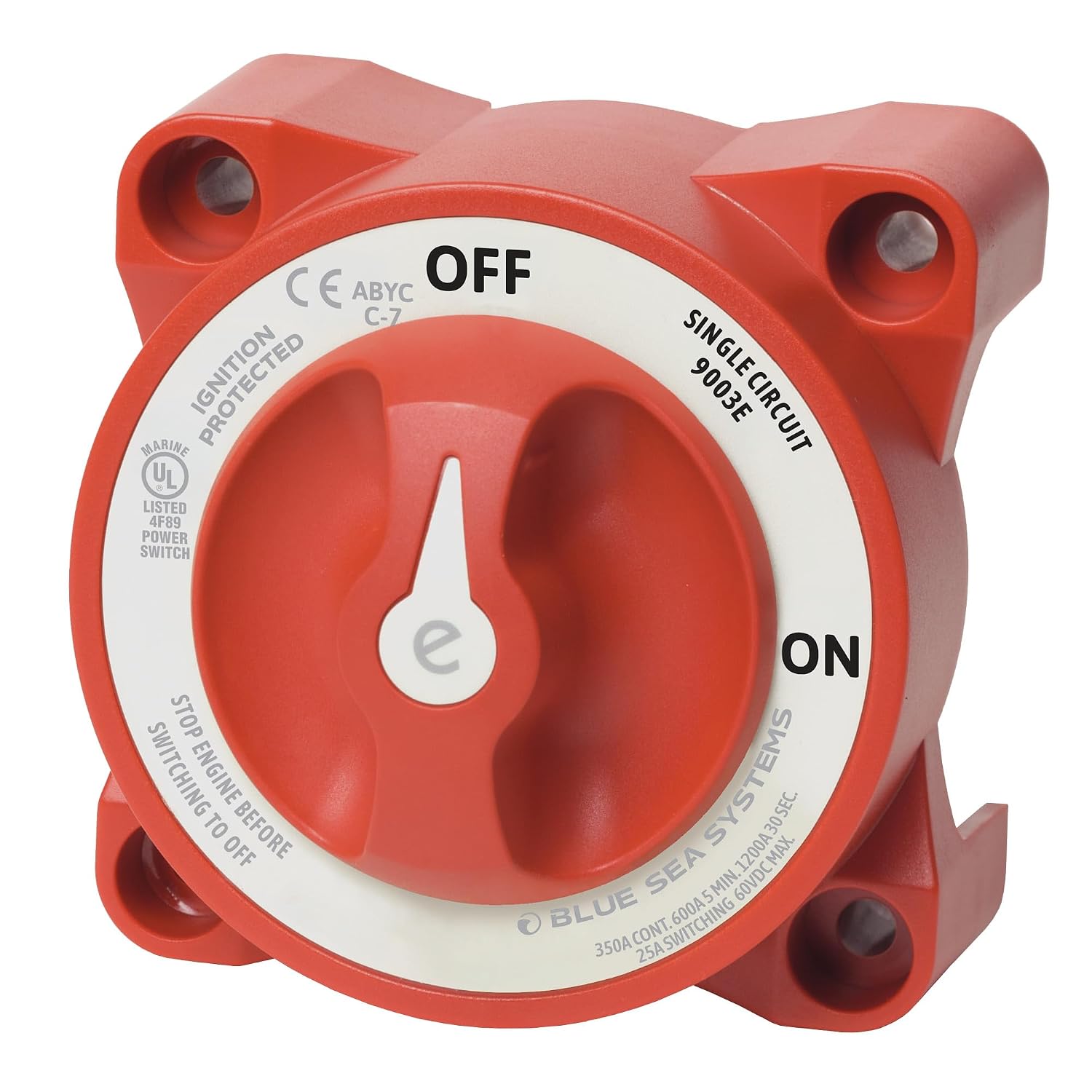
Blue Sea 9003E Battery Switch
The Blue Sea 9003E is an e-Series rotary battery switch with on and off positions. Its red control turns within a mounting body with rear connection studs.
View on AmazonThe distribution side of my build includes bus bars, fuse holders, switches, circuit breakers, cable and terminals. These parts connect and control the circuits around the batteries and charging equipment.
The equipment I used includes Blue Sea bus bars, a 350A switch, Victron Smart BatteryProtect 100A and Nilight six-gang DC switch panel.
The Blue Sea 9003E is an e-Series rotary battery switch with on and off positions. Its red control turns within a mounting body with rear connection studs.
View on Amazon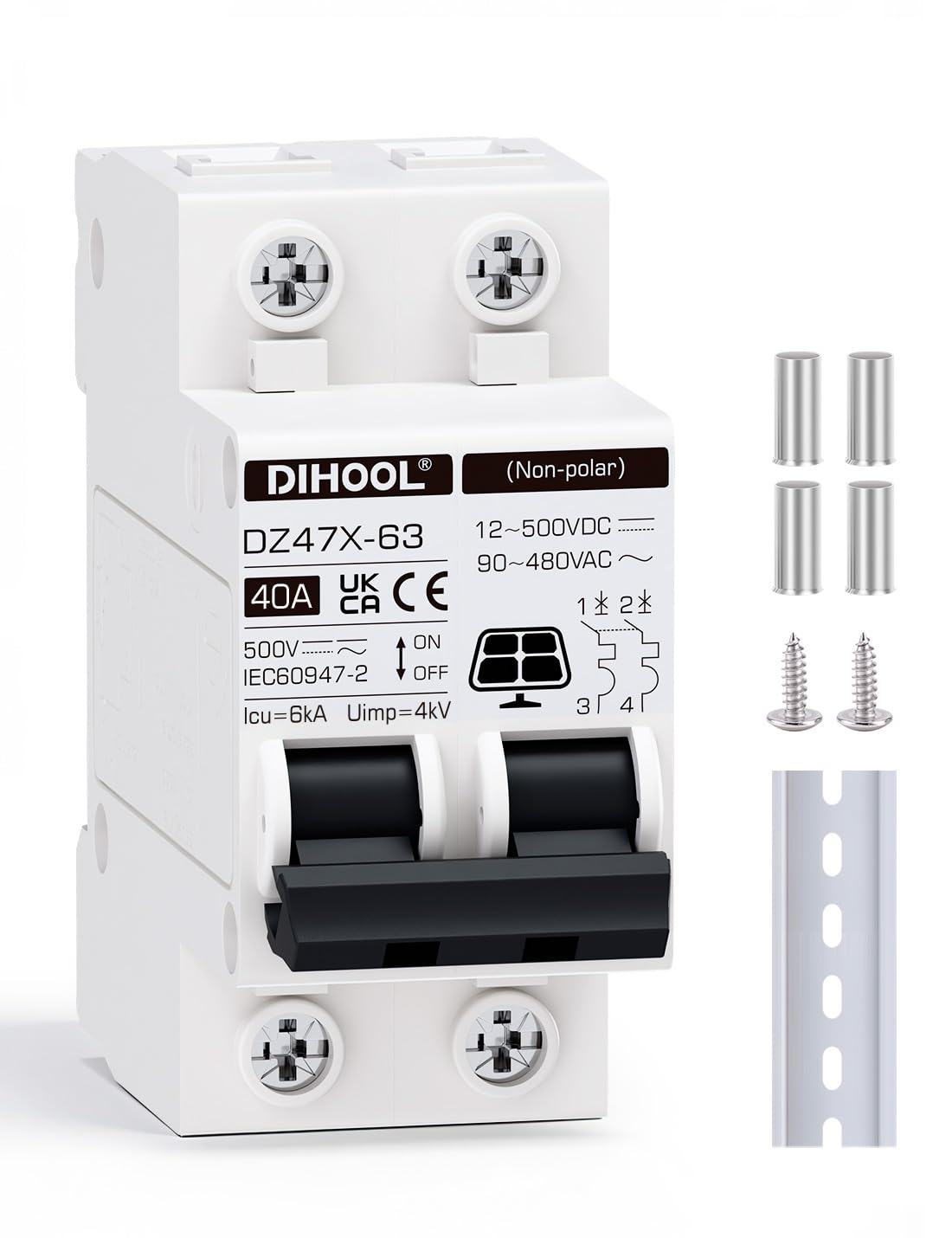
This two-pole circuit breaker clips onto a DIN rail and has a linked operating handle. The purchased DIHOOL version is marked 40 amps.
View on Amazon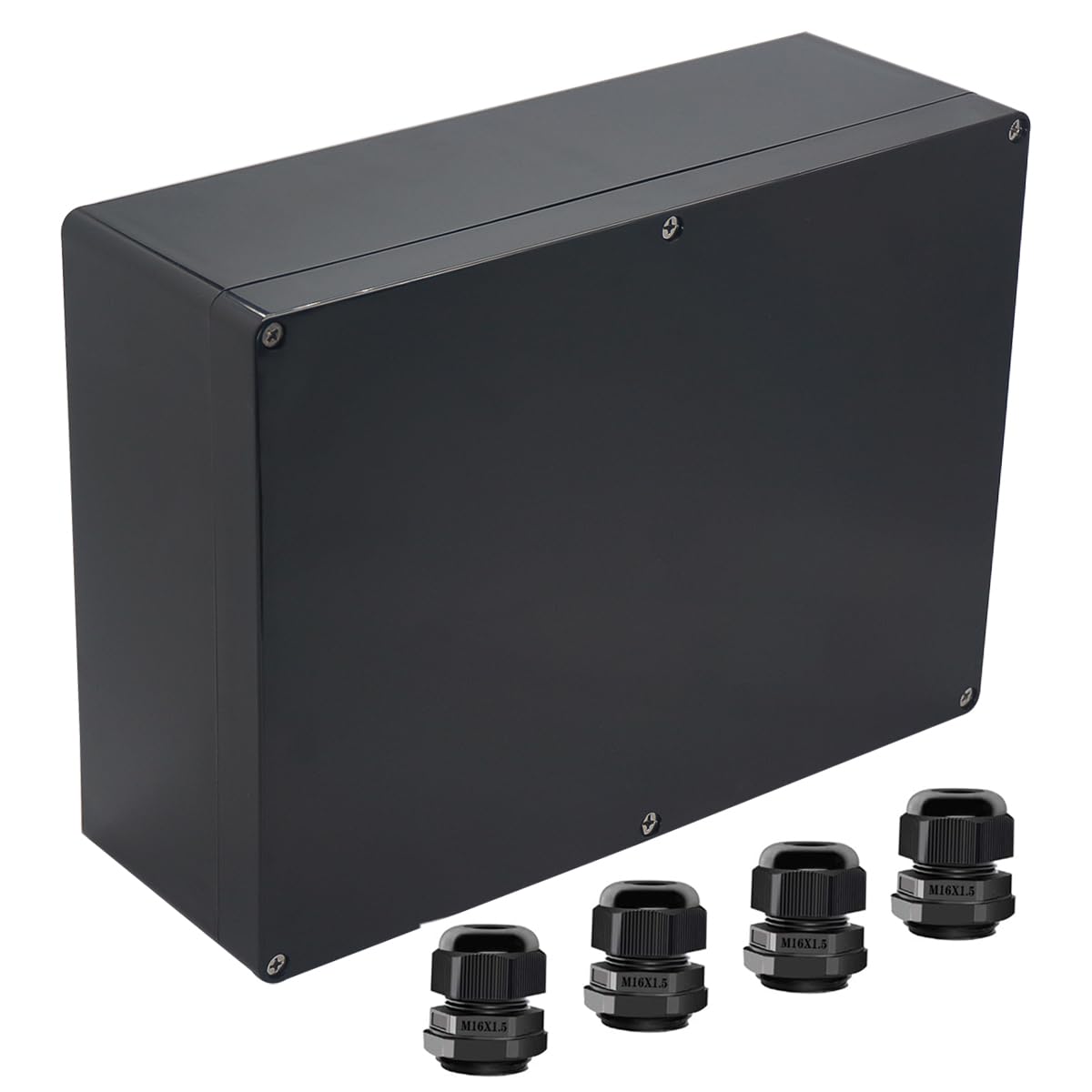
This Otdorpatio project box is an enclosure for electrical project components. It is the larger junction-box model named in my electrical drawings.
View on AmazonA bus bar provides a common connection point. A branch circuit carries power between that distribution point and a particular device or group of loads.
Identify each bus bar by the connections attached to it. A product rating alone does not describe its position or role in the circuit.
The drawings contain Class T, MEGA and PV fuse labels as well as generic fuse and breaker labels. These are different types and references; a matching amp number does not make two devices interchangeable.
A component rating belongs alongside the actual circuit and conductor information. The fuse type, voltage rating and interrupt capability are distinct attributes, not details supplied by the amp number alone.
The wiring labels include 4/0 AWG, 4 AWG, 8 AWG, 10 AWG, 10/3 AWG, 14 AWG and 18 AWG references. The drawings also include control-wire notes and 5/16-inch lug labels.
Conductor size is one field in a circuit record. Length, load current, termination and installation conditions are other fields. A gauge shown on one branch does not establish the conductor for a different branch.
The battery switch provides manual switching, while the Nilight panel groups branch controls. The Smart BatteryProtect is separately identified in my equipment list.
I used the Otdorpatio junction box shown in the drawings to house electrical components. The loads guide identifies the lights, stereo and camera equipment served by the wider distribution system.
My five electrical drawings contain repeated components and different arrangements. The equipment list follows the parts I used through the build, so a component can appear in more than one drawing.
| Equipment used | Function in the component set |
|---|---|
| Bus bars | Common electrical connection points |
| 350A battery switch | Manual battery-circuit switching |
| Fuse holders and fuses | Overcurrent-protection hardware |
| Circuit breakers | Circuit switching and overcurrent-protection hardware |
| Nilight six-gang DC switch panel | Controls for branch loads |
| Otdorpatio junction box | Electrical project enclosure |
| Cable and lugs | Conductors and terminations |
The two Lossigy 400Ah batteries I used, their storage role, and the charging and monitoring equipment around them.
The MultiPlus inverter charger, shore inlet, changeover switch and Firman generator in the build.
The exterior work lights, light bar, stereo, cameras and video converter I used.