SeekLiny 2020 Corners: Three-Way vs Two-Way Joints
I bought three-way corner connectors as part of my extrusion hardware. Their three-direction shape is a different layout from the two-member roof connections shown in my build photographs.
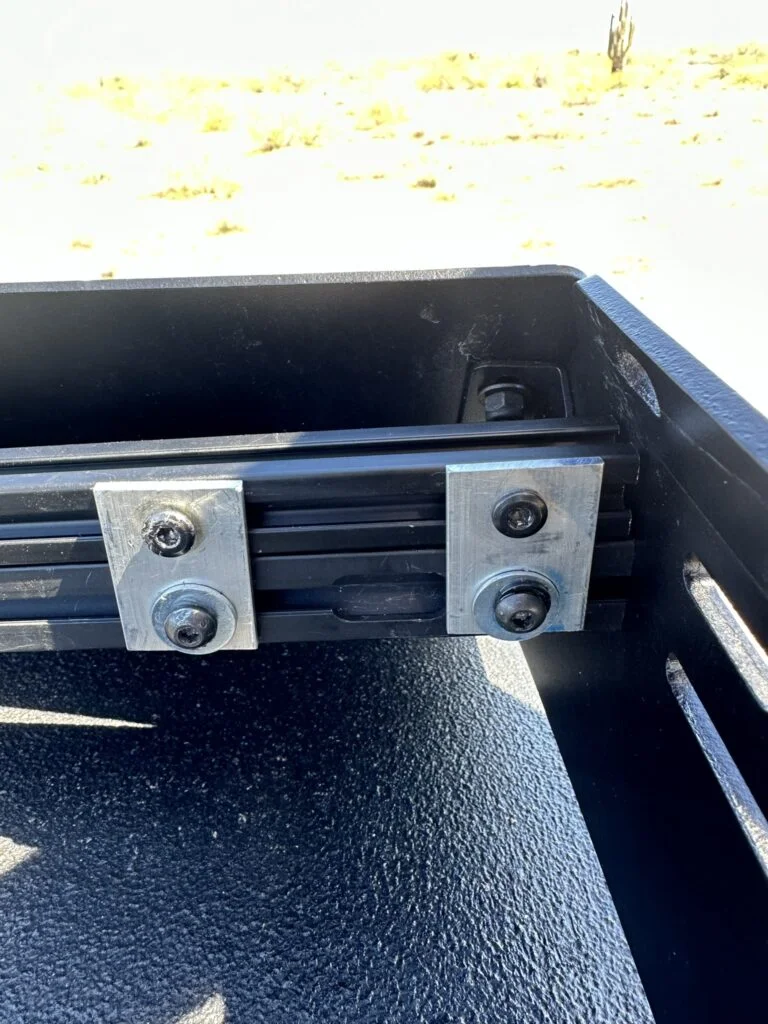
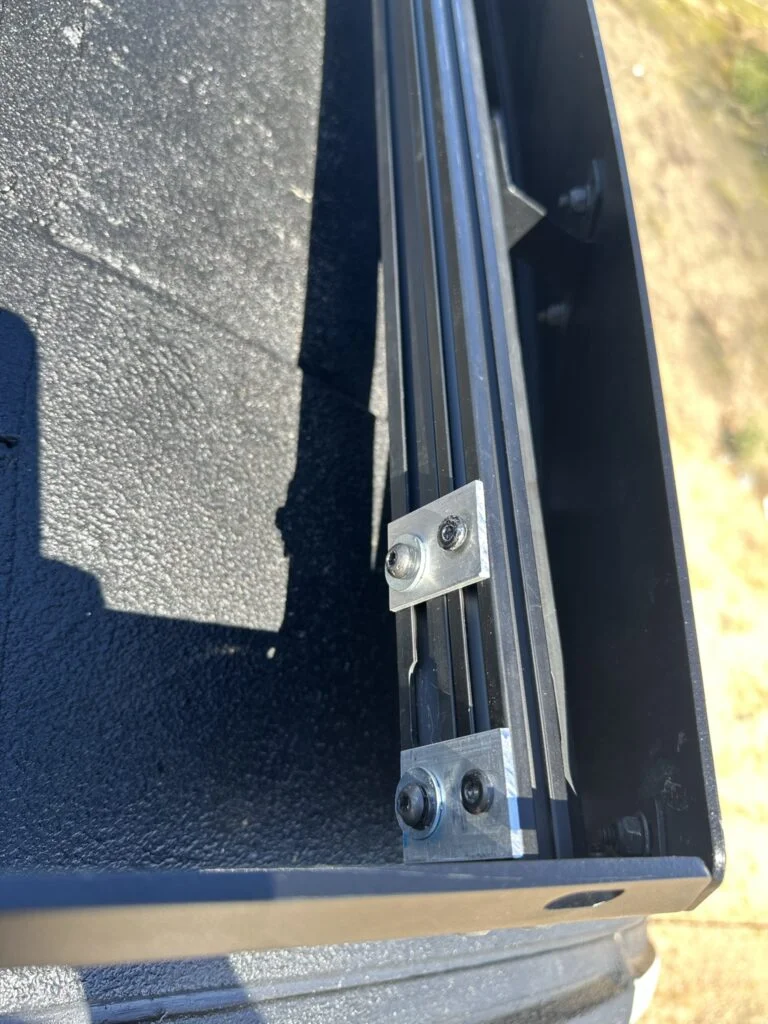
My roof equipment used profiles, small fasteners and drilled mounting pieces. Even after cutting the parts, positioning the slot nuts took time as the pieces came together.
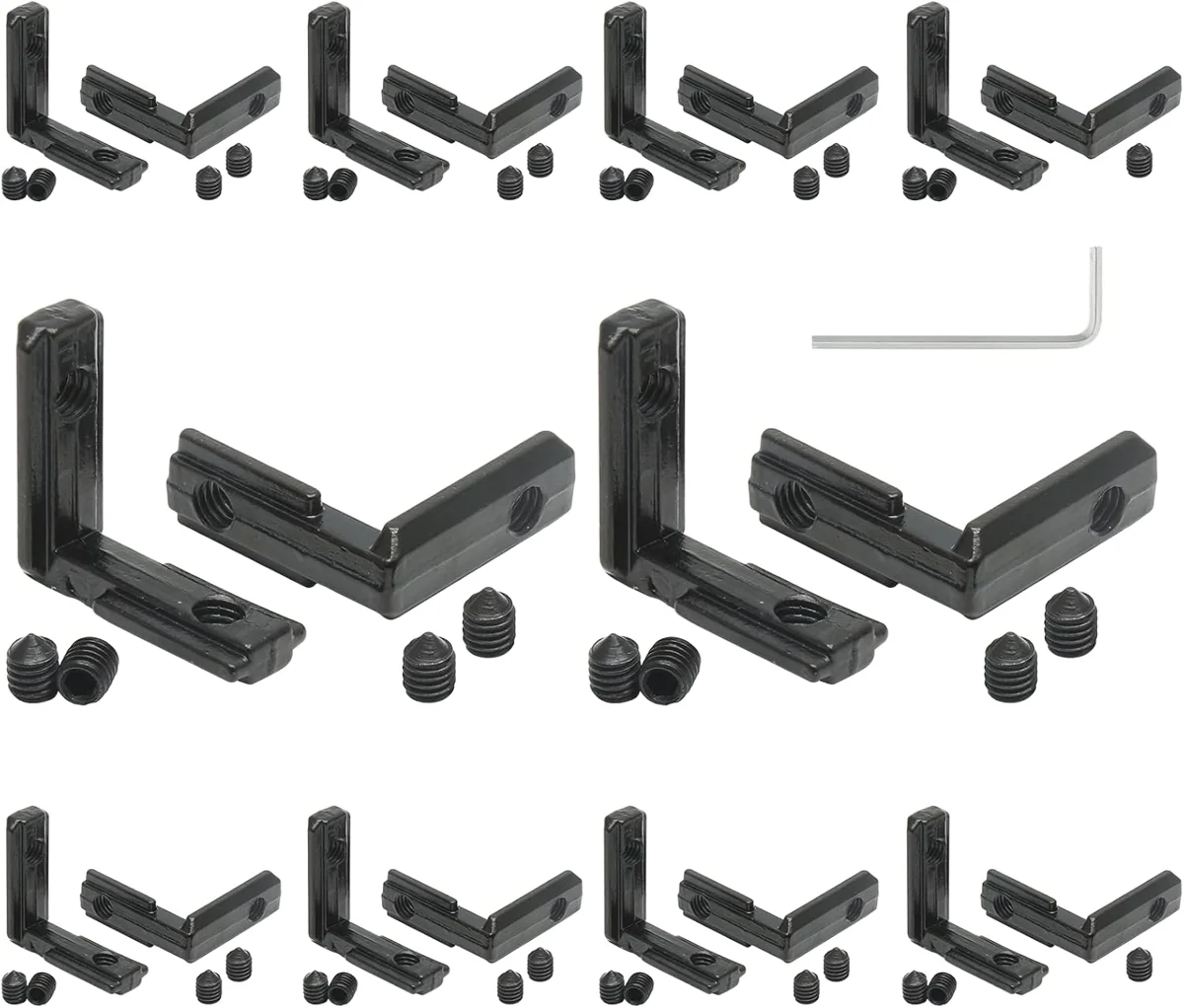
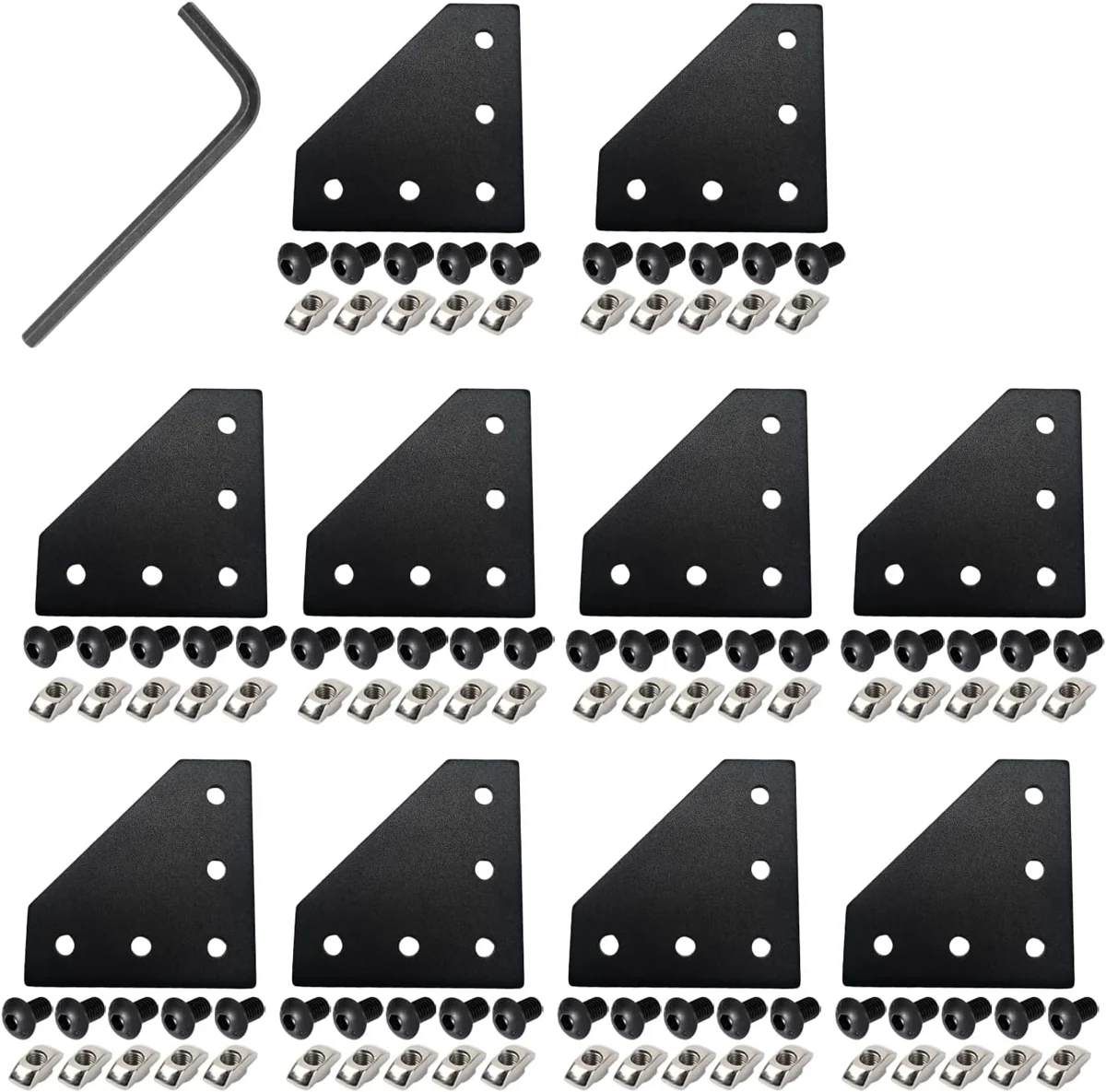
The hardware purchases include several connector shapes because the intersection determines where each part sits. A three-way corner adds another direction to the joint; an inside corner and a flat L-plate organize two members differently.
The drilled connectors and fasteners joining my added extrusion to the roof rack.
Distinguishing the Frame Directions at a Joint
I assembled the roof mounts from extrusion, brackets and small fasteners.
I used separate hardware arrangements for the rack and smaller 2020 profiles.
Positioning the slot nuts became its own task after the pieces were cut and drilled.
The profiles and joint hardware during my roof-mount assembly.
My Takeaway for Choosing the Kit
I would sketch the members meeting at the corner before choosing among these options. SeekLiny supplies the three-way format, Qjaiune sits inside a two-member corner, and the L-plate spans the faces. The differences are visible in the product images, while my roof photographs explain the practical nut-positioning work behind the wider connector kit.
Product Details And Van-Build Uses
Specification
Product Detail
Brand
SeekLiny
Profile Context
2020 extrusion
Joint
Three-way corner
A three-way corner brings members together along three directions, unlike a two-member right-angle joint. Draw the rail ends and connector body together before choosing the surrounding panel arrangement. In a van storage-frame sketch, identify which members are added first and where the driver reaches the connector screws. This keeps the purchased three-way fitting distinct from the two-member connections shown in my roof photographs and from the flat joining plates compared elsewhere in the kit.
Its corner layout brings rail members together in three directions rather than joining only two members.
Alternative products
Two Alternatives to Compare
An inside-corner connector joins two members from within the corner. A flat L-plate fastens across their faces, so these alternatives change both the number of directions and the position of the joint hardware.
Product
Why compare this option
Purchase link
SeekLiny 2020 Three-Way Corner Connectors
Three-way corner format in my extrusion-hardware purchases.