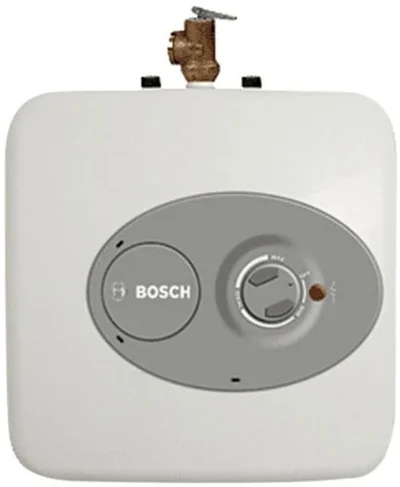
My camper van water-equipment purchases included two very different heaters: a Bosch ES4 electric mini-tank and a CAMPLUX AY132 portable outdoor propane unit. Looking at them together makes the hot-water decision more useful than choosing a brand or a headline capacity. One belongs to a stored-water electrical arrangement; the other belongs to an outdoor setup that is unpacked, connected and put away. I would compare the complete routine before drawing either into a van layout.
Start With The Hot-Water Task
I would begin with the task rather than the appliance. Write down where the water is used, when that happens and what has to be ready beforehand. Washing dishes at a fixed kitchen, using an outdoor shower and taking water to another place are different routines. They may all involve hot water, but they do not automatically need the same equipment arrangement.
Next, follow one task from beginning to end. For a kitchen, include preparing the work area, reaching the tap, handling the dishes and returning the space to its ordinary state. For an outdoor activity, include taking the equipment out, finding its intended use area, arranging the connected parts and packing everything away. Those steps belong in the comparison even though they do not appear in a heater's main product photograph.
I would give repeated and occasional tasks separate places in the notes. A changeover that is reasonable for an occasional activity may become an important part of an everyday routine. Conversely, dedicating permanent cabinet space to an occasional task is a different trade-off from carrying a removable kit. The useful comparison follows the way the space will be used, rather than treating permanent equipment as automatically more convenient.
My full-time living layout guide uses ordinary daily activities to compare an interior. Hot water fits into that same approach. The appliance is one part of a sequence that also involves working space, water supply, energy and storage. I would give the complete sequence a place in the plan before choosing which heater format best supports it.
Separate Stored Water From An Outdoor On-Demand Setup
The Bosch ES4 stores water in a small electric tank. The CAMPLUX AY132 is a portable outdoor propane tankless heater. These formats organize the task differently: one holds water to be heated in its appliance body, while the other heats flowing water as part of an outdoor arrangement. That is the basic distinction I would keep at the top of the comparison.
Tankless does not mean that the rest of the water system disappears. The outdoor arrangement still needs its water supply, connected equipment and intended use location. Likewise, a mini-tank's compact cabinet does not represent the complete fixed arrangement. The surrounding plumbing, electrical provision and access remain separate parts of the layout.
For the mini-tank proposal, I would draw the heater where it belongs in the selected water arrangement and follow the connected route to the intended point of use. For the portable proposal, I would draw two states: the equipment packed inside the van and the equipment arranged outdoors. Those two views make the comparison fairer than placing only the portable heater's empty outline beside a fully drawn cabinet.
I would also keep the product families distinct. An outdoor portable propane heater is a different category from a built-in RV water heater. A brand that sells both does not make their instructions interchangeable. My AY132 record belongs to the outdoor portable category; the comparison here follows that identity instead of assigning it the job of an indoor appliance.
The Bosch equipment page and CAMPLUX equipment page keep their separate product references and alternatives. I would use those exact records when planning, so the diagram of the equipment follows the chosen type rather than a generic box labeled water heater.
Put The Electric Load Beside The Daily Schedule
Bosch's Tronic 3000T manual lists the ES4 at four gallons, 1,440 watts at 120 volts and 12 amps. That gives me a specific appliance load to carry into the electrical plan. The label on an actual selected appliance and its matching documentation belong beside the drawing, rather than a remembered figure for a similar heater.
I would then put that load on the daily schedule. Which other electrical tasks are intended to happen during the same period? Preparing a meal, charging equipment and working at the computer are separate uses of the system. A list of appliance names does not show their overlap. A simple sequence of intended activities does, and it gives the electrical design a clearer question to answer.
Power and energy are different entries in that record. Power describes the load while operating; energy also depends on how long it operates. As an arithmetic example, a 1,440-watt load running for ten minutes uses 240 watt-hours at that load. The ten-minute period is an example for calculating energy, not a measured heat-up time from my van.
I would keep any conversion and other system losses separate from that appliance-side example. The complete electrical arrangement needs its own calculation using the actual equipment and intended operating pattern. That avoids treating a simple multiplication as a finished battery or inverter specification. It also keeps the hot-water decision connected to the broader electrical choices instead of allowing the heater to be selected in isolation.
My electrical-system guide is the related starting point for the wider build. For the hot-water comparison, the useful result is a defined task, a documented appliance load and an intended operating period. Those inputs are much more useful than a claim that one heater will suit every van with a particular battery size.
Give The Fixed Appliance A Complete Cabinet Envelope
For an electric mini-tank, I would draw the appliance body and the connected parts as separate objects. That makes it easier to see what the cabinet must accommodate. The connection faces, control location and access direction all affect the arrangement, even when the body itself fits beneath a counter or beside another component.
I would compare the appliance in the same orientation as its model documentation. A drawing can make almost any rectangular object fit if it is rotated freely, but the selected product's permitted orientation belongs in the layout. Once that is fixed, the remaining cabinet space can be evaluated honestly instead of relying on an orientation that was chosen only to make the model look tidy.
Next I would place the surrounding furniture. Show the door open, the working surface above and the ordinary storage beside the heater. Ask whether the control remains reachable and whether the connected parts have a defined route. Those are furniture questions as well as plumbing questions, because a divider or drawer can occupy the very space that makes a connection accessible.
I would give removal its own check. Seeing the front of an appliance through an opening does not show whether the complete body can leave the compartment. Follow the path through the door or removable panel, with the neighboring parts still drawn. Record what has to move first. That makes later access a planned sequence rather than an unexplained empty area in the model.
My original water-compartment concept included modular framing, a pan and transparent access doors. The heater decision belongs alongside that concept, but it has its own envelope and access needs. I would compare both together while keeping the appliance reference, compartment drawing and furniture boundaries recognizable as separate parts of the same layout.
Treat Portable Equipment As A Kit With Two States
For the outdoor portable format, I would start with the packed state. Identify where the heater body travels and where its connected accessories are stored. The equipment needs an actual place in the van even when it is used outside. A folding handle is a visible feature, but it does not define the storage arrangement for the rest of the kit.
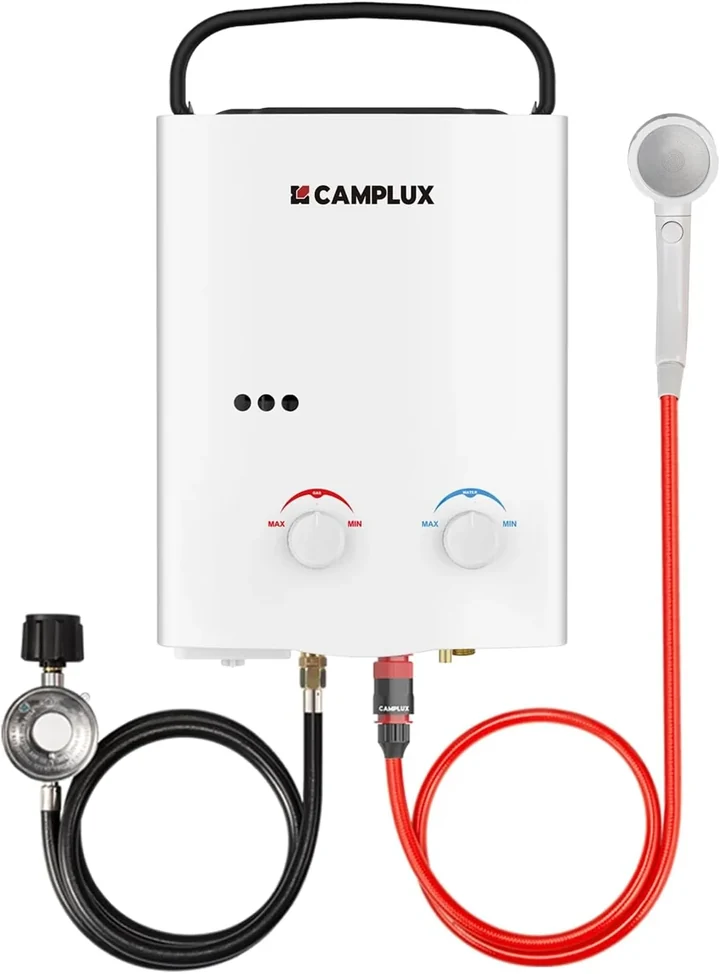
Then draw the outdoor state. Give the heater, water source, connecting routes and point of use their intended positions. The AY132 series manual is the product reference for that outdoor setup. I would keep its requirements with the kit rather than borrow the arrangement from a different CAMPLUX product family.
The important planning question is how one state becomes the other. What comes out first? Which pieces need to be reached together? Does unpacking the kit block access to something used at the same time? These are useful questions to answer with the actual storage location, because the convenience of portable equipment depends partly on how it can be retrieved and returned.
I would also plan the transition after use. The manual's draining and storage instructions belong in the equipment record, and the space plan should account for returning the kit afterward. The storage bay is part of a repeated sequence, rather than simply the place where the original box happened to fit on the day of purchase.
The comparison with a fixed appliance should include that entire changeover. A portable arrangement can free a permanent appliance position while asking for a repeated setup and pack-away task. A fixed arrangement uses permanent space while organizing the connections differently. I would choose between those complete routines rather than assume that portability or permanence is itself the benefit that matters most.
Compare Water Supply And Used-Water Handling Together
The water heater is one part of the task, and the water being used has to come from somewhere and go somewhere afterward. I would put those two paths on the same planning page. That keeps an attractive hot-water option from being evaluated without the supply and cleanup arrangement that makes the activity practical.
Begin with the intended task and record the water it requires as a separate planning input. If that amount is not yet known, define a way to observe the task rather than adopting somebody else's trip total. Dishwashing, rinsing equipment and showering are different activities. The useful figure is the amount associated with the routine being planned, recorded with the conditions that produced it.
I would then separate overall storage from the heater's own description. A mini-tank's listed capacity describes the appliance's stored-water volume. An outdoor tankless format still relies on the supply feeding the task. Those are different records, so I would keep the fresh-water storage plan, appliance information and intended use together without treating one as a substitute for the others.
Follow the used water with the same level of detail. Show the collection or handling arrangement associated with the intended use location and the place where the relevant equipment is stored afterward. That makes it possible to compare the complete kitchen or outdoor activity instead of choosing a heater and leaving cleanup as a separate problem for later.
The water-tank placement guide develops the storage-body comparison in more detail. Here, the important link is between the task, the hot-water format and the rest of the water arrangement. I would review those together whenever a heater choice changes, because the same activity can place different demands on access, storage and changeover depending on the selected format.
Compare Alternatives Within The Right Family
The alternatives to my Bosch ES4 in the existing catalog are a CAMPLUX two-and-a-half-gallon electric mini-tank and an Ariston Andris four-gallon mini-tank. I would compare those as stored-water electric appliance packages. Their cabinet shapes and listed storage volumes are part of that comparison, along with the connected envelope and the place assigned to the appliance.
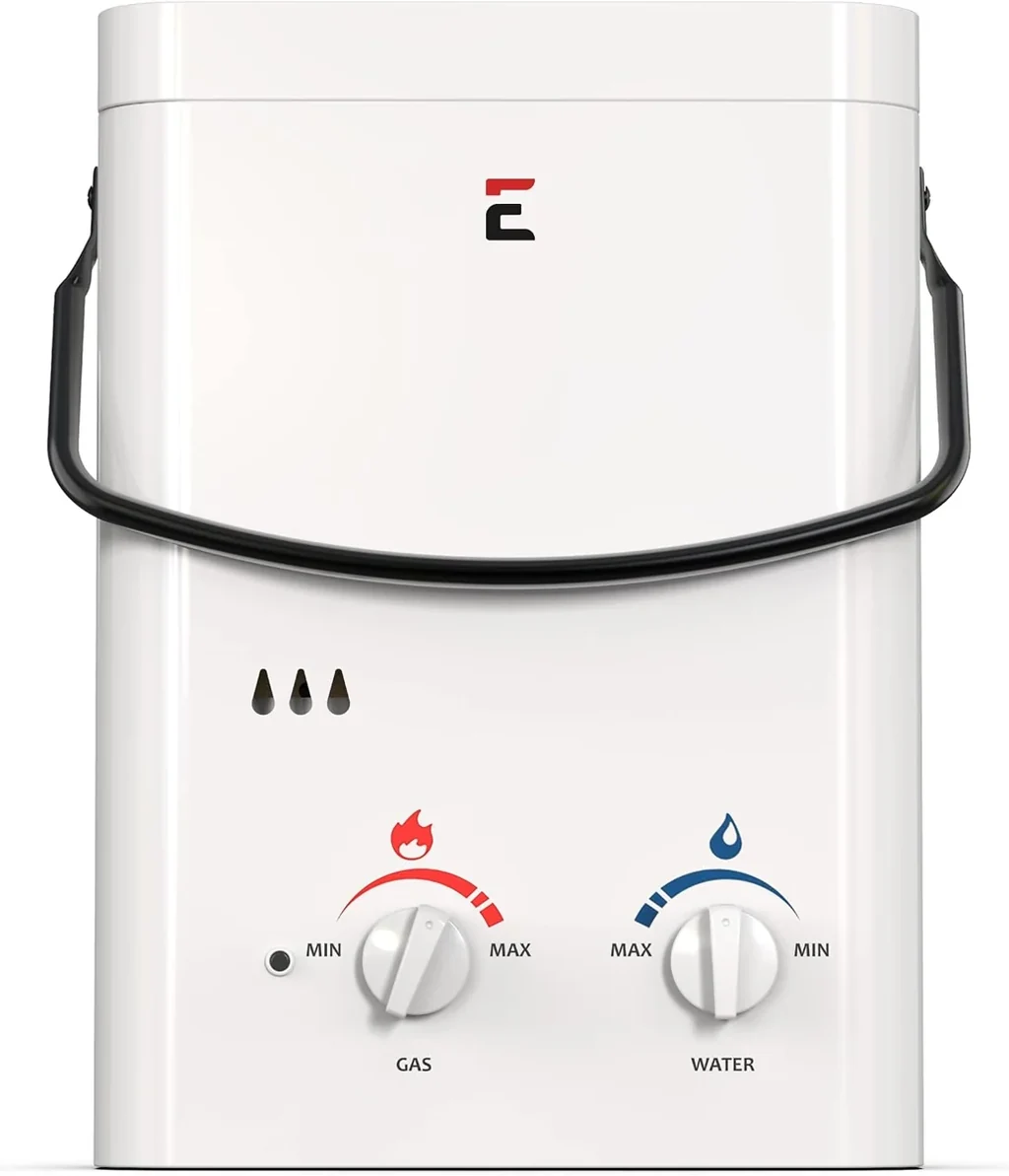
The alternatives to the AY132 are the Eccotemp L5 and GASLAND BE158S, both portable outdoor propane formats. I would compare that group through the packed kit, outdoor arrangement, controls and connection layout. The heater body is only one part of the space occupied, so the accessory storage and retrieval sequence should be included for each candidate.
I keep those alternatives separate from my purchases. They are useful options for comparing the kind of arrangement being considered, rather than a claim that I used every item in the catalog. That separation also helps a reader choose which comparison to follow. The electric-appliance question and the outdoor-kit question have different starting points even though both end with hot water for a task.
I would shortlist within a family only after deciding which routine fits the intended use. Otherwise a comparison can jump between fuel types, storage formats and locations without identifying why a candidate is being preferred. Choose the format first, then compare the exact product records using the same task, available space and connection assumptions.
The product groups below retain their existing catalog descriptions and matching images. I would open the relevant product page and source document while checking a candidate, then record the exact model selected for the next layout revision. A useful shortlist has a reason beside each item and a defined next check, rather than several links collected under a broad best-water-heater label.
Keep Maintenance Space In The Original Decision
A heater's ordinary controls and its maintenance access are different views of the same equipment. I would consider both before enclosing the fixed arrangement or assigning the portable kit's storage bay. A convenient front control can be reached while other parts remain behind or beneath the appliance. The access plan should show the parts associated with each task.
For a fixed mini-tank proposal, I would identify the maintenance sections in the selected model's document and carry their access needs into the furniture drawing. The useful record is the approach and removal space needed for the actual appliance. I would keep that separate from the route used to operate a control, so an easy everyday action does not conceal an awkward occasional one.
For a portable proposal, I would connect maintenance with the packed and outdoor states already drawn. Which parts are inspected before the kit is returned to storage? Where are the small removable pieces kept? What needs to remain together? The storage plan can answer those questions without turning a collection of loose accessories into an assumed complete kit.
I would keep the document revision with the equipment record. That helps when a brand uses similar names across several models or changes the appearance of a current listing. The saved purchase record, selected product identity and matching instructions do different jobs, and the maintenance plan is easier to understand when all three remain connected.
The result should be an arrangement that can be understood after the current work session is forgotten. Draw the access, name the model and link the relevant reference. That gives a future check a clear starting point and avoids relying on the memory that something looked reachable before the neighboring cabinet, stored equipment or trim panel was added.
Compare The Whole Purchase Package
I would price the complete selected arrangement rather than compare the headline prices of two heater bodies. For a fixed proposal, identify the remaining connected parts and furniture work. For a portable proposal, identify what belongs in the complete carried kit. Keep anything already owned separate from anything that still needs to be bought.
Use the same task as the endpoint for both proposals. A comparison becomes misleading when one side includes everything needed for the planned activity and the other includes only the appliance. I would give each proposal a short included-parts list and a separate remaining-work list before deciding whether the apparent price difference represents a real difference in the complete scope.
I would also separate purchase status from readiness. A heater can be purchased while the surrounding arrangement is still being developed. My own purchase records are useful evidence of the equipment involved in the build, while the layout and connection records answer the separate question of what is ready for the next stage of work.
When an alternative changes the arrangement, update the affected lines together. A different cabinet shape can change a furniture opening; a different portable package can change storage. Those are part of the choice even if the headline appliance price is similar. Keeping the effects visible makes it easier to compare complete options instead of treating the most recent listing as the new plan by default.
My conversion-cost planning guide develops that complete-scope approach. For hot water, I would finish the comparison with a selected format, exact candidate, remaining purchases and next physical check. That produces a decision that can move forward without pretending that buying a heater finishes the water arrangement around it.
Use A Short Trial Plan Before Committing The Surrounding Space
Before finalizing furniture, I would turn the selected routine into a short layout trial. For the fixed proposal, represent the appliance, connections and access opening in the intended space. For the portable proposal, lay out the stored equipment and follow its retrieval sequence. The trial should answer a specific question about space or access, rather than become an undefined attempt to prove the whole system at once.
Keep the trial tied to the drawing revision. Record what was represented, which connected parts were present and which spaces were reserved for later detail. Photograph the arrangement from a useful wide view and add close views of the access questions. Those records make it possible to understand what the comparison actually established when the plan is revisited later.
I would follow the ordinary neighboring activity at the same time. Open the kitchen storage while considering the fixed appliance, or retrieve another camping item while the outdoor kit is being unpacked. A layout can look organized when each task is considered separately and become crowded when two activities share the same opening or temporary work area.
Finish the trial with one next action. It might be changing the access panel, measuring a connected part or selecting between two storage positions. Record the reason and update the affected drawing rather than allowing the observation to remain a loose note. The van-build decision log is a useful place to keep that link between the comparison and the next revision.
That is how I would make the heater choice part of a practical van plan. Start with the task, choose the format that supports its location and routine, then compare the actual products within that family. Keep the energy input, water supply, accessory storage and access with the decision. The useful outcome is a complete arrangement that can be checked and developed, not just a product name at the center of an unfinished drawing.
Frequently Asked Questions
Is A Mini-Tank The Same As A Tankless Heater?
No. A mini-tank stores water within the appliance, while a tankless heater heats water as it flows through. In this comparison, the electric stored-water equipment and the portable outdoor propane equipment also belong to different use arrangements. I would choose the intended routine before comparing exact products within either group.
Can The AY132 Be Planned As An Indoor Appliance?
The AY132 belongs to the portable outdoor category. I would plan its outdoor use arrangement and its separate packed storage position. A built-in RV heater is another product family with its own installation documentation, so it belongs in a separate comparison rather than being treated as another way to position this portable unit.
Does The Energy Example Establish My Heat-Up Time?
No. The ten-minute period is an arithmetic example showing how power and duration produce an energy figure. It is not a measured result from my heater or van. I would keep actual operating observations with their conditions and use those records when refining the intended daily schedule and complete electrical calculation.
Which Equipment Did I Buy?
My water-equipment purchase records include the Bosch ES4 and CAMPLUX AY132. The other items shown below are the existing researched alternatives within their respective families. I keep their comparison role separate from my purchases and use the dedicated equipment pages to preserve the original identities and related source references.
Compare The Catalog Options
Electric Mini-Tank Options
Bosch ES4 Four-Gallon Mini-Tank Water Heater — My Purchased Model
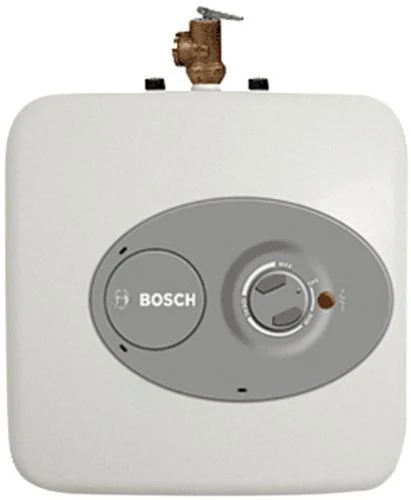
This compact electric water heater stores water in a four-gallon tank. Its small cabinet has water connections on top and a temperature control on the front.
View On AmazonCamplux Two-and-a-Half-Gallon Mini-Tank Heater — Alternative
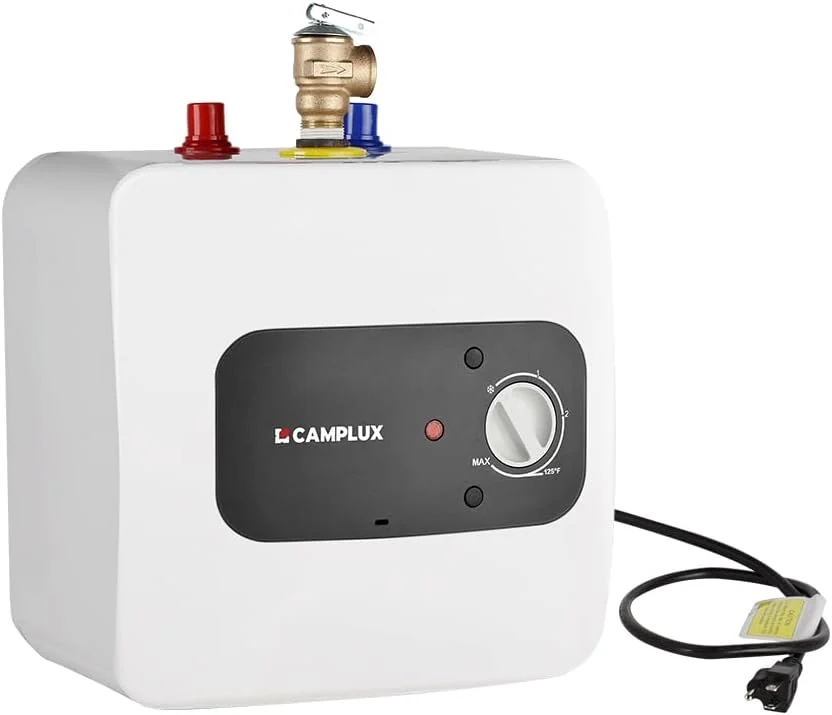
This compact electric heater stores water in a small tank. Its cabinet has a front temperature control and top water connections.
View On AmazonAriston Andris Four-Gallon Mini-Tank Heater — Alternative
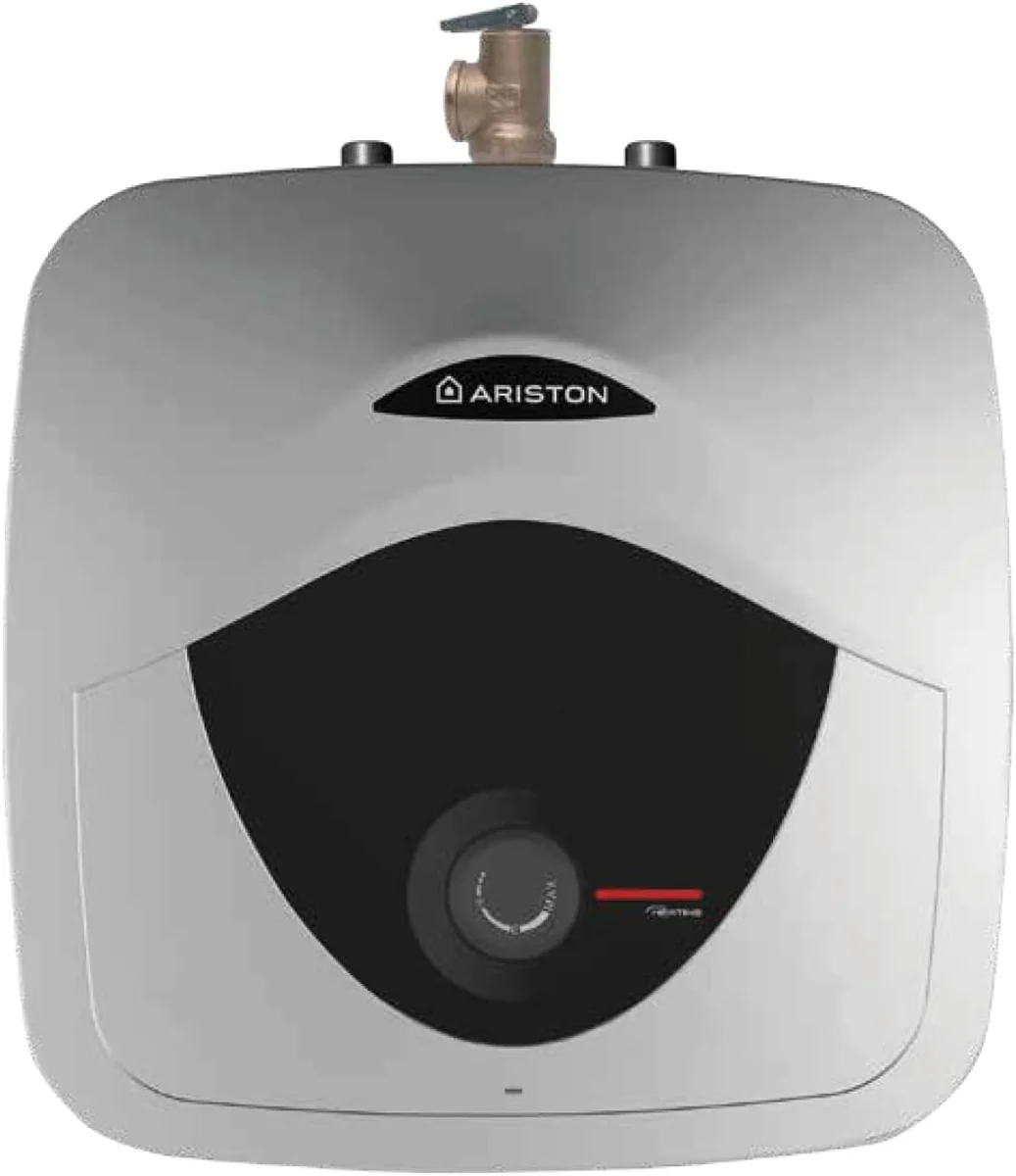
This compact electric heater stores water in a four-gallon tank. A front control and top connections define the appliance's cabinet layout.
View On AmazonPortable Outdoor Propane Options
CAMPLUX AY132 Outdoor Water Heater — My Purchased Model
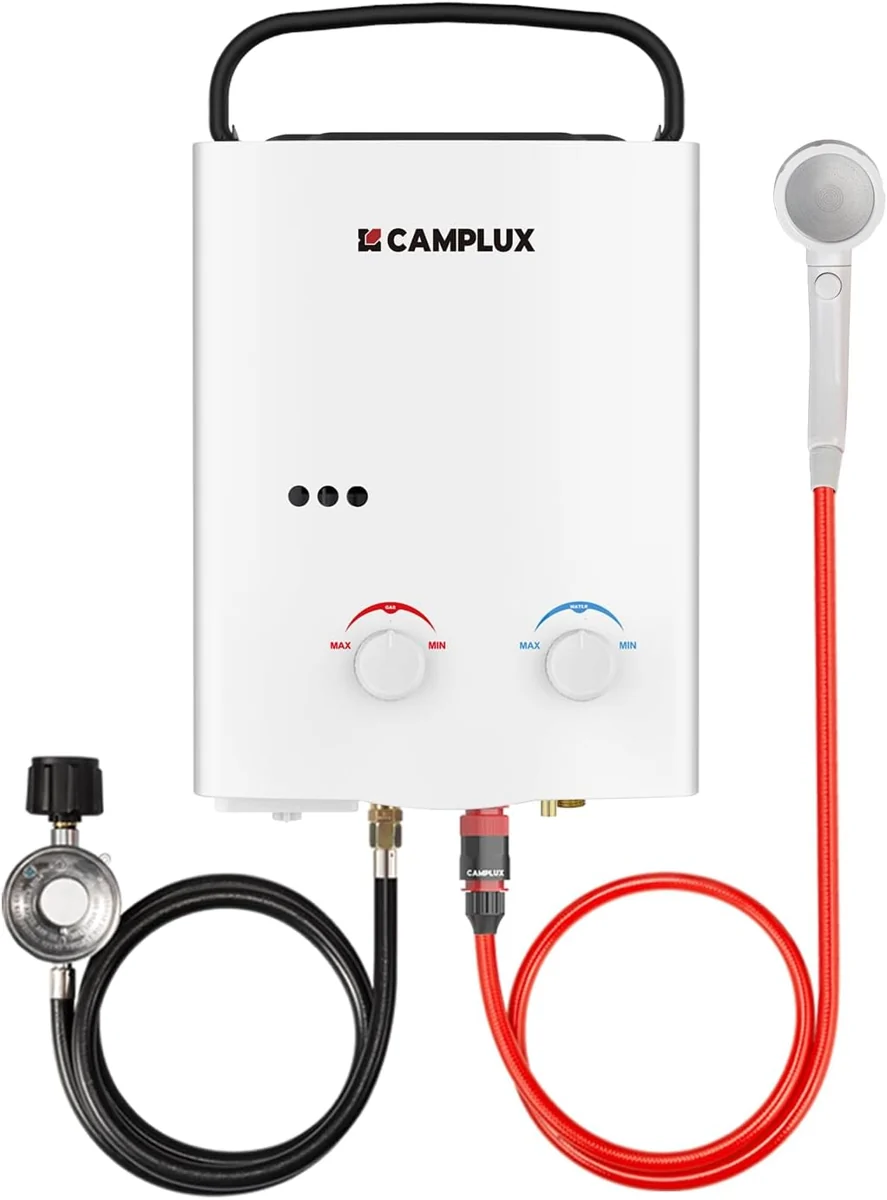
The CAMPLUX AY132 is a portable propane water heater intended for outdoor use. It has a folding handle and separate water and gas connections.
View On AmazonEccotemp L5 Outdoor Water Heater — Alternative
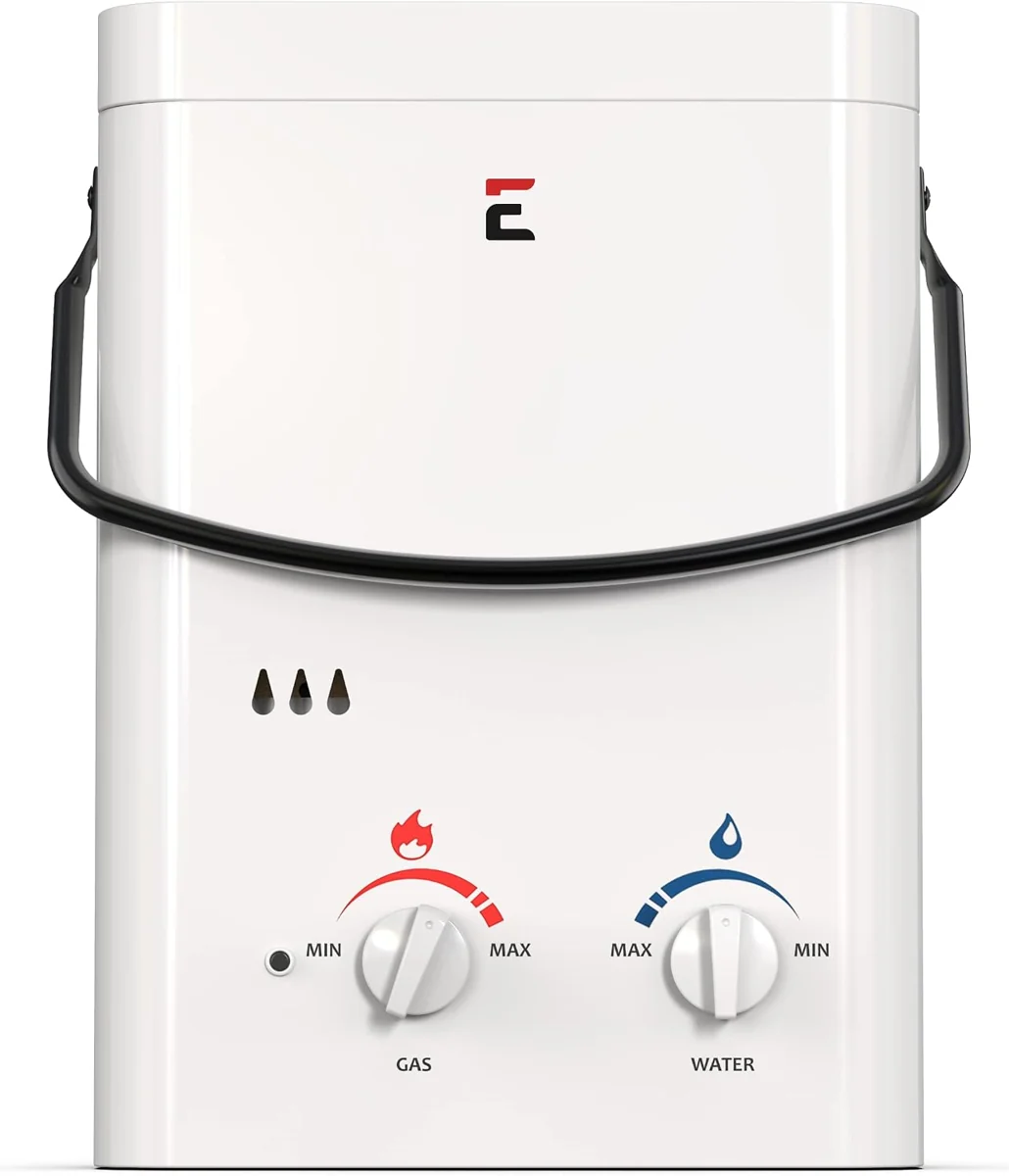
The Eccotemp L5 is a portable propane water heater intended for outdoor use. Its compact body combines the burner assembly, controls and water connections.
View On AmazonGasland BE158S Outdoor Water Heater — Alternative
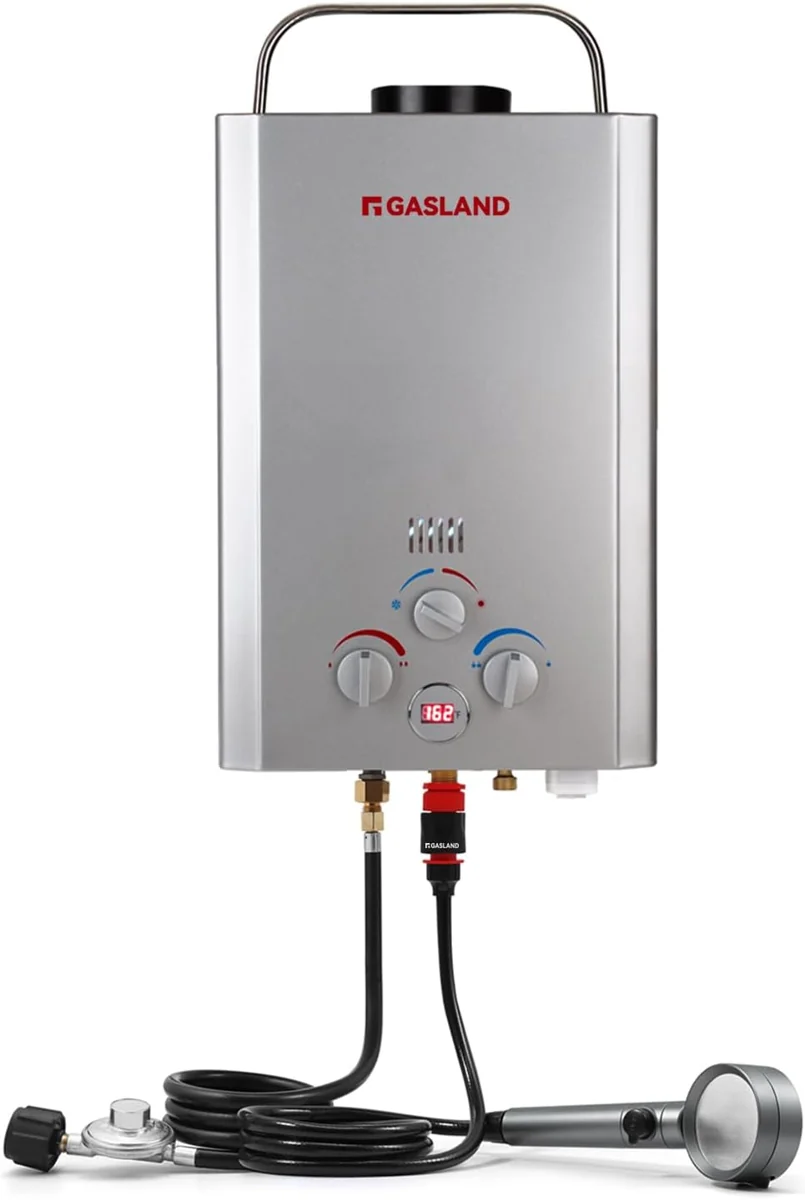
The GASLAND BE158S is a portable outdoor propane water heater. Its front controls and carrying handle provide a different physical layout from the CAMPLUX unit.
View On Amazon